




Scientists Call for Greater Scientific Rigor in the Longevity Industry: More Evidence, Fewer Promises


FIFTIERS | Life Begins at 50. La vida comienza a…
The rapid expansion of the Longevity Economy is transforming biomedical research at an unprecedented pace. Breakthroughs in genetics, regenerative medicine, artificial intelligence, and cellular biology are bringing humanity closer than ever to understanding—and potentially modifying—the biological processes of aging. Yet alongside this remarkable scientific progress, a rapidly growing commercial market has emerged, offering supplements, peptides, intravenous therapies, anti-aging treatments, and wellness programs that promise to slow aging or extend lifespan despite having only limited scientific validation.
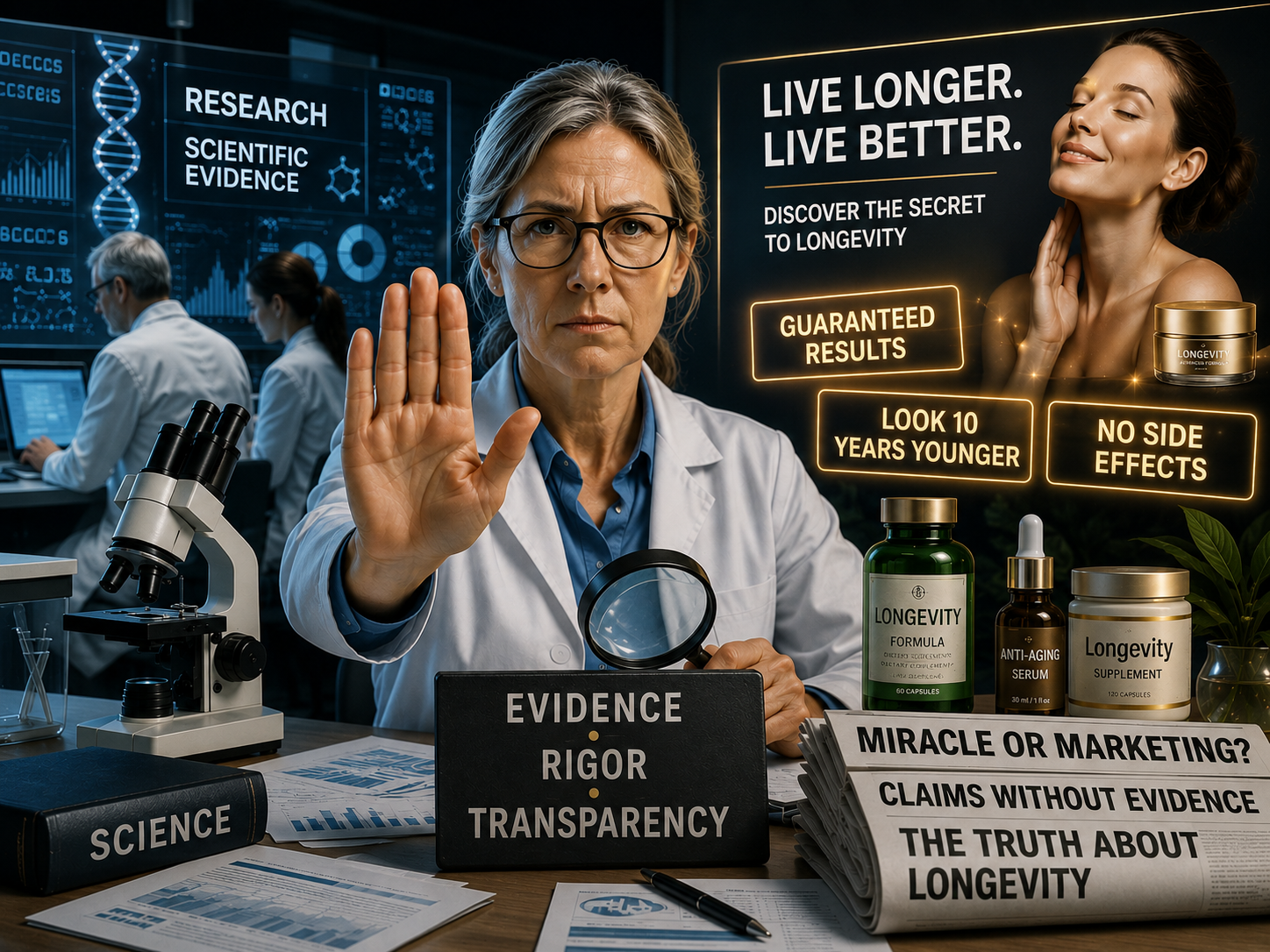
In response, an increasing number of leading geroscientists, physicians, and longevity researchers are delivering a clear message: the future of longevity medicine must be built on clinical evidence rather than marketing claims.
Interest in healthy longevity has surged dramatically over the past five years. Global investment in longevity-focused biotechnology companies now amounts to billions of dollars, while new startups and wellness clinics continue to enter the market at an extraordinary pace. Consumers are increasingly seeking products that claim to improve cellular health, enhance mitochondrial function, reverse biological aging, or extend lifespan. Although many of these innovations are scientifically intriguing, experts caution that enthusiasm should not outpace evidence.
One of the greatest concerns within the scientific community is that many products currently marketed as longevity interventions rely primarily on findings from laboratory experiments or animal studies. While these early results may be encouraging, they often lack confirmation through large-scale, randomized, placebo-controlled clinical trials in humans—the gold standard required to establish both safety and effectiveness. In biomedical research, a therapy that performs exceptionally well in mice frequently fails to produce comparable outcomes in human patients, whose biology is considerably more complex.
Among the most widely promoted longevity products are supplements designed to increase levels of nicotinamide adenine dinucleotide (NAD+), a molecule that plays a central role in cellular energy production and DNA repair. Although several studies have reported improvements in certain metabolic markers, scientists emphasize that there is currently no conclusive evidence demonstrating that NAD+ supplementation extends human lifespan or significantly slows biological aging. Ongoing clinical trials may clarify its potential in the coming years, but current evidence remains insufficient to support many of the claims found in commercial advertising.
A similar situation exists with numerous peptide therapies, hormone treatments, and intravenous “anti-aging” infusions now offered by specialized longevity clinics around the world. Many have attracted considerable public attention, particularly among affluent consumers interested in preventive healthcare and performance optimization. However, in many cases the available scientific evidence remains limited, preliminary, or entirely absent. Researchers stress that any intervention intended to modify fundamental biological aging processes must be held to the same rigorous standards of safety and efficacy required for every other medical treatment.
This does not mean that longevity medicine lacks scientific credibility. On the contrary, our understanding of the biology of aging has advanced more rapidly during the past two decades than at any other time in history. Research into cellular senescence, epigenetic reprogramming, gene therapy, regenerative medicine, stem cell biology, and artificial intelligence–driven drug discovery is progressing at an extraordinary pace. The scientific community’s concern is not about innovation itself, but about ensuring a clear distinction between discoveries that remain experimental and interventions that have already demonstrated meaningful clinical benefits in humans.
When the highest-quality scientific evidence is examined, a remarkably consistent picture emerges. The interventions with the strongest and most reliable evidence for extending healthy lifespan are not the most expensive or technologically sophisticated. Instead, they are the fundamental lifestyle factors that decades of medical research have repeatedly confirmed.
Regular physical activity remains the single most effective intervention for promoting healthy aging. Hundreds of studies have demonstrated that consistent exercise reduces the risk of cardiovascular disease, type 2 diabetes, multiple forms of cancer, cognitive decline, osteoporosis, and frailty. Strength training deserves particular attention, as maintaining muscle mass has become increasingly recognized as one of the strongest predictors of independence, mobility, and survival in later life.
Nutrition represents another cornerstone of healthy longevity. Dietary patterns emphasizing fresh vegetables, fruits, legumes, whole grains, fish, healthy fats, and minimally processed foods continue to produce the strongest evidence for preventing chronic disease. Rather than focusing on so-called “superfoods” or miracle supplements, scientific evidence overwhelmingly supports maintaining sustainable, healthy dietary habits over many decades.
High-quality sleep has also emerged as a critical regulator of biological aging. Chronic sleep deprivation is associated with persistent inflammation, impaired immune function, metabolic dysfunction, hormonal imbalance, and increased risk of neurodegenerative diseases. Sleep is now widely recognized as one of the body’s most important mechanisms for cellular repair and physiological recovery.
Mental health and social relationships are equally important. A growing body of research demonstrates that chronic loneliness, social isolation, prolonged psychological stress, and depression significantly increase the risk of mortality while accelerating many of the biological mechanisms associated with aging. Maintaining meaningful relationships, participating in community life, preserving emotional resilience, and having a strong sense of purpose are increasingly viewed as essential components of healthy longevity rather than merely contributors to emotional well-being.
This scientific debate is also encouraging greater regulatory oversight. As the longevity industry continues to expand, healthcare authorities in several countries are paying closer attention to marketing claims associated with anti-aging products and treatments. Many experts believe that the long-term success of the longevity sector will depend on its ability to support commercial innovations with rigorous clinical trials, peer-reviewed research, and transparent scientific validation.
For the Longevity Economy, this maturation process is ultimately beneficial. Stronger scientific standards will enhance public trust, attract higher-quality investment, accelerate the development of genuinely effective therapies, and better protect consumers from exaggerated claims or interventions whose benefits have yet to be demonstrated. As longevity medicine evolves into one of the defining healthcare industries of the twenty-first century, scientific credibility will become its greatest competitive advantage.
Longevity is poised to become one of the largest healthcare markets in history. Yet its future will not be defined by products that simply promise longer lives. Instead, it will be shaped by interventions that can demonstrate—with robust clinical evidence—that they enable people to live more years in good health, maintaining independence, vitality, and quality of life.
The message from the scientific community is therefore both optimistic and cautious. Aging research has never advanced more rapidly, and the opportunities ahead are extraordinary. But scientific enthusiasm must never replace scientific rigor. In a market where demand for healthy longevity solutions continues to grow worldwide, the most valuable investment remains the same as it has always been: trusting evidence, demanding rigorous science, and distinguishing genuine innovation from commercial hype.
Discover more from FIFTIERS
Subscribe to get the latest posts sent to your email.
What's Your Reaction?