





Longevity technology enters a new phase: building devices is no longer enough — we need data-governed ecosystems


AgeTech Is Evolving from Standalone Sensors and Apps into a Digital Infrastructure Capable of Supporting People for Decades
Technology designed for longevity is entering a far more ambitious phase. For years, much of the innovation aimed at older adults focused on relatively independent devices: emergency buttons, fall detectors, smartwatches, medication dispensers, exercise apps, telecare services and remote-monitoring systems. The next leap is to connect all these components and transform millions of fragmented data points into an infrastructure capable of understanding how an individual changes over years and potentially decades. A recent paper published in Ageing Research Reviews proposes precisely this broader approach to digital technologies for healthy longevity, organising the challenge around seven interconnected domains: medical, technical, practical, interactive, psychosocial, ethical and legal. This framework matters because an excellent algorithm has limited value if a 75-year-old cannot comfortably use the interface; a wearable loses part of its potential if its information cannot reach healthcare professionals; a predictive system becomes problematic if it generates unreliable alerts; and a platform capable of knowing an individual’s sleep, movement, heart rate, medication, location and daily routines raises profound questions around privacy, consent and security. The next generation of AgeTech will therefore not compete simply by manufacturing better devices. It will compete by building trusted ecosystems capable of transforming longitudinal data into additional years of independence.
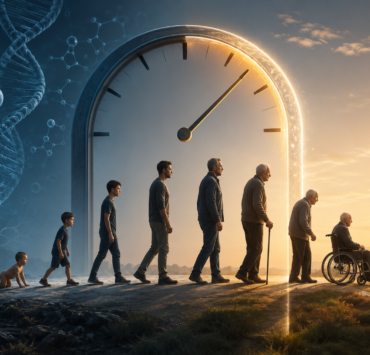
The urgency is driven by an extraordinary demographic transformation. According to United Nations and World Health Organization projections, the global population aged 60 and over will continue expanding rapidly over the coming decades and could reach approximately 2.1 billion people by 2050, while the population aged 80 and over could rise to approximately 426 million. This means the potential market for longevity technology will not consist of a small minority of dependent older people. It will include an enormous population moving through very different stages during the 30, 40 or potentially 50 years after turning 50. The strategic mistake is to imagine a single “senior user”. A 52-year-old executive interested in sleep, metabolic health and prevention has very different requirements from a 72-year-old seeking to preserve mobility or an 87-year-old requiring home monitoring and support. The winning technological ecosystem will need to accompany these transitions without forcing consumers to abandon one platform and start again every time their needs change.
The Real Asset Will No Longer Be the Device — It Will Be the Individual’s Longitudinal Health History
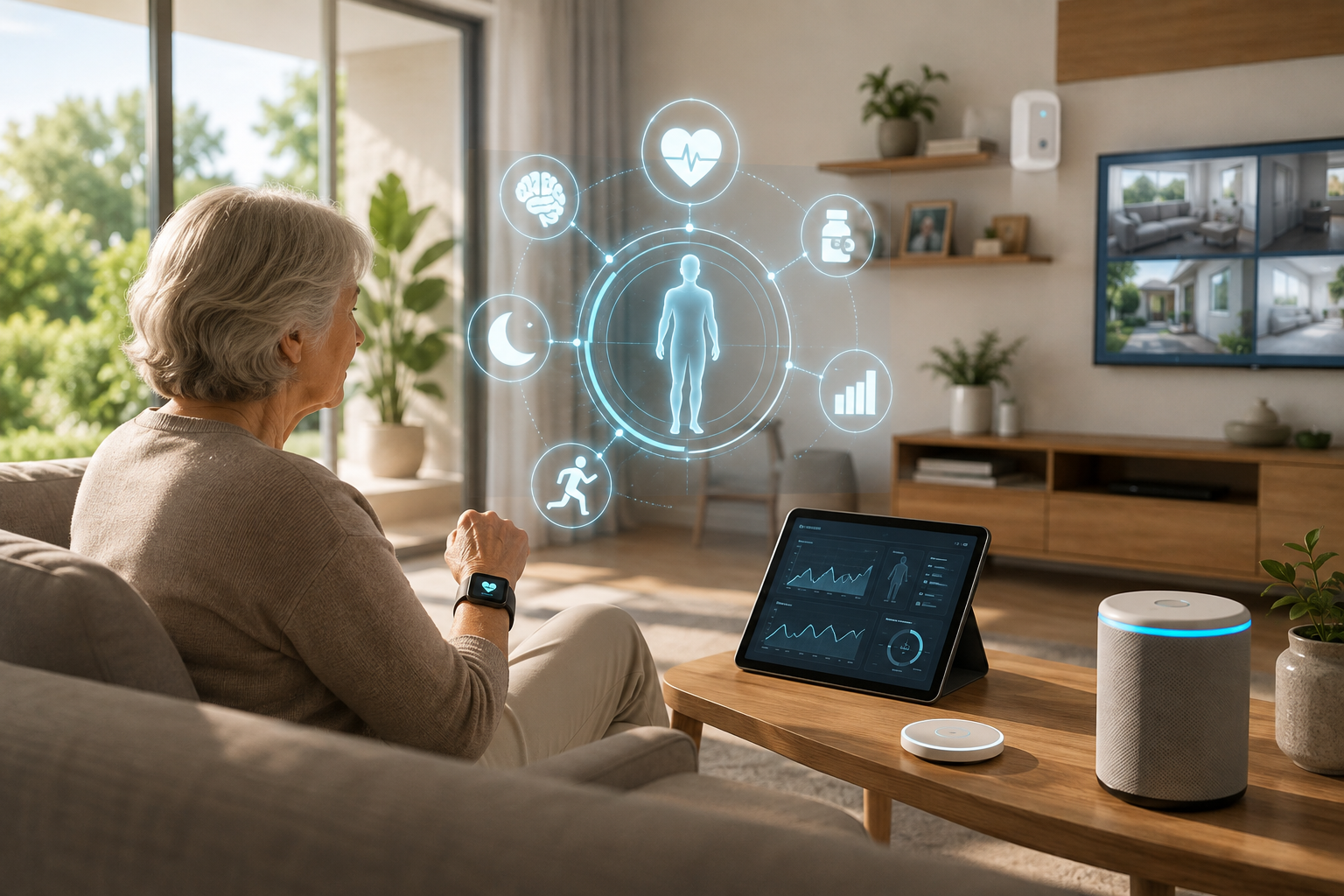
This transformation radically changes the business model. A smartwatch can monitor physical activity, sleep and heart rate; a smart scale can track weight and body composition; a connected blood-pressure monitor records cardiovascular information; a nutrition app knows something about dietary behaviour; a telemedicine platform contains clinical information; home sensors can detect movement patterns; and other digital services may reveal additional behavioural information. Today, much of this data remains fragmented across systems that do not communicate effectively with one another. The real breakthrough will come when different sources can be integrated securely to create an individual’s ageing timeline. Instead of asking whether someone walked 7,000 steps today, a system could analyse how their walking speed has changed over three years. Instead of reacting to one poor night’s sleep, it could identify a six-month deterioration. Instead of waiting for a fall to occur, it could potentially recognise a combination of declining activity, impaired balance and changes in routine that indicates increased risk.
Longitudinal data consequently becomes one of the most valuable assets in the Longevity Economy. A single test provides a photograph; twenty years of information provides a film. In ageing, trajectory can be more informative than a single measurement. Progressive reductions in strength, mobility, social interaction or cognitive performance can provide useful information long before an individual crosses a conventional clinical threshold. Artificial intelligence is particularly suited to analysing these time series and identifying combinations that would be extremely difficult to detect manually. The future objective will not simply be to know how someone is today, but to understand how that person is ageing and whether their trajectory is changing.
Artificial Intelligence Could Shift Longevity from Reaction to Anticipation
Conventional medicine remains largely reactive. A person experiences a symptom, requests an appointment, undergoes tests and receives an intervention. Longevity technology offers the possibility of a different model: detecting small changes before they become major problems. Changes in walking speed may accompany increasing frailty; altered sleep can coincide with physical or psychological problems; reduced activity at home can indicate illness; changes in voice or language may provide information relevant to cognitive function; changes in weight and body composition can indicate muscle loss; and certain cardiovascular variations may justify professional assessment.
The business opportunity lies in combining multiple signals rather than treating each one independently. A reduction in daily steps alone may mean very little. A persistent reduction in activity accompanied by worsening sleep, weight loss and lower social interaction may warrant attention. Multimodal AI can potentially combine these signals into risk assessments and help prioritise interventions, although clinical applications require rigorous validation and human oversight. For hospitals, insurers and senior living operators, anticipating deterioration can be considerably less expensive than managing an emergency admission. For consumers, earlier intervention can potentially mean additional months or years of independence.
The Home Could Become the World’s Largest Health Device
One of the most interesting consequences will be the transformation of housing. The concept of aging in place — enabling people to remain in their own homes as they grow older — has enormous appeal for consumers and for healthcare systems seeking to avoid unnecessary institutional care. To make this possible, the home can evolve from a passive environment into an intelligent monitoring platform. Discreet sensors can detect movement without requiring cameras; intelligent systems can identify that someone has not got out of bed at their usual time; automated lighting can reduce night-time fall risk; voice interfaces can support communication and reminders; connected devices can identify selected household risks; and telemedicine platforms can connect residents with healthcare professionals.
This opportunity is not limited to people in their 80s. A home purchased at 55 could progressively incorporate additional technological layers as the owner’s needs evolve. This creates a new convergence between AgeTech and Longevity Real Estate. Property developers, construction companies, insurers, telecommunications providers, energy businesses and technology companies can participate in a market for homes designed around 90- or 100-year lives. The home could become one of the principal nodes of the longevity ecosystem, connected to relatives, healthcare professionals, insurers and emergency services.
Wearables Will Move from Tracking Activity to Supporting Preventive Ecosystems
Wearable technology is evolving in the same direction. Early consumer devices were primarily focused on counting steps. Current generations can monitor heart rate, sleep, temperature, blood oxygen and other variables depending on the device and applicable regulatory authorisations. The future may be less about adding dozens of additional measurements and more about correctly interpreting the metrics that genuinely matter. For a 50+ consumer, knowing that they slept six hours last night may be less useful than understanding how their sleep pattern has changed over twelve months and how those changes relate to activity, stress and metabolic health.
The challenge will be separating wellness from diagnosis. An application can provide information about lifestyle without automatically becoming a medical device. When a company claims to detect disease or recommend treatment, it enters a much more demanding regulatory environment. Longevity companies will therefore need to decide carefully where they want to position themselves: wellness, prevention, clinical decision support or diagnosis. The stronger the medical claim, the greater the requirements around evidence, validation, regulation and accountability.
Interoperability Could Determine Who Wins the Market
One of the greatest weaknesses of today’s ecosystem is that information remains trapped inside silos. Hospitals use one system, insurers another, wearables another and senior living operators yet another. Consumers may have five different applications without any of them possessing a complete picture. One of the largest opportunities may therefore lie not in creating another sensor, but in building the layer that connects existing technologies.
Interoperability means enabling information to move between systems through appropriate standards and permissions. But the technical ability to share data does not mean that data should be shared without limits. Individuals must understand who can access their information, for what purpose and for how long. Consent architecture consequently becomes a core part of product design. Companies capable of providing consumers with simple and transparent control over their information may build a competitive advantage based on trust.
Data Governance Will Become as Important as Artificial Intelligence
A longevity platform could eventually know some of the most intimate information about an individual: when they sleep, when they leave home, how they walk, which medications they take, how much they exercise, how their cognitive abilities are evolving and potentially where they are located. This information can be extraordinarily valuable for prevention, but it is also extremely sensitive. A financial-data breach is serious; a breach revealing cognitive decline, household routines and health status can be even more intrusive.
For this reason, privacy by design, cybersecurity, data minimisation, granular consent, access controls and auditability will move from being primarily legal requirements to becoming commercial product features. Consumers and their families will select platforms they trust. Hospitals and insurers will demand high standards before integrating external providers, while regulators will increase scrutiny as algorithms influence health-related decisions.
In Europe, strategies must also consider the interaction between the GDPR, the EU AI Act and applicable healthcare and medical-device regulation. Certain AI applications used in medical contexts may be subject to considerably stricter obligations than general wellness applications. Companies that design governance into their architecture from the beginning will have an advantage over businesses attempting to add compliance after the product has already been built.
The Digital Divide Could Become AgeTech’s Greatest Risk
There is an important paradox: some of the people who could benefit most from technology may also experience the greatest difficulty using it. Vision or hearing impairment, reduced manual dexterity, cognitive decline or simply limited digital experience can turn a conventional interface into a barrier. Inclusive design does not mean creating childish or patronising products. It means reducing friction through readable typography, intuitive navigation, voice control, easy error recovery and the ability to involve relatives or caregivers when appropriate.
There is also an economic divide. If the most advanced preventive technologies cost hundreds of euros every month, technology could widen healthspan inequalities between wealthier and lower-income populations. Governments, insurers and employers will therefore need to determine which technologies generate sufficient preventive return to justify broader funding. AgeTech will reach its true mass market not merely when excellent products exist, but when they can be deployed at scale and at accessible prices.
The Economic Model Could Shift from Hardware Sales to Long-Term Subscriptions
This evolution has major implications for business models. Selling a device creates a one-off transaction. Managing a longevity platform can generate recurring revenue for years or even decades. Consumers could pay monthly subscriptions covering a wearable, data analysis, alerts, recommendations, historical storage and access to professionals. An insurer might finance the service if it demonstrably reduces future claims. An employer could provide it as a benefit for employees over 50. A senior living operator could incorporate the technology into its monthly fee.
This makes Customer Lifetime Value particularly powerful in the Longevity Economy. A company that acquires a customer at 50 and successfully supports that individual for twenty or thirty years could create an exceptionally valuable relationship. But achieving this requires the product to evolve with the customer: prevention in their 50s, functional optimisation in their 60s, independence support in their 70s and progressively greater assistance if required later in life.
The winner may not be the company that sells the largest number of devices.
It may be the organisation capable of maintaining the longest trusted relationship around an individual’s data and wellbeing.
The Next Battle Could Be to Become the Operating System for Longevity
This leads to one particularly powerful business possibility. In the same way that major technology ecosystems became platforms on which thousands of applications operate, the Longevity Economy could generate genuine Longevity Operating Systems. A central platform could manage identity, health and behavioural data, permissions, devices, professionals, relatives, insurance services, home-care providers and recommendations, while third-party companies develop products connected to that infrastructure.
The value of the platform could increase with every integration and every additional year of information. This can create network effects and switching costs: leaving an ecosystem containing fifteen years of health history, connected devices, healthcare professionals and family permissions may be considerably more difficult than replacing a smartwatch.
For major technology companies, insurers, healthcare groups and senior living operators, controlling this layer could become strategically valuable. For startups, the opportunity may lie in solving highly specialised components and subsequently integrating into larger ecosystems.
What Boards Should Be Asking Today
Organisations interested in the Longevity Economy should stop asking only, “What device could we launch?” The relevant questions are broader: What data do we actually need? Who controls it? How do we obtain consent? How does it integrate with other systems? Which decision does the data improve? Which outcome can we measure? What happens when the algorithm is wrong? Can an 80-year-old use the product comfortably? Who responds when an alert is generated? What financial return does the insurer or healthcare system receive? Can we support this customer for twenty years?
These questions separate a gadget from an infrastructure.
That distinction could define the next decade of AgeTech.
From Selling Technology to Selling Years of Independence
The most important conclusion from this new approach is that longevity technology needs a different set of ultimate KPIs. Devices sold, monthly active users and data points collected will remain relevant business metrics, but the real outcomes should increasingly address much more human questions: How many falls did we prevent? How many hospitalisations did we avoid? How long did we delay dependency? How many additional years did people remain independent? How many caregiving hours did we release for families and professionals?
When a company can answer these questions with robust evidence, technology moves from being an expense to becoming a preventive investment.
AgeTech is therefore entering its second generation. The first generation connected devices.
The next will connect people + data + homes + healthcare professionals + families + insurers + artificial intelligence.
Companies capable of governing that ecosystem with trust, interoperability, accessibility and evidence could become some of the defining businesses of the global Longevity Economy.
Prepare to Lead the Longevity Economy
Artificial intelligence, AgeTech, data, smart housing, preventive healthcare and new models of care are creating entirely new markets around the 50+ consumer. The MBA in Longevity Business at FIFTIERS prepares executives and entrepreneurs to understand these transformations, identify emerging opportunities and develop business models for a society in which living into our 90s — and potentially beyond — will become increasingly common.
Discover more from FIFTIERS
Subscribe to get the latest posts sent to your email.
What's Your Reaction?