




Public policy is beginning to treat ageing as a structural transformation, not merely a care challenge

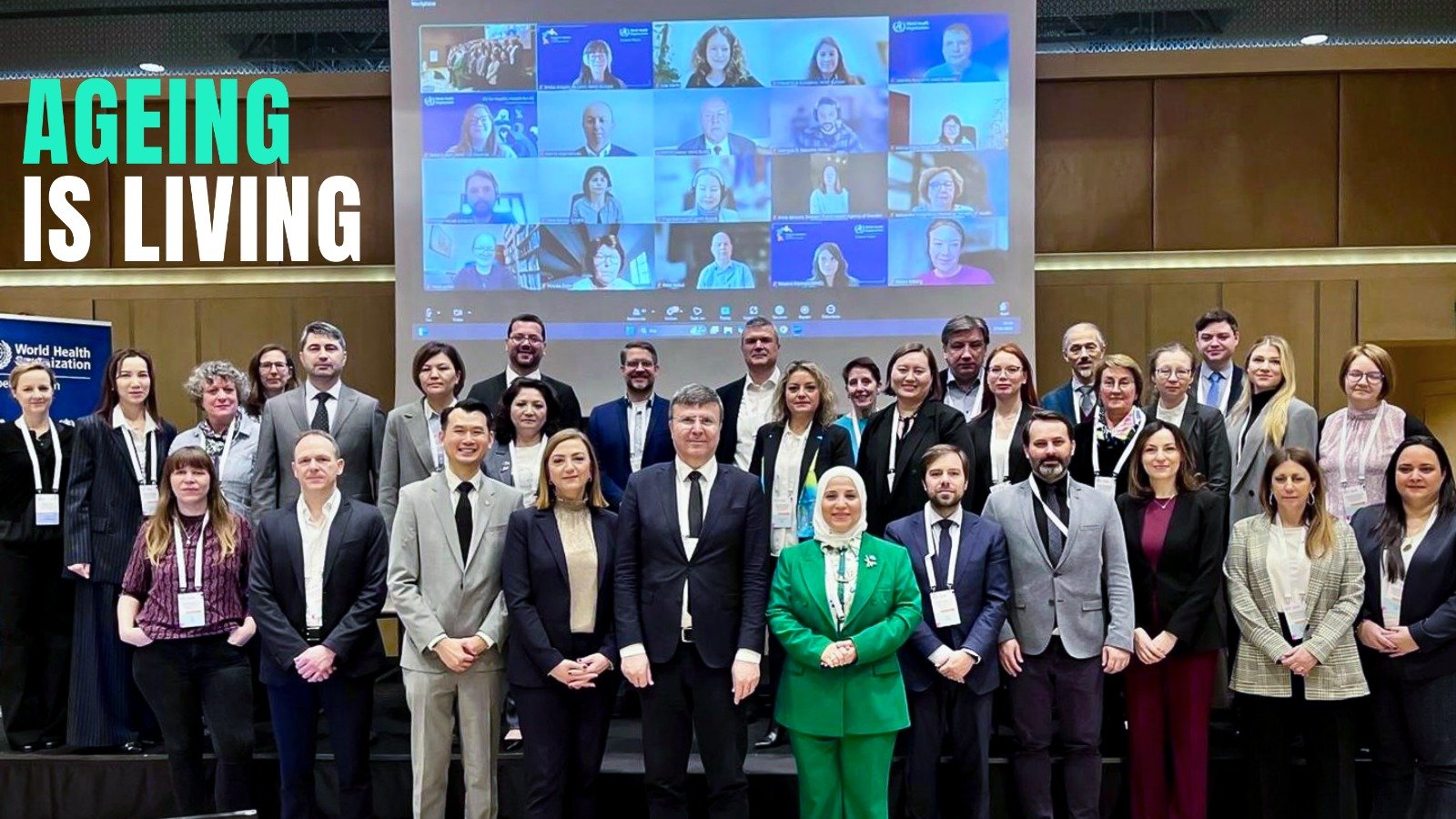

For decades, public policy on ageing was largely organised around three major issues: pensions, healthcare and dependency. The logic was relatively straightforward: as societies aged, the number of retirees increased, chronic disease became more prevalent and governments needed to finance more care. That framework is becoming insufficient. Longevity is forcing governments and international organisations to recognise that population ageing is not merely a social-care challenge but a structural transformation of the economy and society. Europe provides one of the clearest examples. WHO/Europe’s “Ageing is Living: Promoting a Lifetime of Health and Well-being 2026–2030” strategy takes a much broader approach, connecting lifelong prevention, environments that support independence, transformation of health and care systems, social participation and action against ageism. The demographic foundation is clear: more than 200 million people aged 60 and over already live across the WHO European Region, while the population aged 80+ is expected to more than double by 2050. Virtually no major economic policy can therefore be designed for the coming decades without incorporating longevity.
The fundamental change is to stop seeing older people primarily as recipients of services. A society in which millions of citizens will live to 85, 90 or 100 needs to consider how they will live, how long they will work, how they will move around cities, what they will consume, how they will finance potentially thirty years of retirement and who will provide care when required. Longevity consequently enters real estate, urban planning, mobility, employment, education, technology, insurance, financial services, tourism and consumer markets. An inaccessible apartment can become a health problem; inadequate public transport can accelerate isolation; and companies that push experienced professionals out of the workforce at 55 may lose decades of expertise precisely when working-age populations are shrinking.
From financing dependency to investing in prevention and independence
This evolution fundamentally changes the economic logic of ageing. A system built primarily around treating disease and financing dependency intervenes when much of the problem already exists. The emerging model seeks to intervene earlier. Physical activity, nutrition, cardiovascular prevention, cognitive health, vaccination, hearing, vision, mental health and social participation can influence how people arrive at 70, 80 or 90. The objective shifts from merely increasing lifespan towards expanding healthspan — the years lived in good health and with functional independence. Delaying dependency even by several years could reduce demand for hospitalisation, intensive home care and residential services while enabling people to remain active consumers and, in some cases, economically productive for longer.
China illustrates the same transformation at extraordinary scale. The country already had more than 310 million people aged 60 or over at the end of 2024, approximately 22% of its population, and ageing will continue to accelerate. Its response increasingly connects prevention, rehabilitation, long-term care, infrastructure, technology and development of the Silver Economy. Hundreds of millions of older citizens do not represent only public expenditure; they also create enormous demand for housing, healthcare, nutrition, tourism, insurance, technology, mobility and leisure. When very different economies begin broadening their approach simultaneously, the signal for business is powerful: longevity is moving from social policy towards economic and industrial policy.
Housing and cities become health infrastructure
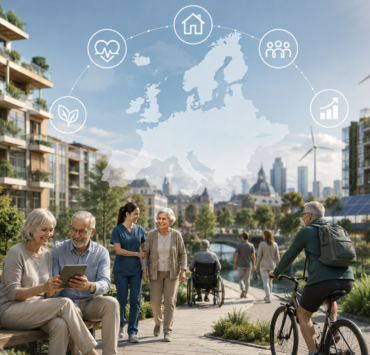
One of the most important consequences will be the transformation of real estate. Most people want to remain independent for as long as possible, yet much of today’s housing stock was not designed for 90- or 100-year lives. This creates demand for accessible, adaptable and technology-enabled housing alongside independent living, active adult communities, cohousing, Senior Living and Longevity Living. Homes can progressively incorporate sensors, telemedicine, automation, fall prevention and home-care services without becoming institutional environments. Urban planning must evolve in parallel: walkable neighbourhoods, accessible transport, green spaces, nearby shops, healthcare services and social environments can help preserve independence and reduce isolation.
The city itself consequently becomes longevity infrastructure. Accessibility improvements are not simply construction projects; they can also function as preventive interventions. A person who can leave home, walk, shop and meet friends maintains physical activity and social connection. Someone trapped in an inaccessible environment may move more rapidly towards isolation and dependency. This creates substantial opportunities for property developers, architects, insurers, construction groups and technology companies.
Longer lives will require longer and more flexible careers
The transformation will also reach employment. The traditional model of education followed by approximately forty years of work and then permanent retirement becomes increasingly difficult to sustain in societies combining low fertility with potential 90-year lives. This does not simply mean forcing people to retire later. It means creating more flexible participation: longer careers with different levels of intensity, reskilling after 50, part-time employment, mentoring, senior entrepreneurship and gradual transitions into retirement.
For companies, the 50+ population should therefore become a strategic component of talent management. Continuous learning, flexibility, ergonomics, preventive health and multigenerational teams can help preserve expertise and productivity. Ageism consequently acquires an economic dimension: excluding experienced workers purely because of age artificially reduces the talent pool at precisely the moment economies need to extend workforce participation.
Care will become one of the major economic infrastructures of the twenty-first century
Even if societies succeed in extending healthspan, populations containing far more people aged 80, 90 and 100 will require additional care. The problem is that the care workforce is unlikely to grow at the same rate. Caregiving therefore becomes a strategic economic issue. Governments and companies will need to combine professionalisation, improved working conditions, training, immigration, support for family caregivers and technology. Robotics, artificial intelligence, remote monitoring and automation can release professionals from repetitive tasks and allow them to concentrate on areas where human interaction is indispensable.
The major conceptual shift is to stop treating care as residual social expenditure and start recognising it as economic infrastructure, comparable in strategic importance to transport, energy or telecommunications. Without sufficient care provision, millions of working-age relatives may need to reduce their hours or leave employment temporarily to support dependent family members. The effects would flow directly into productivity, tax revenues and economic growth.
From the Silver Economy to a true Longevity Economy
The final change is perhaps the most important for business leaders. If governments are beginning to approach ageing transversally, companies should do the same. A 55-, 65- or 75-year-old is not simply a healthcare consumer. They purchase housing, cars, travel, technology, education, fashion, restaurants, insurance, financial products, sport and experiences. The generations entering these age groups now also have very different expectations from their predecessors. They want independence, choice, learning, travel and technology.
The Silver Economy is therefore evolving into something much larger: the Longevity Economy, an economy organised around longer lives. The commercial opportunity is not simply to manage dependency but to participate for decades in prevention, housing, wellbeing, mobility, wealth, education, leisure and care. The market can begin before consumers consider themselves old and continue for thirty or forty years.
The policy shift now underway is consequently much deeper than it may initially appear. Governments are beginning to recognise that preparing more hospitals, pensions and care homes will not be enough. Societies need to redesign how people live, work, move, care, consume and inhabit cities throughout much longer lives. For organisations, this transformation belongs directly on the board agenda. The strategic question is no longer only how ageing will affect social expenditure. It is **which new markets, needs## Prepare to lead the longevity economy
Longevity is transforming public policy, real estate, cities, employment, technology, care and consumer markets simultaneously. The MBA in Longevity Business by FIFTIERS prepares executives, entrepreneurs and investors to understand this transformation, anticipate emerging opportunities and develop business models for an economy increasingly shaped by longer lives.
Discover more from FIFTIERS
Subscribe to get the latest posts sent to your email.
What's Your Reaction?