




Europe launches a major project to measure brain ageing before disease appears


Nearly 13,000 adults will help researchers understand how the brain changes long before cognitive symptoms become clinically visible
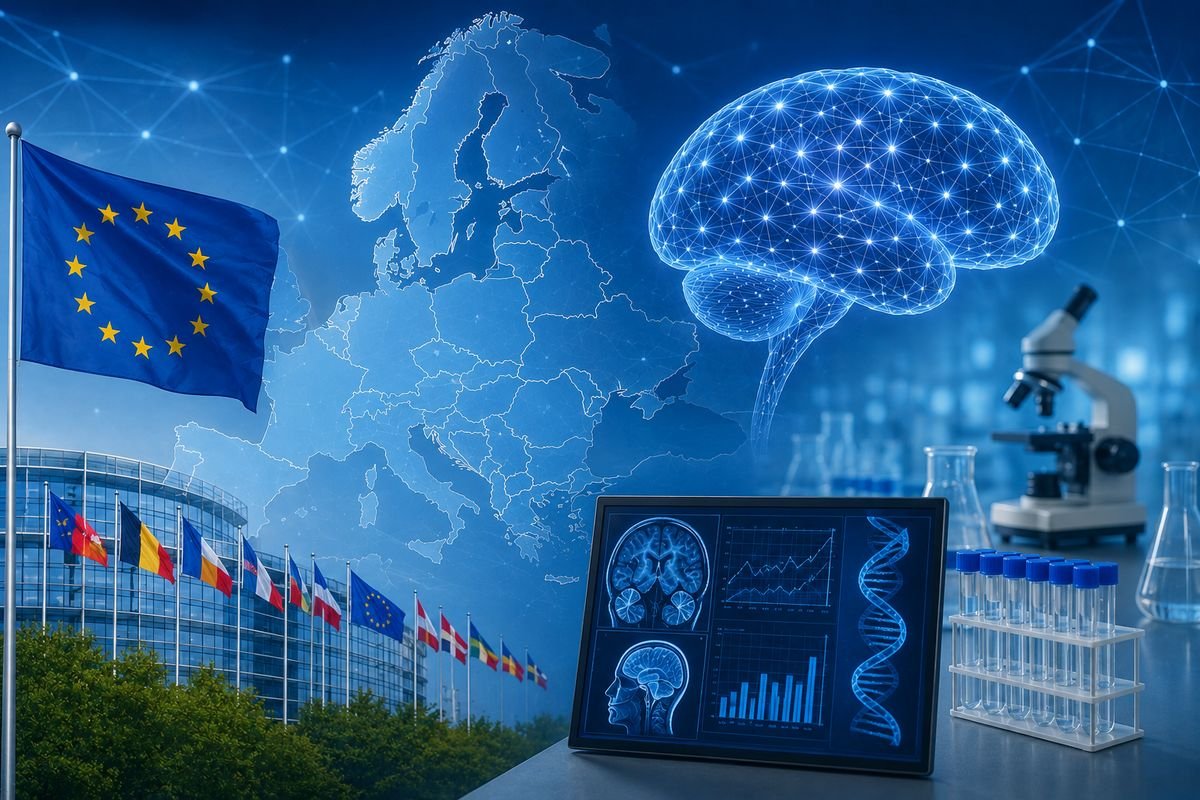
Europe is taking an important step towards one of the most ambitious objectives in preventive longevity medicine: understanding how the human brain ages before neurological disease becomes clinically apparent. The Healthy Brain Ageing (HeBA) project is bringing together data from nearly 13,000 adults to investigate the biological and functional changes that occur across the ageing brain and to identify signals that could potentially reveal deterioration years before conventional symptoms become evident. NeuraLight has announced that its digital neurological biomarkers will be incorporated into the initiative, adding technology designed to measure aspects of brain function through digital assessments. The strategic importance of the project goes far beyond academic neuroscience. If researchers can identify reliable patterns showing that an individual’s brain is ageing faster than expected, the healthcare system could begin moving from diagnosing neurodegenerative disease after symptoms emerge towards measuring trajectories, identifying risk and intervening earlier.
This change is particularly relevant because Alzheimer’s disease and other forms of dementia generally do not begin on the day a person notices memory problems. Biological processes associated with neurodegeneration can develop for many years before clinical diagnosis. Amyloid accumulation, tau pathology, vascular damage, inflammation and other changes may progress silently while an individual continues to function normally. By the time substantial cognitive impairment becomes visible, some neurological damage may already be difficult to reverse. This is why one of the most important questions in brain longevity is no longer simply “Does this person have dementia?” but rather “How is this person’s brain changing over time?” HeBA reflects this shift from diagnosis at a single moment towards longitudinal measurement of brain ageing.
Dementia already affects tens of millions of people worldwide
The scale of the challenge explains the urgency. The World Health Organization estimates that around 57 million people were living with dementia worldwide in 2021, with nearly 10 million new cases occurring every year. More than 60% of people with dementia live in low- and middle-income countries, and Alzheimer’s disease is estimated to account for approximately 60% to 70% of dementia cases. The economic consequences are enormous. Global dementia costs were estimated at around US$1.3 trillion in 2019, and approximately half of that burden was associated with care provided informally by family members and other unpaid caregivers. Population ageing means these pressures could become substantially greater during the coming decades.
The demographic trajectory makes prevention particularly important. Global populations aged 65, 75 and 80+ are expanding, and the absolute number of people at risk of age-related cognitive decline will consequently increase even if age-specific disease rates improve. This creates a challenge for healthcare systems but also an enormous market for diagnostics, digital biomarkers, artificial intelligence, preventive clinics, insurers, senior living operators and companies developing services around brain health and cognitive longevity.
The real breakthrough could be measuring trajectories rather than isolated results
Traditional medical assessments often provide snapshots. A patient attends an appointment, performs a cognitive test, receives a score and perhaps repeats the assessment months or years later. Digital technologies create the possibility of generating much richer longitudinal information. Small changes in reaction time, eye movement, speech, language, motor function, attention or other neurological signals can potentially be measured repeatedly, creating a detailed picture of how an individual’s performance evolves.
The value lies not necessarily in one abnormal result but in the direction and speed of change. Two 65-year-olds could obtain the same cognitive score today while following completely different trajectories. One may have remained stable for five years while the other has experienced gradual decline over the previous eighteen months. A conventional assessment may treat them similarly; a longitudinal system can identify the difference.
This principle is central to the future of longevity medicine. Ageing is a process, not an event. A blood-pressure reading, brain scan, blood test or cognitive score represents one moment within a much longer biological trajectory. The companies and healthcare organisations capable of measuring those trajectories over ten or twenty years may obtain information far more valuable than organisations relying primarily on isolated tests.
Digital biomarkers could transform how brain health is measured
Digital biomarkers are particularly attractive because they may allow neurological information to be collected more frequently and, in some cases, outside specialist clinical environments. Depending on the technology involved, digital assessments can analyse motor responses, eye behaviour, voice, speech, interaction patterns or other measurable features related to neurological function. The objective is not to replace neurologists or conventional diagnostics, but to create additional layers of information that can help identify who may need further investigation.
This could fundamentally change the economics of screening. MRI, PET imaging and specialist neurological assessments are valuable but relatively expensive and resource-intensive. They cannot realistically be performed continuously across entire populations. A validated digital assessment that identifies people at higher risk could potentially act as an initial filter, directing more expensive diagnostic resources towards individuals most likely to benefit from them.
For healthcare systems facing rapidly ageing populations, this model is particularly attractive: digital screening → risk stratification → targeted biomarkers or imaging → specialist evaluation → personalised intervention.
If validated clinically, this type of architecture could allow preventive brain health to scale to millions of people.
Artificial intelligence could identify patterns invisible to conventional assessment
The amount of information generated by longitudinal brain monitoring makes artificial intelligence particularly relevant. Human clinicians are extremely good at interpreting complex clinical contexts, but it is unrealistic to expect a physician to manually analyse millions of data points collected continuously over years. AI systems can identify correlations and changes across multiple variables and potentially recognise combinations that warrant further investigation.
Imagine a person whose cognitive test scores remain within normal ranges but whose speech patterns, sleep, walking speed and reaction time have gradually changed over three years. None of these signals alone necessarily indicates disease. Together, however, they may describe a trajectory worth examining.
This is where multimodal AI could become particularly powerful. Rather than relying on one biomarker, future systems could integrate digital neurological assessments with blood biomarkers, genetics, cardiovascular health, sleep, activity, medical history and imaging. The objective would not be to allow an algorithm to autonomously diagnose Alzheimer’s disease, but to help clinicians understand risk and change with far greater precision.
Blood biomarkers are accelerating the same transformation
The HeBA initiative arrives at a moment when blood-based biomarkers for Alzheimer’s and other neurodegenerative processes are also advancing rapidly. Proteins associated with amyloid and tau pathology can increasingly be measured using blood samples, potentially reducing dependence on more invasive or expensive diagnostic methods in selected contexts. The combination of blood biomarkers and digital neurological measurements could be especially powerful because the two approaches examine different aspects of the disease process: one can provide information about underlying biology while the other can measure changes in function.
The future brain-health pathway could therefore combine biology + behaviour + cognition + imaging + genetics. Instead of waiting until memory loss becomes severe enough to disrupt everyday life, healthcare systems could progressively identify people whose risk profile justifies closer monitoring or intervention.
For companies, this creates a completely new value chain around preventive neurology.
The 50-to-65 age group could become the new market for brain health
Perhaps the most important commercial consequence is that brain health can begin decades before conventional dementia care. A person aged 50 or 55 may have no cognitive symptoms but may already be interested in understanding cardiovascular risk, family history, sleep, hearing, metabolic health and other factors associated with later-life brain health.
This creates a market very different from traditional Alzheimer’s care. The customer is no longer exclusively a patient. It can be a healthy professional willing to invest in preserving cognitive performance.
Clinics could offer annual brain-health assessments. Employers could include cognitive longevity within executive health programmes. Insurers could finance preventive services if they demonstrably reduce future dependency. Wearable companies could integrate validated neurological metrics. Nutrition and fitness businesses could position their products within evidence-based brain-health programmes.
The commercial opportunity therefore expands from treating millions of patients with dementia to potentially serving hundreds of millions of adults interested in preserving cognitive capacity as they age.
Brain health could become an important corporate asset
There is also a direct implication for employers. Professionals aged 50, 55 or 60 frequently hold enormous amounts of institutional knowledge, client relationships and leadership experience. As working lives become longer, maintaining cognitive performance becomes economically relevant for organisations.
Corporate longevity programmes have traditionally focused on general wellness, cardiovascular health or physical fitness. Brain health could become another pillar. Sleep, hearing, hypertension, metabolic health, exercise, stress and social engagement are all areas that can influence healthy ageing and are potentially relevant to long-term cognitive wellbeing.
The concept of cognitive healthspan could therefore become increasingly important: not simply how many years an individual lives, but how many years they retain the ability to learn, decide, create, manage complexity and contribute professionally.
For companies facing ageing workforces, extending cognitive healthspan could become a talent-management strategy.
Senior living could move from managing dementia to monitoring brain health
The implications also reach senior living. Today, the industry often divides residents between independent living, assisted living and memory care according to functional and cognitive needs. Earlier and more accurate monitoring could make those boundaries more dynamic.
A senior living operator could incorporate voluntary cognitive-health assessments, physical exercise, sleep programmes, hearing care, nutrition and social engagement into preventive programmes. Residents showing changes could be referred for professional evaluation before a crisis occurs.
This would represent a major shift in positioning. Senior living would no longer simply provide accommodation and care after decline has occurred. The best operators could become platforms for maintaining cognitive and functional independence.
For investors, this could also create new metrics. Instead of measuring only occupancy and revenue per resident, operators might eventually measure falls avoided, hospitalisations prevented, functional decline delayed or years of independence maintained.
Data governance will be critical because brain data is exceptionally sensitive
The more powerful these technologies become, the greater the responsibility surrounding their use. Information suggesting cognitive deterioration is among the most sensitive personal data imaginable. It could potentially affect employment, insurance, financial decisions and personal relationships if misused.
Large-scale brain-health projects therefore require rigorous privacy, cybersecurity, consent and data-governance frameworks. Participants must understand what information is collected, how it is analysed, who can access it and whether it can be used for secondary research.
Artificial-intelligence systems also require careful validation across different populations. An algorithm trained primarily on one demographic group may perform less accurately in another. Age, education, language, culture, disability and socioeconomic circumstances can influence digital assessments.
The companies that lead this market will therefore need more than sophisticated algorithms. They will need clinical evidence + privacy + transparency + interoperability + trust.
Europe has an opportunity to build a new brain-health infrastructure
A project involving nearly 13,000 adults provides the scale required to explore how digital biomarkers perform across a large population and how brain function changes over time. If initiatives such as HeBA generate clinically useful insights, Europe could help establish standards for a new generation of preventive neurology.
The economic opportunity extends from research institutions to biotechnology, medtech, artificial intelligence, insurance, pharmaceutical development, senior living and preventive healthcare.
It could also create valuable datasets for understanding healthy ageing itself. Studying only people with disease tells researchers what goes wrong. Studying thousands of people whose brains remain healthy as they age may reveal something equally valuable: what goes right.
That information could help identify protective factors and potentially inspire new interventions designed not merely to treat neurodegeneration, but to preserve brain resilience.
The real opportunity is to intervene before dependency begins
The most important change is conceptual. For decades, much of the dementia economy has been organised around what happens after cognitive decline becomes evident: diagnosis, medication, home care, memory care and family support.
The next generation of the Longevity Economy could begin much earlier.
It will attempt to measure brain ageing before disease, identify risk before symptoms, intervene before major decline and preserve independence before care becomes necessary.
Projects such as Healthy Brain Ageing are important because they help build the scientific infrastructure required for that transition.
If researchers can reliably identify the difference between a brain that is ageing normally and one beginning to follow a higher-risk trajectory, the consequences could extend far beyond neurology.
They could change healthcare, insurance, employment, senior living and the economics of ageing itself.
The future of Alzheimer’s may therefore not begin in the memory-care unit.
It may begin decades earlier, when the person still feels completely healthy.
Prepare to lead the longevity economy
Brain health, digital biomarkers, artificial intelligence, preventive medicine and cognitive longevity are creating new markets around a population that will live increasingly long lives. The MBA in Longevity Business by FIFTIERS prepares executives, entrepreneurs and investors to understand these transformations, identify emerging opportunities and develop business models for the global Longevity Economy.
Discover more from FIFTIERS
Subscribe to get the latest posts sent to your email.
What's Your Reaction?