



Taiwan Turns Longevity into an Industry: The Laboratory Anticipating the Future of the 50+ Economy


From Managing Ageing to Building an Entire New Economy
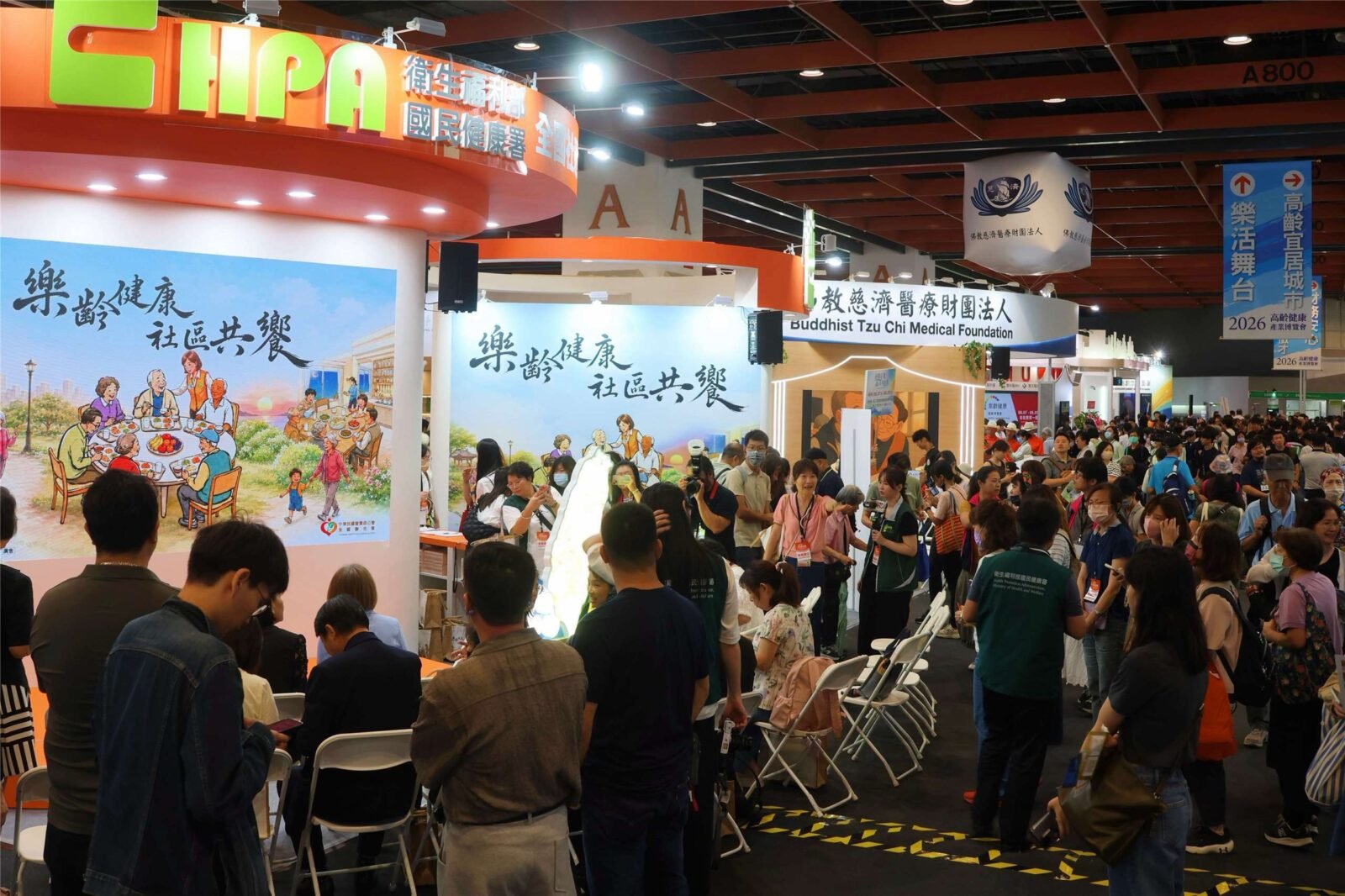
Taiwan is providing one of the clearest signals of where the global economy could be heading over the next decade. From August 7 to 9, 2026, Taipei is hosting a new edition of the Senior Health Industry Expo, but the event represents something far bigger than a trade fair for older adults. Its approach is evolving from the traditional concept of elderly care towards a much broader ambition: enabling longer lives with better health, greater independence, financial security, activity and social participation. The demographic context explains the urgency. Taiwan has moved from being an “ageing society” into the category of a super-aged society, generally defined as one in which at least 20% of the population is aged 65 or over. The speed of this transformation has been extraordinary: Taiwan reached approximately 7% of its population aged 65+ in 1993, exceeded 14% in 2018 and has now crossed the 20% threshold. A demographic transformation that took many European countries several decades has therefore occurred in Taiwan within roughly one generation. This is happening alongside exceptionally low fertility and a population that has already begun to decline, creating a society in which a shrinking proportion of younger workers will increasingly have to support a much larger older population. But Taiwan is beginning to approach this challenge from another perspective. The question is no longer simply how to finance pensions, hospitals or residential care. A much more interesting question is emerging for companies and investors: what products, services, technologies, homes, experiences, financial instruments and new forms of work will be required in a society where living into our 80s, 90s and potentially beyond 100 becomes increasingly common? That question is turning Taiwan into an extraordinary laboratory for the global Longevity Economy.
The “Senior Market” Is Becoming Something Much Bigger
The evolution of the Senior Health Industry Expo itself illustrates the transformation. The 2025 edition brought together approximately 350 companies and 1,200 exhibition spaces, establishing itself as one of Asia’s major events dedicated to industries associated with ageing. Solutions covered food, housing, mobility, daily living, health management and technology, demonstrating how healthcare companies, technology providers, food manufacturers and consumer businesses are beginning to create an interconnected ecosystem around longer lives. The 2026 edition at the Taipei World Trade Center moves even further away from the idea of an exclusively medical event. Visitors can encounter technology-enabled health assessments, financial and insurance planning, exercise programmes, nutrition, preventive health services, social activities and solutions designed to maintain independence for longer. This distinction matters enormously because the Longevity Economy is not the nursing-home market, it is not simply healthcare, and it certainly does not begin when somebody turns 70 or 80. The opportunity starts decades earlier. A 52-year-old executive may be at the highest-earning stage of their career and interested in investment, preventive healthcare, travel, executive education and physical performance. At 62, that same person may begin restructuring wealth, career and housing decisions. At 72, they may continue travelling and consuming premium products while placing greater importance on prevention, mobility and convenience. At 82, assisted services may become increasingly relevant, while at 92 their requirements may be completely different again. Treating all these consumers as a single “senior” segment makes about as much commercial sense as treating a 10-year-old and a 40-year-old as the same consumer simply because both are under 50.
The Real Market Is Extending Independence
The biggest business opportunity created by longevity is not necessarily helping someone reach the age of 100. It is increasing the number of years during which that person can walk, make decisions, spend money, travel, maintain relationships, work, manage their assets and live independently. This distinction between lifespan — the number of years we live — and healthspan — the number of years we live in good health — is transforming longevity science and is now beginning to transform business models as well. Taiwan’s approach reflects this transition, with programmes surrounding healthy longevity increasingly focused on reducing prolonged dependency through physical activity, preventive health, nutrition and technologies that preserve functional capacity. Maintaining strength and mobility is becoming particularly important because muscle loss with age is closely associated with frailty, falls, loss of independence and greater healthcare requirements. Exercise programmes that preserve strength and balance therefore become much more than wellness activities: they can form part of an economic strategy designed to extend independent living. For companies, this dramatically expands the addressable market because prevention can begin at 40 or 50, decades before dependency develops. The customer is no longer exclusively an elderly person requiring assistance; it becomes virtually any adult prepared to invest in maintaining their capabilities for longer.
Six Industries That Could Grow Around the 100-Year Life
The first major opportunity is preventive healthcare. Early diagnosis, biomarkers, wearables, metabolic monitoring, cardiovascular prevention, cognitive health and personalised medicine could progressively shift expenditure from treating disease towards identifying risks before serious conditions emerge. Taiwan has an unusually powerful combination for developing this industry: an advanced healthcare system, world-class technology capabilities, semiconductor expertise, electronics manufacturing, artificial intelligence and a domestic market that is ageing extremely rapidly. The second opportunity is AgeTech. Fall-detection sensors, intelligent homes capable of identifying behavioural changes, AI assistants, cognitive training systems, rehabilitation technologies, robotics and remote monitoring can allow millions of people to remain independent in their own homes for longer. AgeTech can consequently move from being a collection of specialist products into an infrastructure layer connecting healthcare, insurance, housing and family support. The third opportunity is housing. Long-lived populations will require different homes: accessible without looking institutional, capable of incorporating sensors, telemedicine, fall prevention and assistance when necessary. This affects property developers, architects, insurers, technology companies, energy providers and senior-living operators.
The fourth opportunity is longevity nutrition. Preserving muscle, bone health, metabolic function and cognitive performance could create entirely new categories of functional foods. A 55-year-old buying protein products to maintain muscle mass does not need to perceive themselves as “old”; they may instead be a premium consumer interested in performance, prevention and quality of life. The fifth opportunity is the financial economy of longer lives. If somebody retires at 65 and lives until 95, they may need to finance three decades without conventional employment income. Longer lives therefore fundamentally change retirement planning, wealth management, insurance, inheritance strategies, housing decisions and long-term care financing. Financial institutions will increasingly need to answer a different question for their clients: not simply “How much money have you accumulated?”, but “How do we make your wealth last for a potentially 100-year life?” The sixth opportunity may be one of the most underestimated: working for longer. A society with fewer young workers cannot afford automatically to discard the knowledge and productivity of millions of experienced professionals after an arbitrary age threshold. New models will emerge around flexible employment, senior consulting, entrepreneurship after 50, reskilling, mentoring, fractional executives and multi-stage careers. The 100-year life could eventually transform the traditional three-stage model of education, work and retirement into a much more fluid sequence of learning, employment, entrepreneurship, career breaks, retraining and new professional chapters.
AI Could Become the Invisible Infrastructure of Longevity
There is one technology running across almost every one of these opportunities: artificial intelligence. A longevity-ready home could learn a person’s normal movement patterns and identify unusual behaviour. A wearable could detect changes in sleep, activity or cardiovascular indicators. An AI assistant could support medication routines and appointments. A financial platform could identify an unusual transaction and activate fraud-prevention measures. A nutrition platform could personalise recommendations using biomarkers and physical activity, while healthcare systems could prioritise patients according to risk. But one of AI’s most important applications may be less visible: increasing the productivity of the care workforce. Ageing populations simultaneously create more demand for care and a relative shortage of workers capable of providing it. Advanced economies will not be able to solve this imbalance simply by hiring more people. AI-assisted clinical documentation, automated scheduling, remote monitoring, robotics, predictive systems and administrative automation will become increasingly necessary to allow each professional to support more people while maintaining quality. This is precisely why Taiwan deserves close attention: it is one of the world’s most important technology economies and simultaneously one of its fastest-ageing societies. If it successfully connects those two realities, it could develop technologies and business models that can later be exported to Japan, South Korea, China, Europe and other ageing markets.
Asia Shows the Extraordinary Scale of What Is Coming
Taiwan should not be analysed in isolation because it forms part of an enormous demographic transformation taking place across Asia. China already had approximately 297 million people aged 60 or over in 2023, and projections indicate that this population could exceed 400 million by around 2035. Estimates previously reported by the Associated Press placed China’s Silver Economy at around 7 trillion yuan, approximately US$982 billion, with the potential to reach approximately 30 trillion yuan — around US$4.2 trillion — by 2035, representing an increase from approximately 6% to around 10% of China’s economy. The scale helps explain why Asia could become one of the world’s most important centres for longevity innovation. Japan brings decades of experience as a super-aged society; South Korea combines extremely rapid ageing with advanced technology; China provides extraordinary market scale; and Taiwan combines sophisticated healthcare, semiconductor and technology capabilities with an exceptionally fast demographic transition. The global competition will therefore not be limited to developing drugs capable of extending life. Companies will compete to control the platforms through which long-lived populations live, consume, move, eat, manage their money, work, learn and interact.
From the Silver Economy to the Longevity Economy
The terminology itself is evolving. For years, businesses and policymakers talked about the Silver Economy, generally referring to products and services for older adults. The concept of the Longevity Economy is broader because it introduces a life-course perspective and does not begin at 65. A decision made at 45 about exercise can affect mobility at 75; a financial decision at 50 can determine economic security at 85; a home purchased at 55 may require adaptation twenty years later; and a professional skill acquired at 60 could enable another decade of productive work. Companies should therefore begin analysing longevity in the same way they analyse artificial intelligence or sustainability: as a horizontal transformation capable of affecting almost every area of the organisation. This perspective radically increases the size of the potential market because the customer is not defined by an arbitrary age threshold but by needs that emerge throughout increasingly long lives.
What Boards Should Be Asking Today
The first question should not be “Do we sell products for seniors?” It should be: “How will our market change when our customers live ten or twenty years longer?” That immediately leads to much more strategic questions. What percentage of our customers will be over 50 by 2030? Are we segmenting them correctly? Are our products designed for different levels of physical and digital ability? Does our marketing portray mature consumers as aspirational individuals or primarily as vulnerable people? Could we develop premium products around prevention, convenience or independence? Is there a subscription opportunity? Can artificial intelligence personalise the experience? Are we prepared for employees who may want to continue working beyond 65? What happens to our business when a professional career can potentially last 50 years? Companies capable of answering these questions before their competitors could find themselves positioned at the beginning of one of the most powerful structural markets of the coming decades.
Longevity Is Not Simply a Demographic Problem — It Is a New Economic Infrastructure
Taiwan demonstrates why governments and businesses should stop discussing only the “cost of ageing”. Those costs will undoubtedly be considerable: healthcare, pensions, dependency and long-term care will place substantial pressure on public finances and families. But focusing exclusively on those costs ignores the other half of the equation. Hundreds of millions of people will live longer, many of them with accumulated wealth, professional knowledge, purchasing power and a strong desire to continue participating in society. They will require new financial products, new homes, new ways to travel, new technologies, new forms of nutrition, new healthcare services, new experiences and new ways of working. Every additional year of healthy life can potentially represent another year of consumption, economic activity, learning, investment, entrepreneurship and value creation. Taiwan is beginning to treat this transformation as an industry and other countries will follow. One of the greatest business opportunities of the 2027–2040 period may therefore not simply be helping humanity live longer, but building everything people need to live better throughout those additional years.
Prepare to Lead the Longevity Economy
Demographic transformation is creating new markets across healthcare, technology, tourism, real estate, nutrition, financial services, luxury, education and services designed for a population that will increasingly live longer lives. The MBA in Longevity Business at LUXONOMY University is designed for executives, entrepreneurs and business leaders who want to understand this new economy, identify opportunities around the 50+ consumer and develop business models prepared for the 100-year life.
Discover the MBA in Longevity Business:
https://luxonomy.university/course/mba-in-longevity-business/
Discover more from FIFTIERS
Subscribe to get the latest posts sent to your email.
What's Your Reaction?