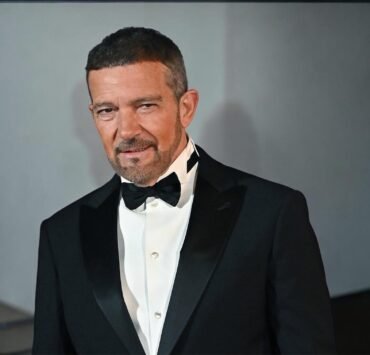





FIFTIER of the week: Robert De Niro turns 83



Robert De Niro turns 83 on August 17. More than six decades after beginning his professional career, he continues to work, take on new projects and occupy a central place in contemporary culture. That is why FIFTIERS has chosen him as our FIFTIER of the week: not simply because of everything he has achieved, but because of what his extraordinary trajectory represents in a world beginning to understand that growing older and becoming irrelevant are not the same thing.
83 and still in the game
Robert Anthony De Niro was born in New York City on August 17, 1943. This Monday he turns 83, with a professional career that began in the 1960s and now stretches across seven decades. Two Academy Awards, performances that have become part of cinema history and one of Hollywood’s most extraordinary creative partnerships with Martin Scorsese would have been more than enough to justify retirement decades ago. De Niro chose another path: he kept going. In 2025 he starred in Zero Day, his first leading role in a television series, playing a former U.S. president called out of retirement to investigate a devastating cyberattack. That same year, he took on the remarkable challenge of portraying both Vito Genovese and Frank Costello in The Alto Knights. At an age when previous generations were generally expected to have withdrawn completely from professional life, De Niro was still experimenting with new formats, characters and creative challenges.
That is precisely why his birthday matters to FIFTIERS. The interesting story is not simply that a Hollywood star can continue working at 83. It is what it represents culturally when millions of people can look at an 83-year-old man and still see an actor, producer, entrepreneur, creator and protagonist before seeing an old person. We are entering a historic period in which chronological age tells us progressively less about an individual’s capabilities, ambitions or potential role in society.
A career measured in decades, not seasons
When De Niro began building his career, the world was radically different. There was no internet, no smartphone, no streaming industry and certainly no generative artificial intelligence. The young man who began performing on small New York stages eventually became one of the defining actors of his generation, remaining professionally relevant through extraordinary technological, economic and cultural transformations.
There is a lesson here that extends far beyond cinema. For much of the 20th century, we built our lives around a seemingly fixed sequence: education, work, retirement and withdrawal. Rising longevity is forcing us to reconsider that architecture. If millions of people are going to live for decades beyond 60 or 65, we cannot continue organising society as though those years were merely an epilogue. The longevity revolution presents us with a much more ambitious question: what are we going to do with all those additional years?
De Niro’s trajectory offers one possible answer. It is not necessarily about doing the same thing forever. It is about remaining connected to the world, adapting to new formats and continuing to find places where accumulated experience creates value. His first leading television-series role arrived after his 80th birthday. There is something quietly revolutionary about that: there can still be first times after eight decades of life.
Experience as an asset
There is also an entrepreneurial dimension to De Niro’s story that is frequently overshadowed by his acting career. His activities have extended over decades into production, restaurants, hospitality and the cultural development of New York. He was among the founders of the Tribeca Film Festival and has been closely associated with major hospitality and restaurant ventures. His trajectory illustrates something fundamental about the longevity economy: a long professional life does not have to take place within a single profession.
This is likely to become increasingly common. Someone who reaches 50 in good condition may still have decades of economic, intellectual and entrepreneurial activity ahead. That changes the meaning of career, education, savings, entrepreneurship, housing, leisure, healthcare and consumption. People over 50 are not merely a growing demographic segment; they are becoming one of the defining economic forces of the coming decades.
For businesses, failing to understand this transformation could become one of the great strategic mistakes of the 21st century. Marketing remains disproportionately obsessed with youth. Organisations still treat professionals in their 50s as too old for certain opportunities. Products and services continue to be designed around an outdated image of ageing. Meanwhile, populations are getting older and millions of consumers over 50 hold wealth, experience, purchasing power and an appetite to continue enjoying life, learning, investing, travelling, creating businesses and consuming.
Life can begin again in your 80s
Another aspect of De Niro’s recent life makes his selection particularly fascinating. In 2023, at 79, he became a father again with the birth of his seventh child, Gia. Whatever one’s personal view of fatherhood at such an advanced age, the event dramatically challenges traditional assumptions about the chronology of life.
For generations, we associated particular milestones with particular ages. Education belonged to youth; career development to adulthood; retirement to old age. Longevity is disrupting that timetable. We will increasingly encounter people studying at 60, starting businesses at 70, changing careers after 50, falling in love again at 80 or beginning projects at an age when previous generations would have assumed their active lives were already over.
This does not mean denying ageing. Being 83 carries biological realities that no aspirational narrative can erase. The real revolution lies in refusing to confuse ageing with disappearance. We can acknowledge the limitations associated with age while simultaneously building societies in which people remain able to contribute for as long as they have the ability and desire to do so.
The quiet revolution of the new 80s
A few decades from now, we may look back at today’s perception of people in their 70s and 80s in much the same way we now look at outdated 20th-century assumptions about people in their 50s. Preventive medicine, biotechnology, AI-powered healthcare, personalised nutrition, early diagnosis, new housing models and changing patterns of work could profoundly reshape the experience of ageing.
Not everyone will reach 83 and still be working like Robert De Niro, nor should that become the objective. Longevity should never mean imposing productivity until the final day of life. It should mean expanding possibilities. The possibility to work for those who want to work. To build businesses for those who want to build them. To learn, travel, create, connect, fall in love or simply enjoy life for many more years without a number automatically determining what behaviour society considers appropriate.
De Niro represents precisely that freedom. At 83, he has nothing left to prove. His cinematic legacy was secure decades ago. Yet he continues to step in front of cameras, encounter new characters and participate in projects that belong completely to the present rather than merely celebrating his past.
Robert De Niro, FIFTIER of the week
This week, we are not simply celebrating the birthday of one of the greatest actors in cinema history. We are celebrating something far more interesting: the possibility of imagining our 80s differently.
Robert De Niro was born in 1943. He has lived through the transformation of New York, the cultural revolution of the 1960s, the emergence of the blockbuster, global television, the internet, streaming platforms and now the age of artificial intelligence. And he is still here, professionally active, participating in contemporary culture and adding new chapters to a biography that could have been considered complete many times over.
Perhaps that is one of the great lessons of longevity.
It is not simply about adding years to life. It is about preventing society from deciding too early what we are allowed to do with them.
For all these reasons, in the week in which he turns 83, Robert De Niro is our FIFTIER of the week.
Discover more from FIFTIERS
Subscribe to get the latest posts sent to your email.
What's Your Reaction?