





An AI-Powered Orbital Laboratory Could Accelerate the Discovery of Anti-Aging Therapies

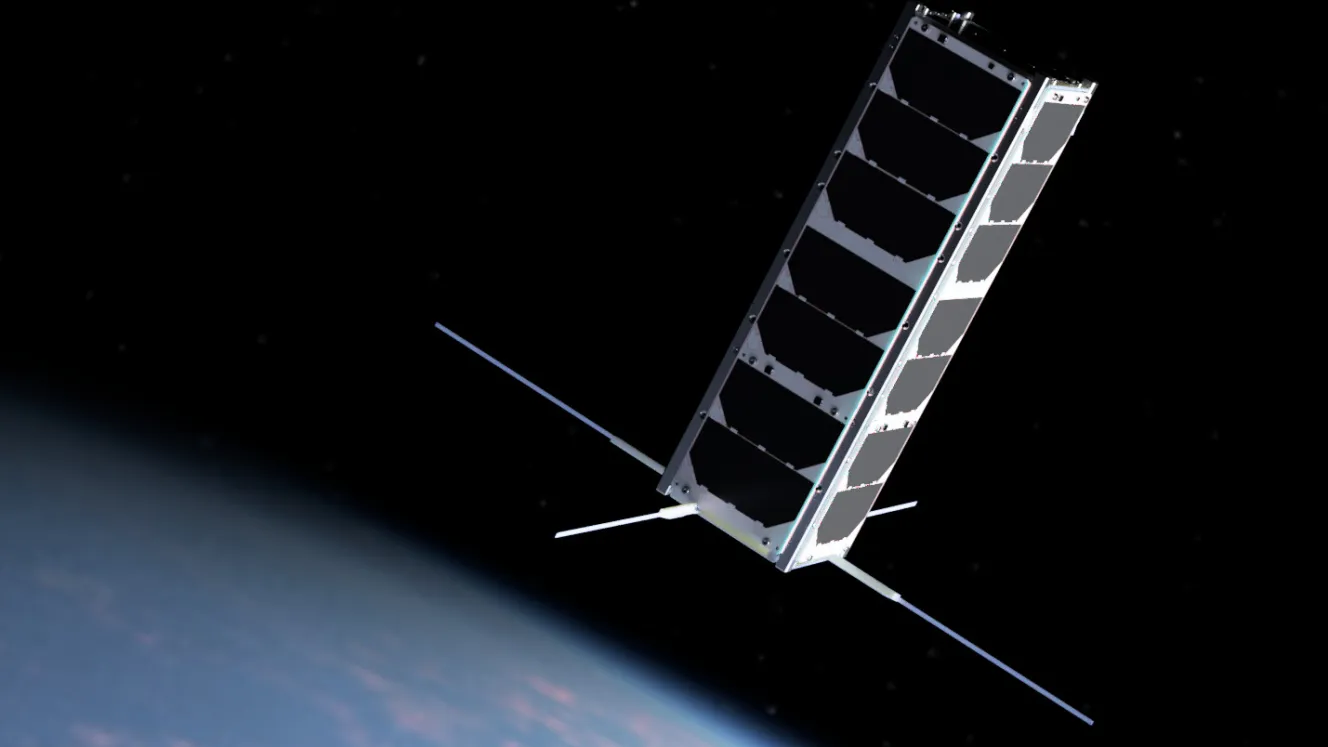

The race to extend healthy human lifespan has just taken a leap that, until recently, belonged to the realm of science fiction. While much of today’s longevity research continues to take place in universities, hospitals, and biotechnology laboratories around the world, a new generation of scientists has decided to look beyond Earth. More than 500 kilometers above the planet, a fully autonomous laboratory has begun a mission that could fundamentally reshape the way tomorrow’s medicines are discovered.
British startup Mass Balance has successfully launched an innovative miniaturized laboratory into orbit, designed to conduct chemical and biological experiments under microgravity conditions. Developed in collaboration with the Austrian company Tumbleweed and deployed aboard a SpaceX launch, the mission aims to demonstrate that space can provide an unparalleled environment for studying some of the most complex molecular processes associated with human aging. Although this first mission is primarily a technological demonstration, its long-term ambition is far greater: to generate entirely new biological data that can be used to train artificial intelligence systems capable of dramatically accelerating the development of therapies for age-related diseases, including Alzheimer’s disease, Parkinson’s disease, amyotrophic lateral sclerosis (ALS), and several forms of cancer. The project represents one of the most advanced examples of the convergence between biotechnology, artificial intelligence, and space exploration.
The scientific interest in conducting research beyond Earth’s atmosphere lies in one fundamental difference: gravity. In conventional laboratories, liquids are constantly affected by sedimentation and convection, subtle physical forces that influence the natural behavior of molecules. While these effects are often invisible to the naked eye, they introduce microscopic disturbances that make it far more difficult to observe delicate biological interactions with absolute precision. In microgravity, however, these disturbances almost entirely disappear. Proteins and other biomolecules are free to interact in a far more stable environment, allowing researchers to capture molecular events with a level of accuracy that is simply unattainable on Earth. That advantage could prove decisive in understanding the behavior of highly complex proteins responsible for many of the neurodegenerative diseases that become increasingly common with age.
One of modern medicine’s greatest challenges involves studying what scientists call intrinsically disordered proteins. Unlike conventional proteins, these molecules do not maintain a stable three-dimensional structure. Instead, they continuously change shape, making them extraordinarily difficult to observe and even more challenging to target with therapeutic drugs. Many of these proteins play central roles in devastating neurodegenerative disorders that affect millions of people worldwide and whose prevalence is expected to rise sharply as global populations continue to age. Researchers often compare the challenge to trying to photograph an object that constantly changes shape while moving at high speed. The orbital laboratory is designed to capture information that has, until now, remained largely inaccessible under Earth’s gravitational conditions.
The data collected during the mission will subsequently be processed using advanced artificial intelligence models. In recent years, AI systems such as AlphaFold have transformed structural biology by accurately predicting the three-dimensional structures of millions of proteins. Yet even the most sophisticated AI models remain fundamentally dependent on the quality of the data used to train them. When experimental data are incomplete or limited, predictive performance inevitably suffers. The unique molecular observations generated in microgravity are expected to provide an entirely new class of biological datasets, enabling AI to better understand protein dynamics associated with aging, identify novel therapeutic targets, and substantially reduce the time required to discover new medicines.
The economic implications are equally remarkable. Developing a single new drug remains one of the most expensive and time-consuming industrial processes in the world. Industry estimates suggest that bringing a medicine from laboratory discovery to commercial approval typically requires between ten and fifteen years and investments exceeding two billion dollars. Moreover, nearly 90 percent of drug candidates ultimately fail before reaching patients. Any technology capable of improving scientists’ understanding of disease mechanisms has the potential to eliminate years of research, save hundreds of millions of dollars, and accelerate the arrival of life-changing therapies for millions of people worldwide.
The mission also illustrates the rapid convergence of two of the twenty-first century’s most transformative economic forces: the space economy and the longevity economy. According to international market estimates, the global space economy has already surpassed $600 billion and could approach $1.8 trillion by 2035, driven by advances in satellite technology, orbital manufacturing, communications infrastructure, and scientific research. At the same time, the longevity economy is emerging as one of the world’s most powerful engines of growth, fueled by rising life expectancy, demographic aging, preventive medicine, precision healthcare, biotechnology, and artificial intelligence. Mass Balance’s orbital laboratory sits precisely at the intersection of these two global megatrends, demonstrating how space itself may become a new platform for biomedical innovation.
Research conducted in microgravity is no longer the exclusive domain of national space agencies. An increasing number of biotechnology startups and pharmaceutical innovators are using orbital platforms to grow higher-quality protein crystals, investigate the behavior of human cells, manufacture advanced biomaterials, and perform experiments that simply cannot be replicated under Earth’s gravity. All indications suggest that, over the coming decade, orbital laboratories will evolve from experimental projects into essential infrastructure for pharmaceutical research and drug discovery.
For the longevity sector, this mission represents far more than another technological breakthrough. It signals a profound shift in how biomedical innovation will be pursued in the years ahead. Artificial intelligence will undoubtedly remain at the heart of future drug discovery, but its ultimate potential will increasingly depend on the quality and uniqueness of the biological data it can access. If space offers an environment where such data can be generated with unprecedented precision, Earth’s orbit may soon become one of the world’s most valuable laboratories for advancing healthy longevity.
The race to extend healthy human lifespan is no longer taking place solely inside hospitals, universities, or biotechnology centers. From this week onward, it is also unfolding quietly above our heads, where a laboratory no larger than a grapefruit may be generating the knowledge that powers the next generation of therapies against aging.
Discover more from FIFTIERS
Subscribe to get the latest posts sent to your email.
What's Your Reaction?