



Female longevity opens a new frontier: the ovary could reveal clues that go far beyond fertility


Science is beginning to study female reproductive ageing as part of whole-body longevity
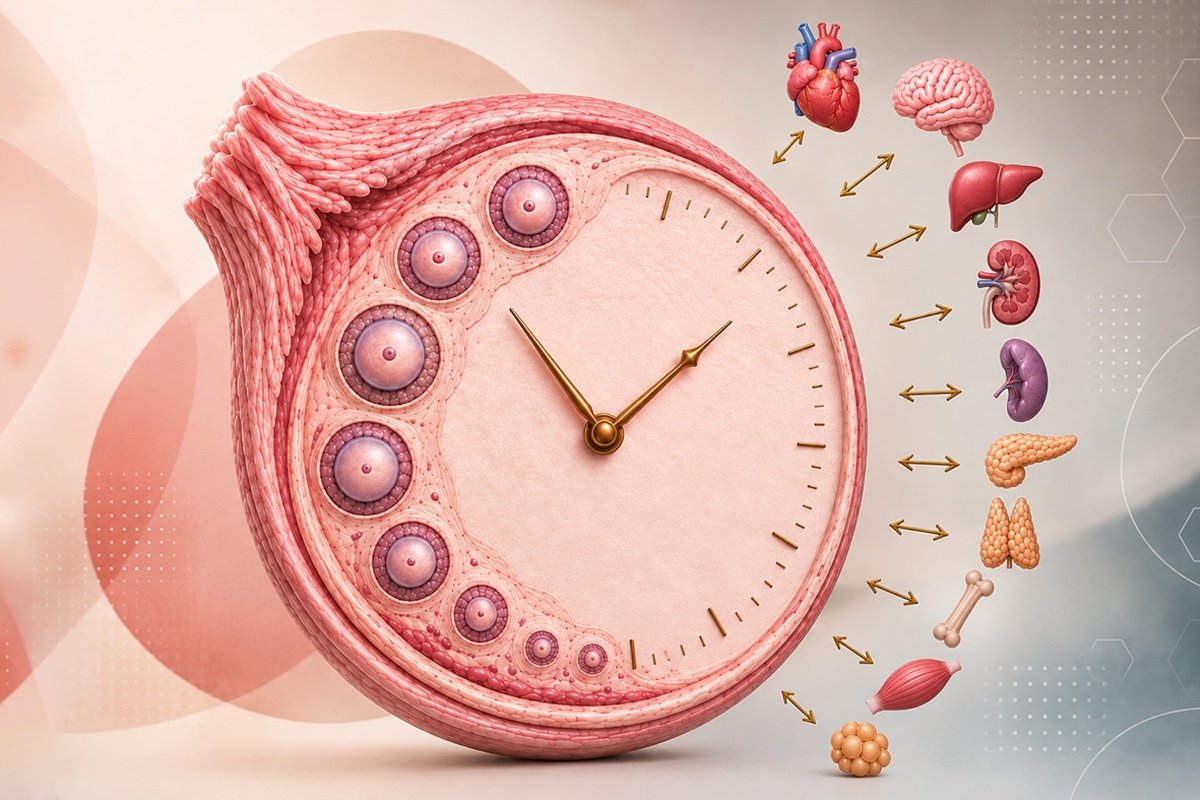
Female longevity is emerging as one of the most compelling fields in ageing research. A new scientific perspective developed by researchers at the Buck Institute for Research on Aging and published in Cell proposes what is known as the Reproductive Resilience Hypothesis, a hypothesis that invites us to reconsider the role of the female reproductive system within the ageing of the body as a whole. For decades, the ovary has been studied primarily in relation to fertility, hormone production and menopause. This new perspective raises a much broader question: could reproductive ageing be connected to biological networks that also affect metabolism, the brain, bones, immunity and tissue repair? The researchers do not claim that ovarian ageing is the general cause of human ageing and caution that the hypothesis requires experimental validation, but the proposal opens up a scientific and business field with enormous potential.
Female biology also presents an extraordinary characteristic: reproductive function ages earlier than many other systems in the body. Fertility declines considerably before many diseases associated with advanced age appear, and menopause typically occurs around the age of 50, while female life expectancy in many developed countries is well above 80. This means that a woman may spend approximately one third of her life after menopause. From both a public health and market perspective, millions of women therefore spend decades in a biological stage that has historically received far less research and innovation than pregnancy, fertility or contraception.
More than one billion women could be going through menopause or postmenopause
The global scale makes this far more than a specialist medical issue. Estimates commonly used across the sector suggest that around one billion or more women will be experiencing menopause or postmenopause during this decade, creating an extraordinarily diverse population requiring solutions across cardiovascular health, bone health, muscle preservation, metabolism, sleep, cognition, sexual health and emotional wellbeing. The menopausal transition can also coincide with years of considerable professional and family responsibility. Many women go through this stage while holding executive positions, running businesses, simultaneously caring for children and ageing parents, and experiencing some of the highest-earning years of their lives.
The hormonal changes associated with menopause are linked to changes across different physiological systems, but it is essential to avoid oversimplification. Not all women experience the same symptoms or risks, and menopause should not be treated as a disease. This is precisely why the scientific opportunity lies in moving towards far more personalised medicine. Reproductive history, genetics, body composition, cardiovascular health, bone density, sleep, physical activity, metabolism and other factors could help build preventive models tailored to each individual woman.
From the menopause market to the female longevity industry
From a business perspective, the shift could be profound. Until now, a considerable proportion of commercial innovation around menopause has focused on supplements, products for hot flushes, hormone therapy, cosmetics and tracking applications. The next generation could be far broader: advanced diagnostics, biomarkers, cardiovascular prevention, brain health, muscle, bone, metabolism, sleep, nutrition, exercise and personalised medicine. In other words, menopause could cease to be treated as an isolated event and instead become a window through which health strategies for the following three or four decades are designed.
The hypothesis proposed by the Buck Institute reinforces precisely this systemic perspective. If reproductive biology communicates with different tissues and physiological systems, a deeper understanding of these relationships could generate new therapeutic targets and biomarkers. We are still far from being able to translate this hypothesis into specific treatments, but the scientific direction is important: female longevity research should not be limited to replicating in women studies conducted primarily in men.
The historical data gap also represents an opportunity
For decades, women were underrepresented in numerous clinical trials, and part of our medical knowledge was built using men as the physiological reference. Although this situation has improved, enormous opportunities remain to develop female-specific datasets, longitudinal studies and algorithms capable of understanding women’s health more accurately throughout the entire lifespan. Artificial intelligence could be particularly valuable when high-quality data is available: integrating reproductive history, laboratory tests, wearables, sleep, physical activity, nutrition and symptoms could make it possible to identify patterns that would be impossible to detect through isolated medical consultations.
However, there is an obvious risk. AI trained on insufficient or biased data can reproduce exactly the same historical limitations it is intended to address. Companies entering this market will therefore need clinical evidence, population diversity, privacy safeguards, explainability and medical validation. In female longevity, trust could become as powerful a competitive advantage as the technology itself.
A new premium market for prevention
There is also a particularly compelling opportunity among women aged 45 to 65 with high purchasing power and a willingness to invest in prevention. Regular assessments of body composition, cardiovascular health, bone density, strength, sleep, metabolism and cognition could be integrated into annual female longevity programmes. Clinics, insurers, premium fitness operators, nutrition companies and digital platforms could compete to provide these ecosystems.
The opportunity is not about medicalising female ageing or promising permanent youth. It is about helping a 50-year-old woman preserve health, independence, strength, cognitive capacity and quality of life for the decades ahead. That change in narrative could completely transform the market.
Companies will also need to incorporate menopause into their talent strategies
The business dimension extends far beyond the healthcare sector. Women between the ages of 45 and 55 are often at stages of their careers characterised by extensive experience and considerable responsibility. If symptoms associated with the menopausal transition affect sleep, concentration or wellbeing and organisations lack appropriate policies, the consequences can include absenteeism, reduced productivity or the loss of experienced talent. Companies capable of providing flexibility, reliable health information, appropriate healthcare support and a stigma-free culture could improve both retention and engagement.
Female longevity, therefore, will not simply become another healthcare category. It will affect talent, insurance, employee benefits, food, fitness, beauty, technology, banking, tourism and luxury. A woman who may live for another thirty or forty years after menopause represents one of the most important groups of consumers and professionals in the economy of the future.
The greatest opportunity lies in extending female healthspan
The Buck Institute research should be interpreted with caution: this is a scientific hypothesis, not evidence that intervening in ovarian ageing can extend human lifespan. Its importance lies precisely in broadening the questions we ask about female ageing. If we can better understand how reproduction, metabolism, the brain, immunity, muscle and bone interact, we may be able to design far more precise preventive strategies.
The market that could emerge around this knowledge will be enormous. The next generation of female longevity companies will not simply sell solutions for menopause. They will offer something far more valuable: more years of life with health, independence and capability.
Prepare to lead the longevity economy
Female longevity represents one of the major emerging opportunities within the Longevity Economy. The MBA in Longevity Business by FIFTIERS prepares entrepreneurs and executives to identify opportunities in preventive health, FemTech, AgeTech, nutrition, technology and new business models designed for an increasingly long-lived society.
Discover more from FIFTIERS
Subscribe to get the latest posts sent to your email.
What's Your Reaction?