






ANTONIO BANDERAS, FIFTIER OF THE WEEK™

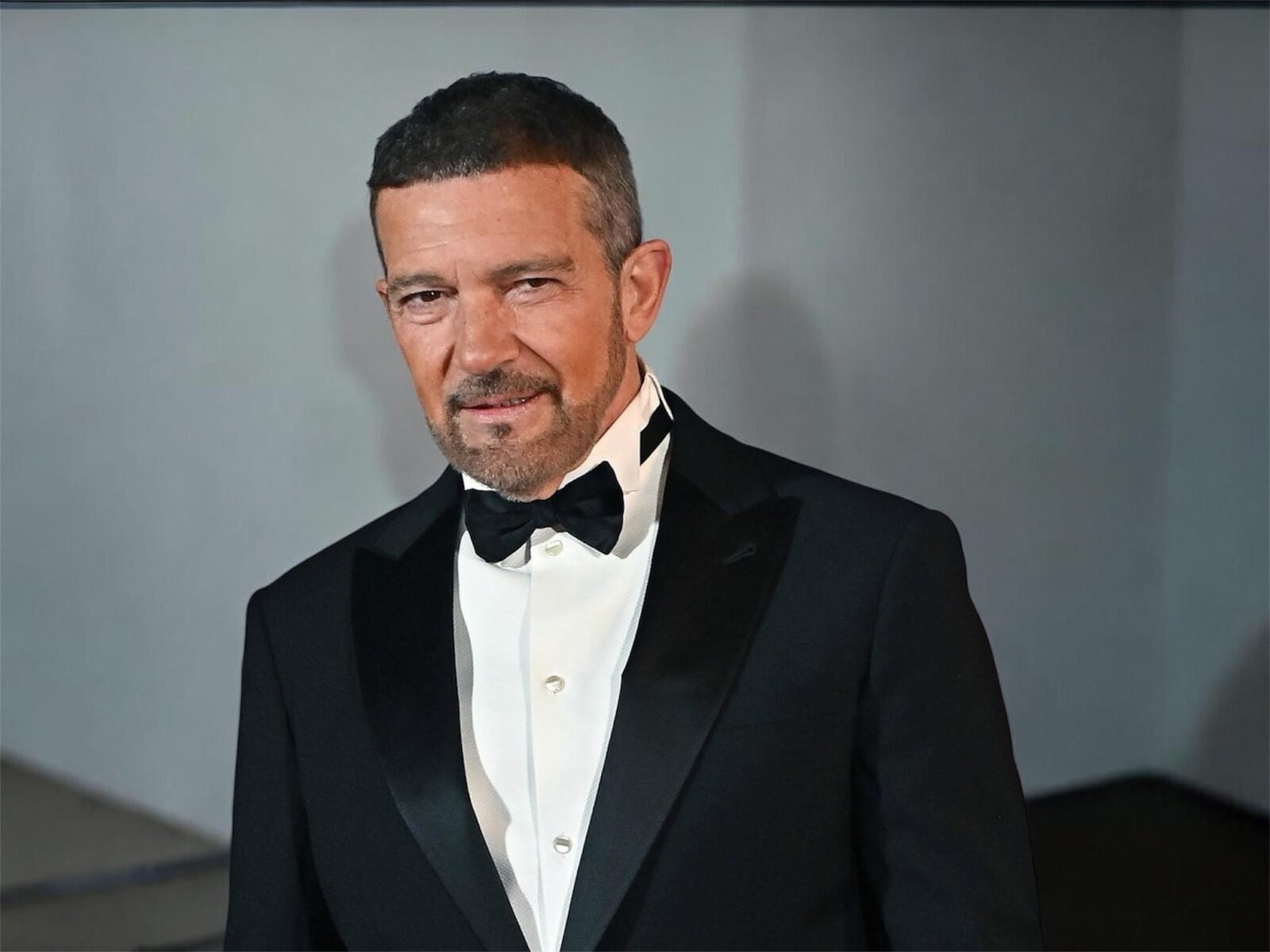

Actor, director, producer, cultural entrepreneur and one of the most internationally recognised Spanish figures of recent decades, Antonio Banderas turns 66 on August 10. But his story is particularly relevant to FIFTIERS for one compelling reason: some of the most remarkable chapters of his personal and professional reinvention have unfolded after the age of 50.
Antonio Banderas turns 66 on August 10, 2026, having evolved into something far broader than a movie star. José Antonio Domínguez Bandera was born in Málaga, Spain, on August 10, 1960, and went from an Andalusian childhood and an early passion for the performing arts to building a career that would take him from independent theatre in post-Franco Spain to Pedro Almodóvar, Hollywood, Broadway, Cannes and the Academy Awards. More than four decades after beginning his professional journey, he continues to act, produce, direct and develop cultural projects from Málaga. This is precisely why Banderas so powerfully embodies the idea of a FIFTIER: someone for whom reaching a certain age does not signal withdrawal, but rather provides the experience, reputation, perspective and freedom to decide what to build next.
From Málaga to Becoming One of Spain’s Most Recognisable Faces in the World
Before cinema, there was theatre. Banderas moved to Madrid as a young man and began working professionally as an actor during a period of profound cultural transformation in Spain. His encounter with Pedro Almodóvar would change the direction of his career. He appeared in key films from the director’s early and later work, including Labyrinth of Passion, Matador, Law of Desire, Women on the Verge of a Nervous Breakdown, Tie Me Up! Tie Me Down!, The Skin I Live In and, decades later, Pain and Glory. Their artistic relationship is particularly revealing when viewed through the lens of professional longevity. Banderas was not destined to remain merely the young actor Almodóvar discovered in the 1980s. He returned to work with him as a mature performer and eventually delivered one of the most acclaimed performances of his entire career.
With Pain and Glory, Banderas achieved one of his greatest professional milestones at an age when traditional career narratives once suggested people should already be contemplating their final professional chapter. At the 2019 Cannes Film Festival, aged 58, he won the Best Actor award for his portrayal of Salvador Mallo. The performance subsequently earned him the Goya Award for Best Actor and his first Academy Award nomination for Best Actor. One of the defining peaks of Antonio Banderas’s career therefore arrived not at 30 or 40, but as he approached 60.
His move into American cinema had begun decades earlier. Banderas arrived in Hollywood with limited command of English and progressively built a career that made him one of the relatively few Spanish actors of his generation to maintain a sustained presence in major international productions. The Mambo Kings, Philadelphia, Interview with the Vampire, Desperado, Assassins, Evita, The Mask of Zorro, The 13th Warrior and the Spy Kids franchise are among the productions that demonstrate the extraordinary range of his filmography. Then came a character that introduced his unmistakable voice to an entirely new generation: Puss in Boots, whom Banderas transformed into one of the most recognisable characters in the Shrek universe before the character went on to headline his own films.
Hollywood, Broadway and a Career That Refused to Stay in One Place
Cinema, however, has never fully explained Antonio Banderas. In 2003, he made his Broadway debut starring in the musical Nine. Once again, he deliberately stepped outside familiar territory. His performance earned him a Tony Award nomination for Best Actor in a Musical, alongside other theatrical recognition. In 2005, he received a star on the Hollywood Walk of Fame, cementing an international position that would have seemed almost unimaginable for the young actor who had left Málaga decades earlier.
Banderas also moved behind the camera. He directed Crazy in Alabama and later Summer Rain (El camino de los ingleses), expanding a career in which acting has never been his only relationship with storytelling and creative production. Yet it is when we examine what happened after the age of 50 that his story becomes particularly relevant to the FIFTIERS generation.
Banderas turned 50 in 2010. By then, he could easily have spent the following decades managing an already exceptional career. He had conquered Hollywood, worked with leading international filmmakers, starred in major productions, succeeded on Broadway and achieved a level of global recognition reached by very few Spanish performers. Instead, between the ages of 50 and 66, some of the events that now define his career took place. He returned powerfully to Almodóvar’s creative universe, won Best Actor at Cannes, received his first Academy Award nomination, embarked on a major new theatrical chapter, launched an ambitious cultural project in Málaga and transformed his return to his roots into an entirely new definition of success.
The Heart Attack That Changed His Priorities
There is also a very clear dividing line in this second life. In 2017, at the age of 56, Antonio Banderas suffered a heart attack while living in Surrey, England. Three stents were implanted in his coronary arteries. Banderas has subsequently spoken openly about how profoundly the experience altered his priorities. In a 2026 interview, he even described the heart attack as the best thing that had happened to him—not because he underestimated its seriousness, but because it became a wake-up call that forced him to reconsider how he wanted to spend the rest of his life. He gave up smoking and began questioning where his time, energy and creativity should be invested.
What happened next is particularly revealing. After spending much of his life conquering increasingly larger stages, Málaga returned to the centre of his world. But returning home did not mean withdrawing from international life. It meant building something new from home. Banderas has explained that he realised he no longer needed to remain permanently trapped within Hollywood’s logic of success and discovered in Málaga another way of combining happiness, creativity and professional ambition.
At 56, an age at which conventional professional narratives have historically begun discussing consolidation, succession or gradual retirement, Banderas was actually preparing one of the most ambitious reinventions of his career.
Teatro del Soho: Starting Again at Nearly 60
On November 15, 2019, when Banderas was 59, the Teatro del Soho CaixaBank opened its doors in Málaga. This was not simply a celebrity lending his name to a cultural venue. Banderas had dreamed of having a theatre since the 1970s, and the project became a vehicle for bringing together everything he had learned during decades of international experience with Spanish talent, theatrical production and his commitment to Málaga.
The theatre opened with A Chorus Line, a production in which Banderas participated as actor, co-director and producer. Other ambitious productions followed, together with an increasingly strong commitment to producing major musicals from Málaga. His work on Stephen Sondheim and George Furth’s Company, for example, again placed him simultaneously in creative leadership and performance roles.
This chapter is fundamental to understanding why we have chosen Antonio Banderas as FIFTIER OF THE WEEK™. He did not return to Málaga simply to look back at everything he had achieved. He returned to create infrastructure, produce theatre, direct productions and generate opportunities for other professionals. The transition from performer to producer, director and cultural entrepreneur illustrates something central to professional longevity: experience can become productive capital.
Some of His Greatest Achievements Came After 50
If we divided Antonio Banderas’s career into the years before and after his 50th birthday, the second half would challenge many assumptions about ageing. After turning 50, he reunited with Almodóvar for The Skin I Live In. He later delivered Pain and Glory, arguably one of the most celebrated performances of his career. He won Cannes at 58. He received the Goya for the same performance. He earned his first Oscar nomination as he approached 60. He opened his own theatre at 59. He returned intensively to musical theatre. He directed and starred in Company. And he continued appearing in major international productions, including a historic franchise such as Indiana Jones, well into his 60s.
His career therefore demonstrates that a professional trajectory does not necessarily have to peak during youth and then enter a long decline. It can change shape. It can produce new peaks. It can move from execution to leadership, from being hired to creating opportunities, and from participating in other people’s projects to building institutions of one’s own.
That distinction matters. The younger Banderas needed to win opportunities. The mature Banderas can create opportunities. Decades of accumulated experience, international relationships, industry knowledge, financial capacity, global recognition and artistic judgement have become assets that can be deployed in entirely different ways. This is one of the great advantages of professional longevity that societies still frequently underestimate.
At 66: Málaga, Hollywood and a Different Definition of Success
Antonio Banderas reaches 66 still firmly engaged in his profession. A recent New Yorker interview portrays an artist reflecting on cinema, theatre, directing, Spanish identity and his relationship with Málaga while continuing to take on new projects. It also examines his involvement in Tony, a film connected with a period in the life of Anthony Bourdain, and presents a Banderas who has gradually moved from being the young performer learning from major directors to occupying positions of creative leadership and mentorship himself.
There is an even deeper evolution behind his story. For much of the twentieth century, international success often required professionals to leave their place of origin and move wherever opportunity was concentrated. Banderas followed precisely that route: Málaga to Madrid, Madrid to international cinema, and eventually Hollywood.
His second chapter partially reverses that journey.
After accumulating economic, cultural and reputational capital around the world, he returned to Málaga and began using part of that capital to create from there. It represents a different definition of success. Success is no longer simply about travelling farther or becoming more famous. At a certain stage of life, it can become the freedom to choose where you want to be, whom you want to work with and what you want to leave behind.
His career also helps explain why the longevity economy and longevity culture need different role models. When we look at a 66-year-old exclusively through the lens of chronological age, we miss almost everything that matters. In Banderas we find more than four decades of accumulated professional knowledge, international experience, relationships built over many years, extraordinary personal brand equity, the ability to attract talent and resources and, perhaps most importantly, greater clarity about what deserves his time.
Age does not automatically diminish those assets. In many cases, it compounds them.
Antonio Banderas Is Our FIFTIER OF THE WEEK™
For all these reasons, this week FIFTIERS™ celebrates Antonio Banderas as our FIFTIER OF THE WEEK™. Not simply because he turns 66 on August 10. Nor only because he is one of the most internationally recognised Spanish actors of his generation. We celebrate him because his biography provides an exceptionally clear example of what a new generation of people over 50 represents: men and women who refuse to assume that their best years must necessarily be behind them.
Banderas reached Hollywood before turning 40, but won Cannes at 58. He had performed on some of the world’s biggest stages for decades, yet opened the theatre he had dreamed about since his youth at 59. He had already achieved almost every conventional measure of professional success when a health crisis at 56 forced him to reconsider his priorities and helped trigger another chapter. And now he reaches 66 still acting, directing, producing, creating and building from Málaga.
Perhaps that is the real lesson in his story. Longevity is not simply about adding more years to life. It is about preserving throughout those years the ability to imagine new projects, change direction, learn, create, take risks and begin again.
Antonio Banderas has spent more than four decades building an extraordinary career.
But his journey after 50 demonstrates something even more powerful:
There is no predetermined age for living your best chapter.
Discover more from FIFTIERS
Subscribe to get the latest posts sent to your email.
What's Your Reaction?