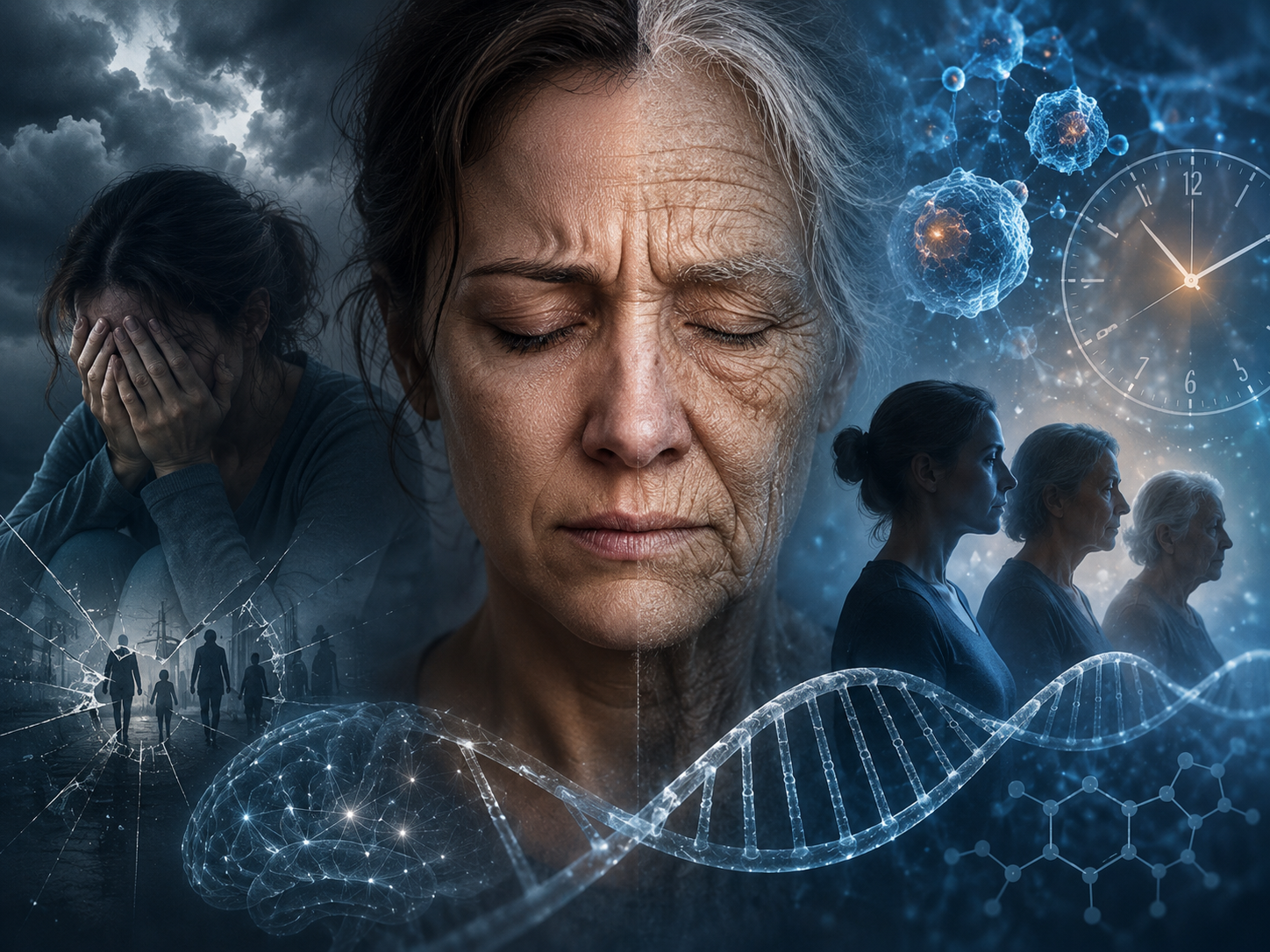
The connection between mental health and aging has received compelling new scientific support. A recent study involving survivors of the September 11, 2001 terrorist attacks and emergency responders who participated in the rescue and recovery efforts has found that post-traumatic stress disorder (PTSD) can leave a long-lasting biological imprint on the body, accelerating the aging process across multiple organ systems and increasing the risk of developing chronic diseases many years after the traumatic event.
The findings add to a growing body of evidence showing that aging is influenced by far more than genetics or the simple passage of time. Life experiences—particularly those involving intense psychological or physical stress—can profoundly affect the rate at which our cells, tissues, and organs age. Modern research increasingly demonstrates that the brain and the body are deeply interconnected, and that prolonged emotional distress can trigger measurable biological changes that persist for decades.
Researchers analyzed biological samples and long-term clinical data from hundreds of individuals directly exposed to the attacks, comparing those who developed post-traumatic stress disorder with participants who did not. The results revealed that individuals suffering from PTSD consistently exhibited biomarkers indicating a higher biological age than would be expected based on their chronological age. Accelerated biological aging has previously been associated with an increased risk of cardiovascular disease, diabetes, cognitive decline, frailty, and premature mortality.
One of the primary mechanisms identified by the researchers is chronic low-grade inflammation. When individuals experience prolonged psychological stress, the body’s stress-response system remains persistently activated. This leads to sustained production of hormones such as cortisol and adrenaline, which are essential during acute emergencies but become harmful when elevated continuously over months or years.
This prolonged state of physiological alertness gradually disrupts immune function, promoting inflammatory processes that affect nearly every organ in the body. Chronic inflammation is now recognized as one of the central biological drivers of aging and has been linked to cardiovascular disease, Alzheimer’s disease, cancer, osteoporosis, type 2 diabetes, and many other age-related conditions. Within the field of geroscience, this phenomenon is commonly known as inflammaging, and it has become one of the primary targets of longevity research.
The study also identified biological alterations across several physiological systems. In addition to immune dysregulation, participants with PTSD exhibited changes affecting metabolism, hormonal regulation, cardiovascular function, and multiple epigenetic biomarkers commonly used to estimate biological aging. Taken together, these indicators describe an organism that is aging more rapidly than expected, even when chronological age remains relatively young.
These findings help explain why numerous epidemiological studies have consistently shown that individuals suffering from chronic stress or severe psychological disorders experience significantly higher rates of cardiovascular disease, neurodegenerative disorders, metabolic illness, and premature death. Mental health can no longer be viewed solely as an emotional or psychological concern; it is increasingly recognized as a fundamental biological determinant of long-term physical health.
The implications for preventive medicine are profound. Traditionally, strategies designed to promote healthy aging have focused on nutrition, physical activity, blood pressure control, cholesterol management, and metabolic health. However, there is now growing scientific consensus that effective stress management, prevention of anxiety and depression, high-quality sleep, emotional resilience, and strong social relationships should occupy an equally important place within public health strategies aimed at extending healthy lifespan.
For the field of longevity medicine, the research reinforces a much broader understanding of human aging. Living longer in good health depends not only on maintaining physical fitness but also on protecting psychological well-being throughout life. Emotional health is increasingly being recognized as a genuine biomarker of longevity, capable of influencing critical biological processes such as inflammation, immune function, DNA repair, and cellular resilience.
The economic implications are equally important. As populations continue to age, markets related to preventive healthcare, mental wellness, and emotional well-being are expanding rapidly. Companies developing digital mental health platforms, behavioral therapies, artificial intelligence–based stress monitoring, sleep optimization technologies, mindfulness programs, and resilience training are becoming integral parts of the rapidly growing Longevity Economy. As scientific evidence continues to strengthen the relationship between psychological health and biological aging, these sectors are expected to play an increasingly strategic role in future healthcare systems.
Although researchers emphasize that further studies are needed to fully understand the biological mechanisms involved, the overall message is becoming increasingly clear: prolonged and severe psychological stress does far more than affect emotional well-being. It can accelerate the body’s biological clock, increasing vulnerability to many of the diseases traditionally associated with aging.
Conversely, protecting mental health may prove to be one of the most effective interventions available for extending healthy lifespan. In an era where longevity has become one of the defining healthcare challenges of the twenty-first century, this research reinforces an idea that modern science is now confirming with growing confidence: taking care of the mind is also one of the most powerful ways to take care of the body. It may ultimately become one of the most effective strategies for achieving healthier, longer lives.