




FIFTIERS™ and NEXTAGE™ launch the Global Senior Living Outlook 2030/2050, a new professional Report on the Future of Longevity Real Estate

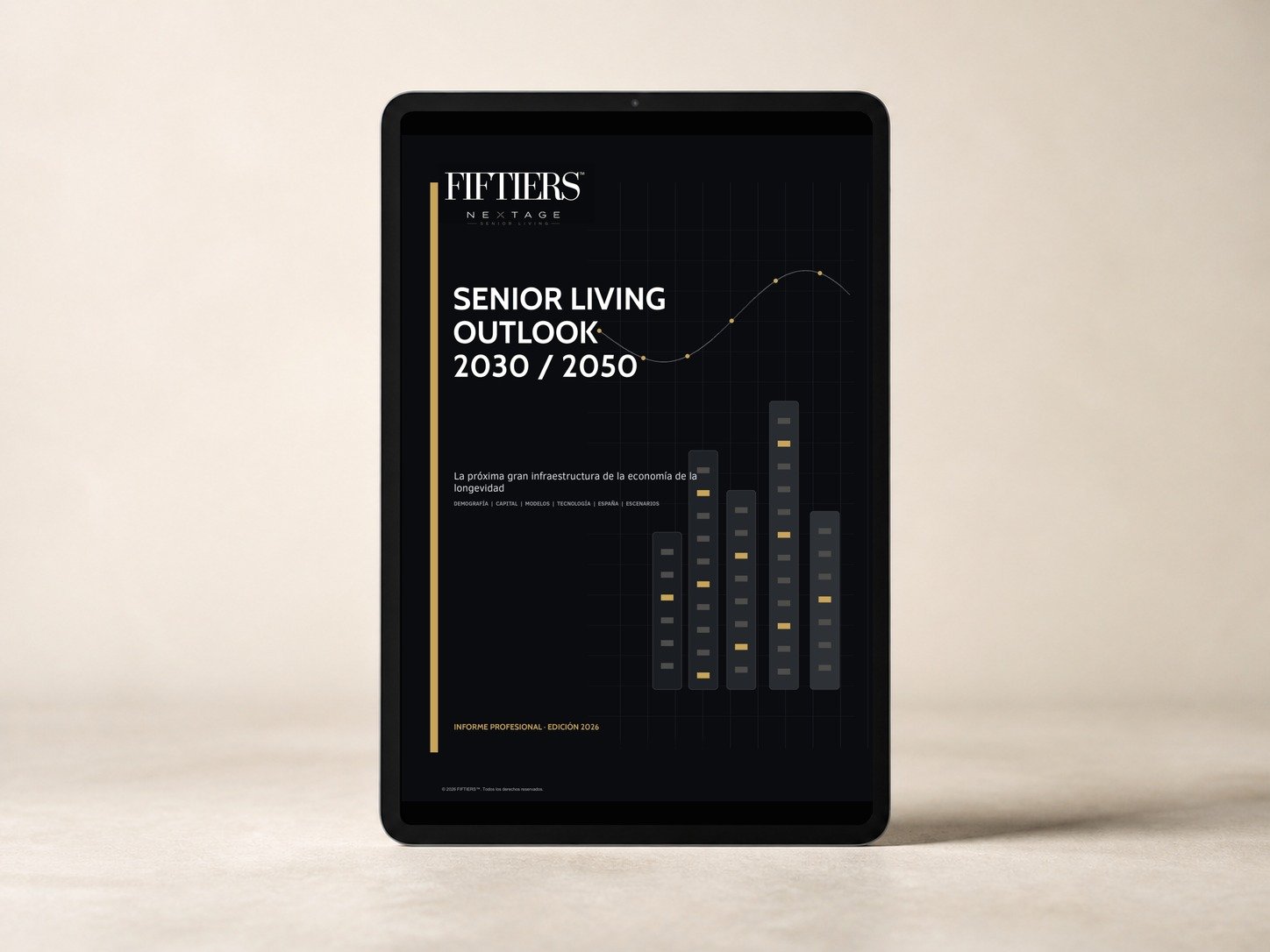

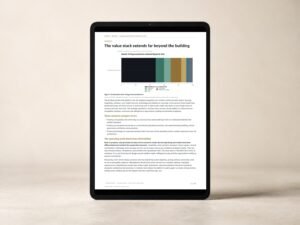
FIFTIERS™ and NEXTAGE™ announce the release of the Global Senior Living Outlook 2030/2050, an international market intelligence report created for investors, real estate developers, operators, investment funds, family offices, financial institutions, architects, consultants and executives seeking to understand one of the most compelling structural opportunities emerging from the global longevity economy. The 80-page report analyses North America, Europe, the Middle East and Asia-Pacific, combining demographics, investment, real estate, operating models, technology, artificial intelligence and proprietary professional frameworks to examine how senior living could evolve towards 2030 and 2050.
The world is entering an unprecedented demographic transition. Longer lives, declining fertility rates, changing family structures, growing numbers of older consumers and increasing institutional interest in longevity-related assets are creating a new investment landscape. Senior living is consequently moving far beyond the traditional concept of elderly care. It is becoming a sophisticated real estate and operating category at the intersection of housing, hospitality, healthcare, wellness, technology, financial services and longevity. Against this backdrop, FIFTIERS™ and NEXTAGE™ have released the Global Senior Living Outlook 2030/2050, a professional international report designed not simply to describe the ageing of the world’s population, but to identify what this transformation could mean for capital, real estate development, operations and business strategy over the next quarter-century.
The central question behind the report is straightforward but enormous in its implications: where and how will hundreds of millions of older people live in 2030 and 2050? Answering it requires looking beyond demographics. Future senior consumers will need housing, but they will also demand independence, community, security, services, healthcare access, wellness, technology, mobility, experiences and increasingly personalised solutions. The organisations capable of integrating these elements into financially viable residential platforms could help define one of the major real estate categories of the longevity era.







A global demographic transformation that will reshape real estate
The demographic foundations of the market are extraordinary. The global population aged 65 and over is projected to rise from approximately 761 million in 2021 to around 1.6 billion by 2050, while the number of people aged 80 and above is expected to increase even faster. The World Health Organization has estimated that by 2030 one in six people worldwide will be aged 60 or over. This is not simply a healthcare issue. It represents a fundamental transformation in housing demand, consumption, wealth allocation, urban planning, infrastructure and investment.
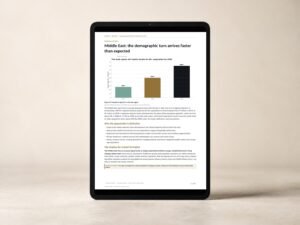
The consequences will vary dramatically by geography. North America combines a rapidly expanding older population with one of the world’s most developed senior housing investment ecosystems. Europe faces advanced ageing, constrained housing supply and highly fragmented regulatory and operating environments. Asia-Pacific contains both some of the world’s oldest societies and some of the countries that will experience the largest absolute increases in older populations. The Middle East, meanwhile, is beginning from a younger demographic base but could undergo a much faster ageing transition than many investors currently anticipate. The Global Senior Living Outlook 2030/2050 therefore avoids treating senior living as a single global market. Instead, it examines how demographics, wealth, culture, regulation, healthcare systems, family structures and real estate economics create radically different opportunities across regions.
2030: the decade of execution, investment and scale
One of the central conclusions of the report is that the period to 2030 could become a defining phase for the institutionalisation of senior living. Demographic demand is becoming increasingly visible, yet the ability to create new supply remains constrained in many markets by development costs, financing conditions, regulation, labour availability and operating complexity. In the United States alone, industry projections point to the need for hundreds of thousands of additional senior housing units by 2030 to accommodate future demand, creating a potential supply gap that cannot be solved simply by continuing current development rates.
However, FIFTIERS™ and NEXTAGE™ stress that demographic growth does not automatically translate into profitable real estate. Successful senior living requires the alignment of location, affordability, product-market fit, operating capability, workforce, capital structure, services, healthcare integration and customer experience. A poorly conceived project located in an ageing market remains a poorly conceived project. For this reason, the report defines 2030 not merely as a growth story, but as an execution story. The winners are likely to be organisations capable of converting demographic visibility into investable, operable and scalable platforms.
2050: from senior housing to longevity ecosystems
The 2050 horizon raises a much bigger question. The people who will become senior living consumers over the next two decades will have spent much of their adult lives using smartphones, digital platforms, personalised services, connected healthcare, e-commerce, artificial intelligence and increasingly sophisticated wellness solutions. Their expectations are unlikely to resemble those of previous generations.
The report therefore explores a potential evolution from traditional senior housing towards residential longevity ecosystems in which housing, hospitality, prevention, healthcare, nutrition, fitness, social connection, entertainment, mobility and technology increasingly converge. The residence itself could become a platform for managing multiple dimensions of later life. Artificial intelligence, ambient sensors, non-invasive monitoring, fall prevention, behavioural pattern analysis, telehealth, robotics, predictive maintenance and smart-building technologies could become progressively embedded within senior living environments.
This transformation could also redefine the economics of the sector. Future operators may generate value not only through accommodation and care but through a broader architecture of services built around longer, healthier and more autonomous lives. In this scenario, senior living becomes more than a real estate category: it becomes part of the infrastructure of longevity.
North America: scale, institutional capital and an urgent supply challenge
The Global Senior Living Outlook 2030/2050 provides extensive coverage of North America, particularly the United States and Canada. The region offers one of the clearest examples of senior living evolving into an institutional real estate asset class, supported by specialist operators, REITs, private equity, investment managers, developers and increasingly sophisticated data.
The report examines demographic demand, occupancy, development pipelines, investment activity, affordability, labour pressures and the emergence of different consumer propositions. Particular attention is paid to the tension between rising demand and constrained development, as well as the challenge of creating senior living solutions for the vast middle-income population that may be too affluent to qualify for certain public support mechanisms but unable to afford premium private-pay communities.
North America also provides valuable lessons for younger markets. It demonstrates that scale alone is insufficient: operational quality, management depth, workforce stability, reputation and resident experience can directly influence financial performance and asset value.
Europe: one continent, multiple senior living markets
Europe presents a very different investment landscape. Its demographic ageing is advanced, but senior living penetration, regulation, financing, terminology and consumer acceptance differ substantially from country to country. The report analyses the European Union and leading markets including the United Kingdom and the Netherlands, examining how ageing populations interact with housing shortages, healthcare systems, planning frameworks and emerging institutional investment.
The European opportunity extends far beyond conventional care homes. Independent senior living, serviced housing, retirement communities, intergenerational concepts, assisted living and ageing-in-place solutions could all play increasingly important roles. The report also examines how the European market may gradually converge with hospitality and residential real estate while retaining major national differences in regulation and funding. For investors, this fragmentation creates complexity, but it can also create opportunity for organisations capable of developing locally appropriate models rather than attempting to impose a single product across the continent.
Middle East: preparing today for tomorrow’s ageing population
The Middle East represents one of the most intriguing longer-term markets covered in the report. Many countries in the region remain considerably younger than Europe or Japan, but demographic transition can occur rapidly. At the same time, Gulf markets are investing heavily in healthcare, hospitality, wellness, premium real estate, smart cities and new urban infrastructure — sectors that could eventually converge around new forms of senior living.
The report examines the ageing trajectory of the Arab region and the particular potential of Gulf economies, including the United Arab Emirates. High-quality healthcare, international connectivity, premium residential development, hospitality expertise and growing longevity and wellness industries could create conditions for distinctive senior living propositions, including internationally oriented retirement destinations.
Rather than replicating Western models, the region has the opportunity to design products around local family structures, cultural expectations, privacy, multigenerational living and hospitality standards. This makes the Middle East not merely an emerging market for existing senior living concepts, but potentially a laboratory for entirely new ones.
Asia-Pacific: the world’s largest longevity laboratory
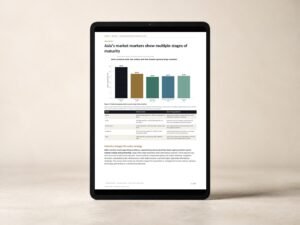
Few regions illustrate the complexity of ageing better than Asia-Pacific. The report examines Japan, China, South Korea, Singapore and India, markets that occupy very different positions on the demographic curve. Japan is already one of the world’s oldest societies and offers decades of experience in adapting housing, care, technology and urban systems to longevity. South Korea is ageing at extraordinary speed. China faces an enormous absolute increase in its older population. Singapore combines ageing with high incomes, advanced technology and constrained land. India remains younger but will eventually generate a senior population of extraordinary scale.
The result is not one Asian senior living opportunity but many. Cultural expectations around family care, home ownership, intergenerational living and institutional accommodation differ substantially, making localisation essential. At the same time, Asia may become one of the most important regions for innovation in robotics, connected healthcare, smart homes and technology-enabled ageing, giving it a potentially decisive role in defining what senior living looks like in 2050.
Beyond retirement homes: mapping the new senior living ecosystem
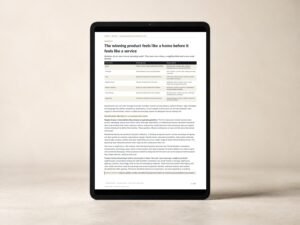
One of the report’s objectives is to eliminate a persistent misconception: senior living is not synonymous with nursing homes. The international market encompasses a wide spectrum of products including Active Adult, Independent Living, Assisted Living, Memory Care, Continuing Care Retirement Communities, Senior Apartments, retirement communities, senior co-housing, intergenerational living, ageing in place and hybrid models.
Each category serves different age groups, income levels, dependency profiles and consumer expectations. This distinction is fundamental because a healthy, affluent and socially active 65-year-old has little in common with an 88-year-old requiring daily assistance. Treating everyone above an arbitrary age threshold as a homogeneous market is one of the fastest ways to misunderstand the longevity economy. The future of senior living will therefore be built around segmentation, personalisation and life-stage relevance, rather than age alone.
How capital is discovering longevity real estate
The report also examines the growing relationship between senior living and institutional capital. REITs, private equity firms, investment funds, insurers, pension-related investors, family offices and specialist real estate managers are increasingly evaluating longevity-linked assets. One reason is structural: while many real estate sectors depend heavily on short-term economic cycles, the underlying expansion of older populations is comparatively visible decades in advance.
This does not make senior living low-risk. On the contrary, it is an operationally intensive asset class where poor management can quickly destroy real estate value. Investors increasingly need to understand not only land, construction costs, yields and exit values but also occupancy, revenue per occupied unit, NOI, operating margins, labour costs, resident turnover, length of stay, customer acquisition costs, absorption and resident satisfaction. Senior living sits precisely at the intersection of Real Estate and Operating Business, making expertise in both essential.
How senior living makes — and loses — money
The Global Senior Living Outlook 2030/2050 dedicates an extensive section to operating economics and revenue architecture. Future senior living platforms may combine accommodation with hospitality, food and beverage, wellness, healthcare, physiotherapy, housekeeping, mobility, technology, home care, activities and premium personalised services. This creates the possibility of expanding revenue per resident beyond the traditional real estate component and developing increasingly sophisticated lifetime-value models.
The same complexity, however, creates substantial execution risk. Labour, food, energy, maintenance, insurance, technology, regulation, marketing and customer acquisition can rapidly compress margins when occupancy or pricing fails to meet expectations. The report therefore treats operating economics as central to investment analysis rather than as a secondary consideration after development. Understanding how an asset performs after opening is just as important as understanding how much it costs to build.
Artificial Intelligence, robotics and the connected resident
Technology could become one of the defining forces in the next generation of senior living. The report examines the application of Artificial Intelligence, IoT, sensors, wearables, telehealth, robotics, automation and data platforms across the resident and operator journey. Potential use cases range from fall detection and mobility monitoring to workforce scheduling, predictive maintenance, energy optimisation, personalised nutrition, conversational assistants, care coordination and early identification of behavioural changes.
The FIFTIERS™ and NEXTAGE™ thesis is clear: technology should not eliminate the human dimension of senior living. It should make more human interaction possible. As ageing societies face growing shortages of care and service professionals, automating administrative, repetitive and monitoring tasks could allow staff to spend more time on what technology cannot easily reproduce: empathy, observation, conversation, companionship and human connection.
Proprietary tools for investors, developers and operators
The report has been designed not simply to be read but to be used as a professional decision-making instrument. It incorporates the FIFTIERS Project Readiness Score™, a proprietary 100-point framework for assessing whether a senior living project is sufficiently prepared to progress towards development or investment. It also includes the FIFTIERS 8D Category Model™ and FIFTIERS Location Opportunity Screen™, providing structured methodologies for evaluating markets, concepts and locations.
Professionals will also find 25 key performance indicators for investors and operators, 40 due diligence questions, investment red flags and a 90-day market-entry roadmap. Areas covered include demographics, market depth, location, product, affordability, operator quality, financial structure, workforce, technology, regulation, scalability and exit strategy. The purpose is to transform market intelligence into an actionable framework that can support investment committees, development teams and corporate strategy.
Three scenarios towards 2050
Forecasting exactly what senior living will look like in 2050 would create a false sense of certainty. The report therefore uses scenario analysis rather than a single linear forecast. It considers different trajectories based on the speed of development, capital deployment, affordability, workforce availability, regulation, technological adoption and consumer acceptance.
Under a slower scenario, supply constraints, costs and regulation limit expansion. Under a more progressive scenario, institutionalisation and operator consolidation gradually increase capacity and professional standards. Under an accelerated transformation scenario, housing, healthcare, prevention, hospitality and technology converge much more rapidly, creating a category substantially broader than today’s definition of senior living.
For investors and executives, this scenario approach makes it possible to ask a more useful question than simply “what will happen?”: which strategies remain attractive across several plausible futures?
An 80-page professional intelligence report
The FIFTIERS™ × NEXTAGE™ Global Senior Living Outlook 2030/2050 comprises 80 pages of professional analysis, combining international data, regional market intelligence, strategic interpretation, proprietary frameworks, charts, investment criteria, operational metrics and forward-looking scenarios. The report has been developed specifically for a professional audience and analyses the senior living opportunity through the combined lenses of demographics, investment, real estate, operations, technology and longevity.
It is intended for real estate developers, investment funds, REITs, private equity, family offices, banks, insurers, senior living operators, architects, construction companies, consultants, PropTech and HealthTech businesses, healthcare organisations, institutional investors, public-sector decision-makers and entrepreneurs working within the longevity economy. It is equally relevant to boards and executive teams that do not currently operate in senior living but need to determine whether the sector should become part of their long-term strategy.
FIFTIERS™ and NEXTAGE™: intelligence for the infrastructure of longevity
The collaboration between FIFTIERS™ and NEXTAGE™ reflects the multidisciplinary nature of the opportunity. FIFTIERS™ focuses on the longevity economy, the economic power of the 50+ population and the new industries emerging from longer lives. NEXTAGE™ brings that transformation into the real estate environment, focusing on the development and evolution of next-generation senior living concepts.
Together, the Global Senior Living Outlook 2030/2050 connects demographics, consumers, capital, real estate, operations, technology and the future of longevity in a single professional intelligence document.
The report is now available for professionals and organisations seeking to understand where the global senior living market is heading and, more importantly, how to position themselves before demographic transformation becomes physical demand.
Because the central question is no longer whether the world is ageing. That is already happening.
The question for investors, developers and business leaders is much bigger:
Who will build, finance and operate the residential infrastructure required by the longevity society of 2050?
That race has already begun.
Shop The Global Senior Living Outlook 2030/2050
Discover more from FIFTIERS
Subscribe to get the latest posts sent to your email.
What's Your Reaction?