



Three Brazilian Sisters May Hold the Genetic Secrets to Exceptional Longevity
FIFTIERS | Life Begins at 50. La vida comienza a…
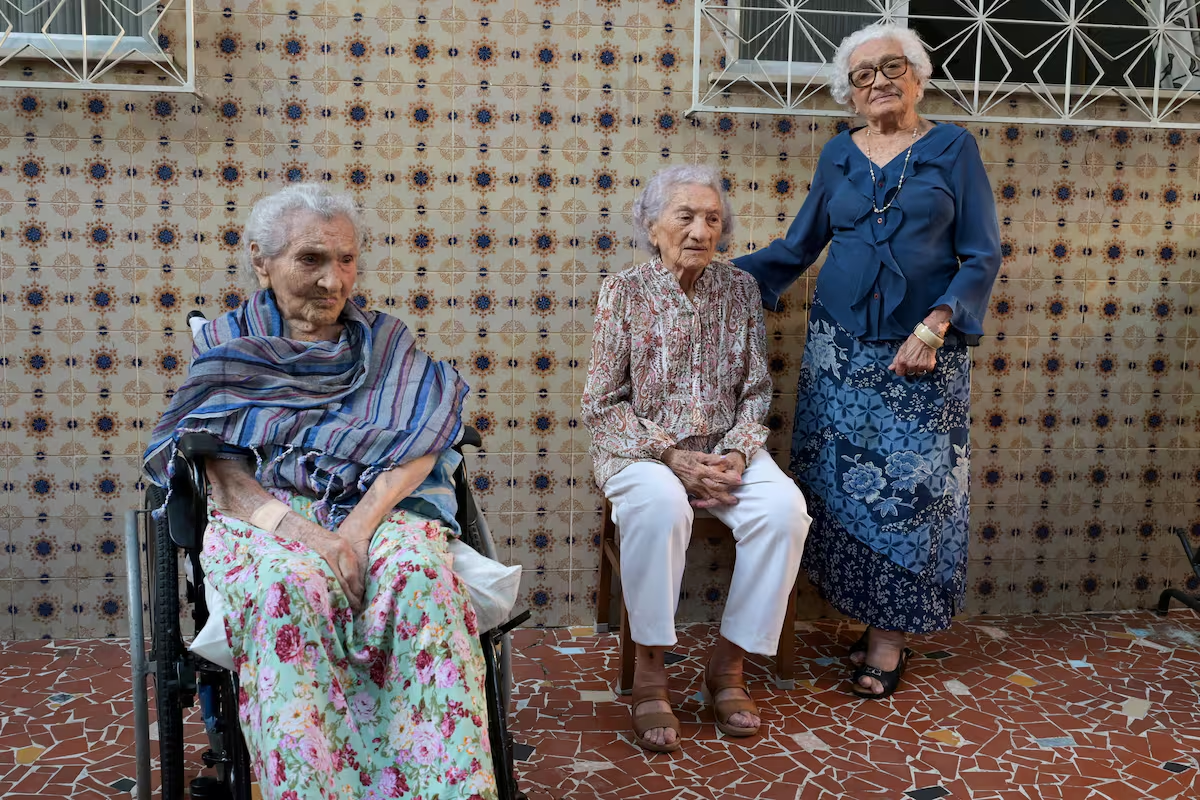
Longevity science has found a remarkable new natural laboratory. Three Brazilian sisters, aged 103, 104 and 109, have become the focus of an international research project seeking to uncover the genetic mechanisms that enable some individuals to live well beyond 100 years while maintaining relatively good health. Beyond their extraordinary ages, the fact that all three belong to the same family makes this an exceptionally rare opportunity to understand why certain people enjoy exceptionally long lives and, perhaps more importantly, why they remain healthy for so much of that time. Researchers from the University of São Paulo and other institutions specializing in geroscience have begun analyzing their DNA and biological markers in the hope of identifying the factors that contribute to such remarkable longevity.
The study is part of a growing trend in longevity research focused on so-called supercentenarians—people who live beyond 110 years of age—and on families with an unusually high concentration of exceptionally long-lived individuals. Rather than examining lifestyle alone, scientists are increasingly investigating how genetics interacts with immune function, metabolism, inflammation, and cellular repair mechanisms to slow biological aging and protect against age-related diseases.
Researchers have known for years that genetics plays an important role in determining lifespan. Numerous studies suggest that approximately 20% to 30% of human longevity is influenced by inherited genetic factors. However, among individuals who reach or exceed 100 years of age, the contribution of genetics appears to become considerably more pronounced. Many centenarians carry rare genetic variants associated with enhanced DNA repair, improved immune function, greater resistance to chronic inflammation, and a reduced risk of cardiovascular disease, cancer, and neurodegenerative disorders.
These are precisely the biological mechanisms scientists hope to identify in the three Brazilian sisters. The research team is sequencing their entire genome to search for genetic variants linked to some of the most important processes involved in aging. Among the primary areas of investigation are DNA repair capacity, regulation of chronic inflammation—often referred to as inflammaging—resistance to oxidative stress, mitochondrial function, which determines how efficiently cells produce energy, and the maintenance of telomeres, the protective structures at the ends of chromosomes whose gradual shortening has long been associated with aging.
Yet genetics alone is unlikely to explain such extraordinary longevity. One of the most compelling aspects of the study is that the sisters have shared a remarkably similar environment throughout their lives. They grew up in the same region of Brazil, followed a traditional diet based largely on fresh, minimally processed foods, maintained strong family and social relationships, remained physically active, and experienced relatively low levels of chronic stress during much of their adult lives. Researchers believe these environmental factors may have interacted with their favorable genetic profile, amplifying the body’s natural protective mechanisms against aging.
This combination of genetic and environmental influences reinforces one of the central conclusions emerging from modern geroscience: exceptional longevity is not determined by genes alone. While favorable genetics may increase the likelihood of reaching advanced ages, nutrition, physical activity, sleep quality, social engagement, emotional well-being, and other lifestyle factors remain essential contributors to healthy aging. In other words, genes may define the biological potential, but lifestyle largely determines how that potential is expressed over a lifetime.
The findings from this research could have implications far beyond academic knowledge. If scientists identify particularly protective genetic variants, they could become the basis for developing new biomarkers capable of predicting accelerated aging or susceptibility to age-related diseases. Over the longer term, these discoveries may also inspire new therapies designed to mimic the biological mechanisms naturally present in exceptionally long-lived individuals, potentially opening entirely new avenues for preventive medicine and longevity interventions.
Interest in centenarians continues to grow worldwide. Numerous international projects are currently studying exceptionally long-lived populations across Japan, Italy, the United States, Scandinavia, and other regions often associated with high life expectancy. However, finding three living sisters whose combined ages exceed three centuries is extraordinarily rare, making this one of the most valuable family-based longevity studies ever undertaken.
For the rapidly expanding longevity economy, research of this kind carries enormous strategic importance. Understanding the biological foundations of exceptional aging could accelerate the development of personalized preventive medicine, predictive genetic testing, precision nutrition, and innovative therapies aimed at extending healthy lifespan rather than simply prolonging life itself. As populations continue to age across the globe, demand for solutions that allow people to remain healthy, independent, and active well into later life is expected to become one of the defining healthcare and economic opportunities of the twenty-first century.
Although it will take years before the findings can be translated into clinical applications, the three Brazilian sisters represent far more than an extraordinary family story. They offer scientists a unique opportunity to better understand the biology of human aging and bring medicine one step closer to answering one of humanity’s oldest questions: not simply how to live longer, but how to live longer in good health.
Discover more from FIFTIERS
Subscribe to get the latest posts sent to your email.