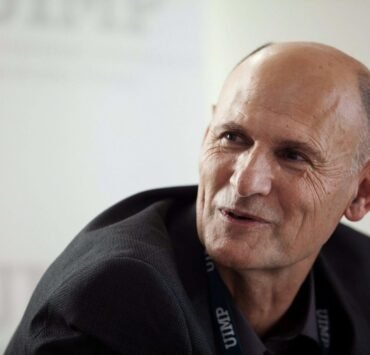



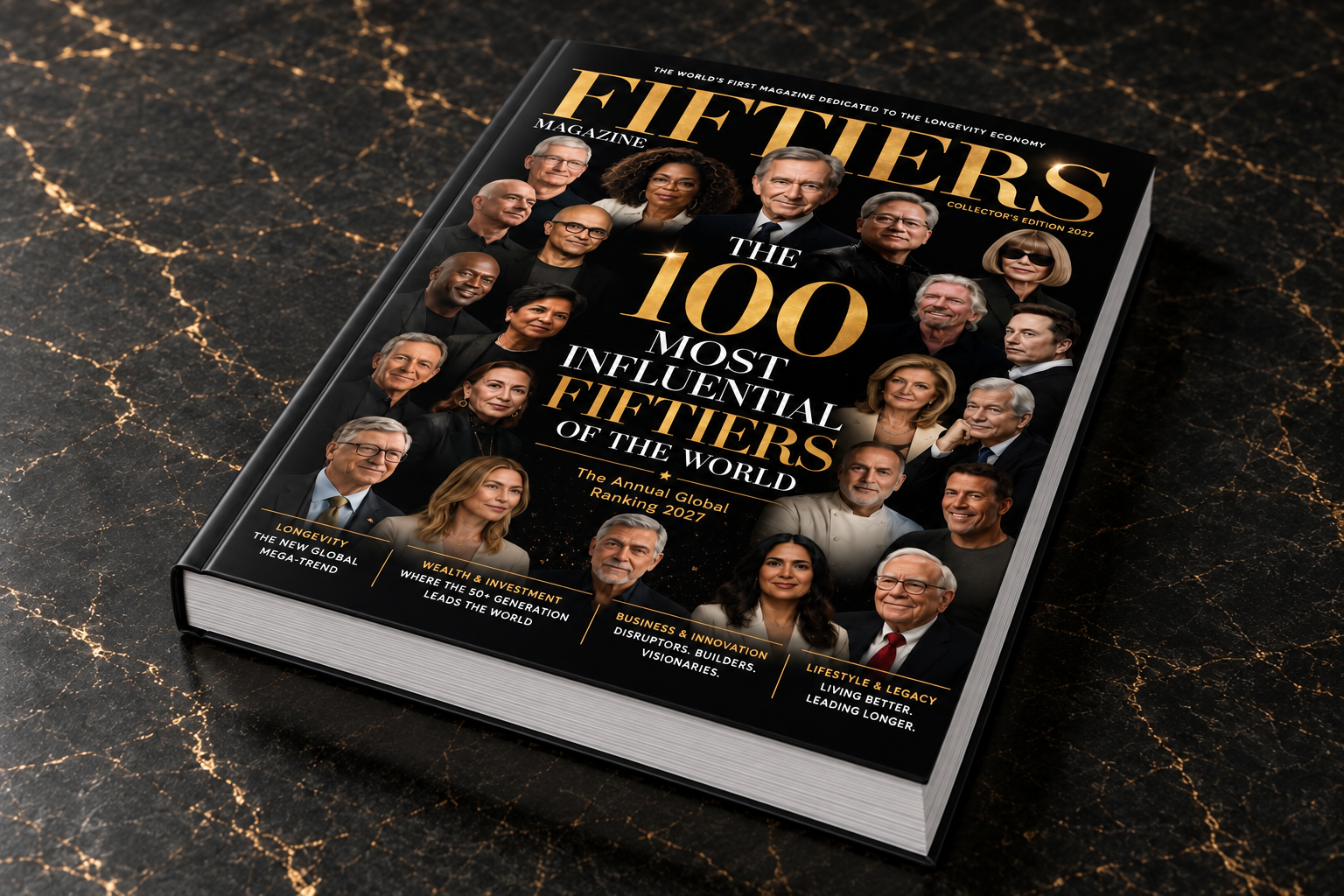

THE 100 MOST INFLUENTIAL FIFTIERS OF THE WORLD — Global Ranking 2027 #008 | Demis Hassabis: just 50, and already trying to turn artificial intelligence into an engine of scientific discovery

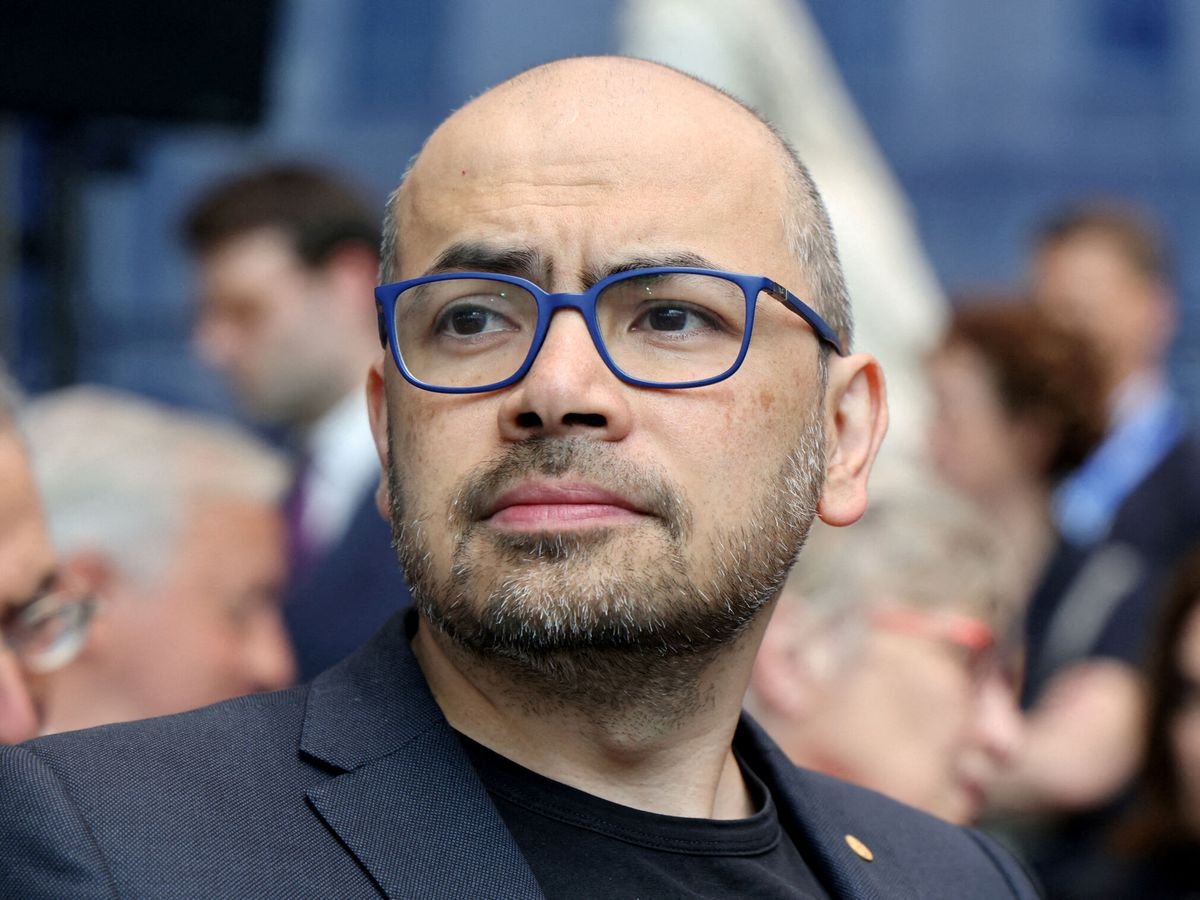

Some people derive their influence from leading a major corporation. Others change an entire scientific discipline. Demis Hassabis is attempting to do both. Born in London in 1976 and newly entering the FIFTIERS generation at 50, the DeepMind co-founder has also just begun a new professional chapter. Since August 2026, he has served as Chair of Google DeepMind and Chief Scientist of Alphabet, after handing over day-to-day management of the AI lab to focus on artificial general intelligence, science and applications capable of reshaping entire industries. He also continues to lead Isomorphic Labs, Alphabet’s AI-first drug discovery company.
The timing is revealing. At 50, Hassabis is not stepping away from the peak of his influence; he is redesigning his role around even larger problems. After leading one of the laboratories at the center of the modern AI revolution, he is devoting more of his time to two questions likely to define the coming decades: how far artificial intelligence can advance and how dramatically it can accelerate science. That combination makes him an exceptional candidate for THE 100 MOST INFLUENTIAL FIFTIERS OF THE WORLD — Global Ranking 2027, positioned at the intersection of technology, research, business, healthcare and the future economy.
His career has always resisted easy categorization. He was a chess prodigy, video-game programmer, entrepreneur, computer scientist and neuroscientist before co-founding DeepMind in 2010. Google acquired the company in 2014, and it ultimately became central to Alphabet’s global artificial-intelligence strategy. DeepMind produced breakthroughs including AlphaGo, which defeated champion Lee Sedol in 2016 and transformed public perceptions of machine intelligence, followed by AlphaFold, which used AI to tackle one of biology’s long-standing grand challenges.
AlphaFold alone provides a compelling reason for Hassabis to appear in this ranking. Determining the three-dimensional structure of a protein traditionally required lengthy experimental work. AlphaFold demonstrated that AI could predict structures from amino-acid sequences with extraordinary accuracy. In 2024, the Royal Swedish Academy of Sciences awarded Hassabis and John Jumper part of the Nobel Prize in Chemistry for their work on AlphaFold2. AlphaFold has now predicted more than 200 million protein structures, while its freely accessible database has surpassed three million users across more than 190 countries. More than one million are in low- and middle-income nations, and over 30% of scientific papers citing AlphaFold relate to disease research.
The implications extend far beyond computational biology. Modern medicine depends heavily on understanding proteins: how they are structured, how they interact and what happens when their functions fail. Accelerating that understanding can influence drug development, infectious disease, cancer, neurodegeneration and many other areas of biomedical research. AlphaFold proved a central Hassabis thesis: artificial intelligence does not have to be limited to automating things humans already know how to do; it can become a tool for discovering knowledge we do not yet possess.
His next project may push that idea much further. Hassabis founded Isomorphic Labs in 2021 to move from predicting biological structures toward designing entirely new medicines. Its IsoDDE system combines capabilities spanning molecular structure, binding affinity, pocket detection and drug candidate generation. In February 2026, Isomorphic reported that its latest drug-design technology more than doubled AlphaFold 3’s accuracy on a challenging protein-ligand generalization benchmark while introducing capabilities intended to bridge the gap between structural prediction and practical drug discovery.
Investors are beginning to value that possibility on an extraordinary scale. On May 12, 2026, Isomorphic Labs announced a $2.1 billion Series B funding round led by Thrive Capital, with participation from Alphabet, GV, MGX, Temasek, CapitalG and the UK Sovereign AI Fund. A year earlier it had raised $600 million. The company also maintains collaborations with Novartis, Eli Lilly and Johnson & Johnson, connecting its AI platform to some of the world’s largest pharmaceutical research organizations. Its original collaborations with Lilly and Novartis carried potential payments approaching $3 billion combined, excluding possible future royalties.
This is where Hassabis connects directly with the longevity economy. He does not run a company explicitly dedicated to extending human lifespan. His potential influence is broader: he is trying to change the economics of drug discovery itself. If AI can shorten years of experimentation, explore vastly larger molecular spaces, identify stronger candidates and reduce part of the cost and failure traditionally associated with pharmaceutical development, the effects could reach almost every disease whose prevalence increases with age.
The challenge remains formidable. An AI-designed molecule does not automatically become a safe and effective medicine. Human biology, clinical trials and regulation impose timelines and uncertainty that no model can simply remove. Hassabis himself acknowledged in January 2026 that Isomorphic now expected its first clinical trials toward the end of 2026, later than an earlier target. That realism matters because it separates genuine scientific transformation from the excessive optimism that often surrounds the AI market.
This combination of extreme ambition and scientific discipline is central to Hassabis’s authority. He openly discusses the possibility of artificial general intelligence and believes humanity may be approaching it, while simultaneously emphasizing safety, governance and responsibility. His new position inside Alphabet reflects precisely that concern: stepping away from daily management at Google DeepMind in order to devote more attention to the scientific and strategic implications of increasingly capable systems.
For FIFTIERS, there is an additional and almost perfect coincidence. Demis Hassabis has turned 50 at exactly the moment when what may become the most important phase of his career is beginning. He already has a Nobel Prize. He has already built a company acquired by Google. He has already overseen two defining achievements of modern AI in AlphaGo and AlphaFold. Yet his most ambitious objective may still lie ahead: using artificial intelligence to accelerate science, design medicines and move closer to more general forms of machine intelligence.
This captures one of the core ideas behind the emerging longevity economy. Fifty does not have to represent the culmination of a career. It can be the moment when experience, reputation, knowledge, resources and intellectual capability converge, making it possible to attack problems far larger than those available at 30.
Hassabis may become one of the clearest demonstrations of that idea.
FIFTIERS EDITORIAL VERDICT: Demis Hassabis deserves consideration among the leading candidates for THE 100 MOST INFLUENTIAL FIFTIERS OF THE WORLD — Global Ranking 2027 because he combines science, artificial intelligence, entrepreneurship and the ability to turn fundamental research into tools used by millions of scientists. At 50, he is entering a new professional phase as Alphabet’s Chief Scientist, Chair of Google DeepMind and leader of Isomorphic Labs. If AI succeeds over the next decade in accelerating scientific discovery, reinventing drug development and extending healthy human life, Hassabis may ultimately be remembered not merely as one of the architects of modern artificial intelligence, but as one of the people who taught that intelligence how to discover on our behalf.
Discover more from FIFTIERS
Subscribe to get the latest posts sent to your email.
What's Your Reaction?