







Longevity has just changed scale: a drug extends lifespan in the lab, $770 million flows into Senior Living and the race to control the economics of longer lives begins


September 3, 2026. Some days produce a collection of unrelated headlines. Others reveal that an entire industry is changing. Today belongs to the second category. A study in Nature reports that semaglutide — the active ingredient behind the obesity-drug revolution — extended median lifespan by 12.4% in aged female mice; research is pushing detectable Alzheimer’s-related brain changes years earlier; more than $770 million is moving into US Senior Living; America is projected to need almost 850,000 additional home-care workers; beauty is replacing “anti-ageing” with “skin longevity”; and artificial intelligence is entering retirement, care and independence. Viewed separately, these are stories about science, Real Estate, labour and consumer markets. Viewed together, they point towards something larger: the Longevity Economy is moving beyond an emerging trend and becoming economic infrastructure built around much longer lives.
The scientific development most likely to define today’s conversation comes from the University of California, Berkeley. Researchers administered semaglutide to female mice beginning at approximately 20 months of age and observed effects extending well beyond weight loss. Median survival increased from 742 to 834 days, an additional 92 days, alongside improvements in multiple indicators connected to inflammation, cellular senescence, mitochondrial function, metabolism, physical capacity and cognition. The intervention reproduced aspects of calorie restriction and produced interesting trajectories in spatial memory and glucose regulation. The boundary must remain absolutely clear: these are mice, not humans, and the findings do not establish Ozempic, Wegovy or semaglutide as longevity treatments for healthy people. Yet the strategic implication is considerable. The research raises a question that would have appeared radical only a few years ago: could medicines originally developed for specific diseases influence multiple mechanisms associated with biological ageing? If even part of this biology eventually translates into humans, the market surrounding GLP-1 medicines could move beyond obesity and diabetes towards multimorbidity prevention, functional preservation and geroscience.
At the same time, Alzheimer’s research is pushing prevention earlier. New findings indicate that certain structural brain changes may begin at least seven years before elevated amyloid becomes detectable through PET imaging. If processes leading ultimately to cognitive impairment develop silently for years or decades, the future brain-longevity market will not be limited to treating people once symptoms emerge. It may increasingly combine longitudinal MRI, blood biomarkers, genetics, functional measures and AI to identify risk trajectories during midlife. The customer for a cognitive-prevention platform could be 50 years old and apparently healthy. Economically, that transforms a relatively short disease-based clinical relationship into a preventive relationship potentially lasting decades.
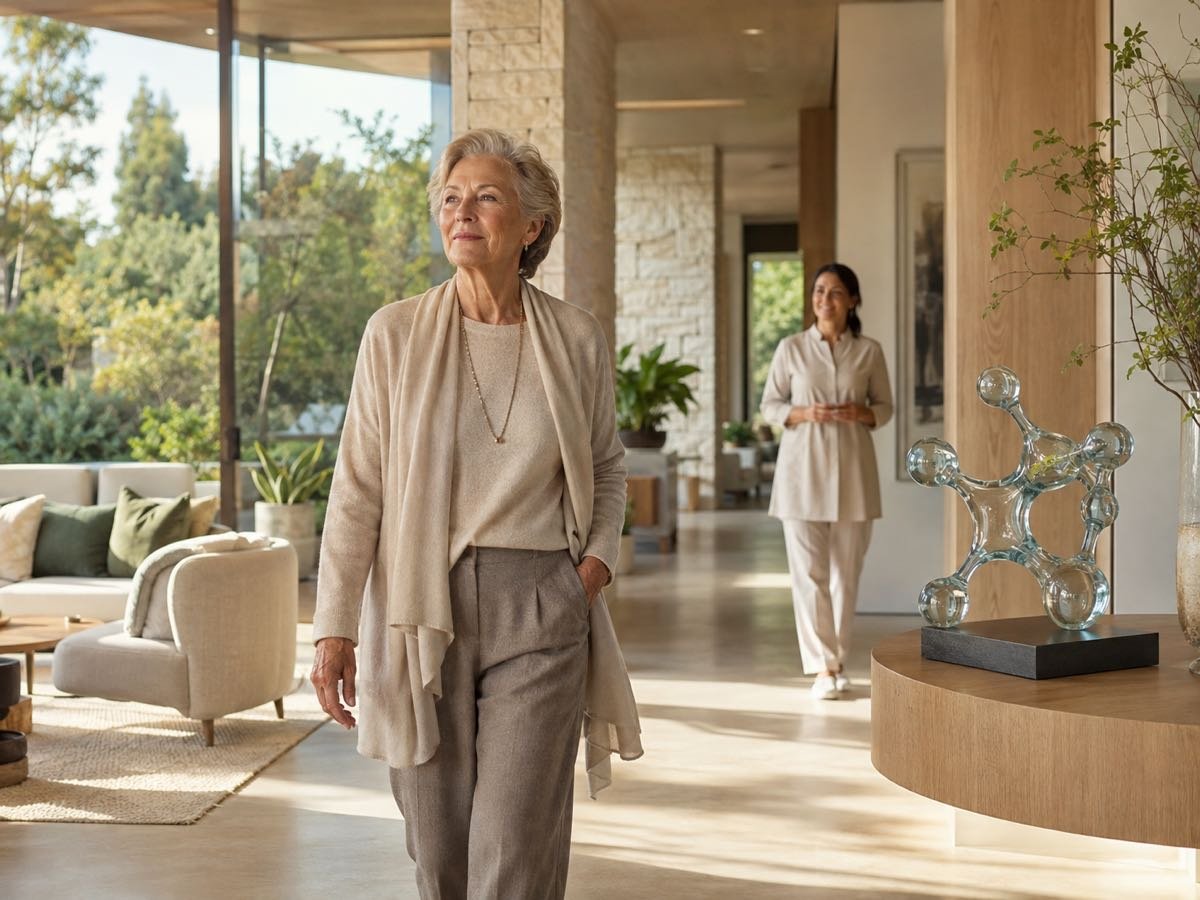
Capital is simultaneously positioning itself where millions of people may eventually require additional services. LTC Properties has completed a $200 million acquisition involving four Minnesota Senior Living communities, expanding its operating senior-housing strategy across independent living, assisted living and memory care. Almost simultaneously, American Healthcare REIT has closed the acquisition of six Kensington Senior Living communities for approximately $572 million, comprising 464 units within an eight-community portfolio with an aggregate contract price of approximately $873 million. AHR’s 2026 investments now exceed $2 billion. Together, the initial transactions exceed $770 million, but the strategic shift matters more than the number. Senior Living is increasingly being treated not simply as property producing rental income, but as an operating platform combining Real Estate, hospitality, health, care, technology and recurring services throughout a long resident relationship. Operator quality, occupancy, data, service delivery and resident lifetime value could become as important as the building itself.
Then comes the great paradox of the Silver Economy: the sector may have capital, buildings, sensors and artificial intelligence while still lacking its most important infrastructure — people. The latest U.S. Bureau of Labor Statistics projections estimate that employment of home health and personal care aides will grow 18% between 2025 and 2035, compared with around 3% across all occupations. Approximately 847,000 additional workers could be required, while about 760,500 openings per year are projected across the decade. This could become one of the defining bottlenecks of the Longevity Economy. Populations are ageing precisely as younger cohorts become proportionally smaller. Robotics, monitoring and AI will be essential, but they will not entirely replace deeply human care. The opportunity therefore lies not only in better technology but in reinventing care employment through training, pay, career pathways, specialist migration, automation and productivity tools. The company that solves the care-workforce problem may build an advantage as powerful as the company that creates the best robot.
The shift is reaching industries that until recently used completely different language. Darkfin Labs has brought its Longevity Protocol to Ulta Beauty, positioning around the concept of skin healthspan. Individual commercial claims still require appropriate scientific scrutiny, particularly where evidence is awaiting independent peer-reviewed publication. Yet the cultural move matters: cosmetics are beginning to migrate from “fighting ageing” towards preserving tissue function for longer. Anti-ageing can evolve into skin longevity just as fitness evolves into functional longevity, food into longevity nutrition, banking into Financial Longevity, housing into Longevity Living and hospitality into longevity wellness. When one idea begins reorganising existing categories, something considerably larger than a marketing trend may be underway.
Artificial intelligence adds another layer. AI-powered tools are increasingly being considered for simplifying healthcare information, monitoring behavioural or health changes, identifying risks inside homes, assisting caregivers, addressing loneliness and supporting financial planning. The opportunity is substantial, but so are the risks surrounding privacy, errors, dependency and inappropriate substitution of human judgement. This foreshadows a major regulatory question for the Silver Economy: which decisions may safely be delegated to AI when the user may be vulnerable, and which must remain under human responsibility? For banks, insurers, health systems and Senior Living operators, governance, transparency and oversight may prove as important as algorithmic capability.
Infection prevention also belongs increasingly within healthy ageing. Major US medical organisations are updating guidance on influenza, COVID-19 and RSV ahead of the 2026–2027 respiratory season. In older populations, preventing infection is not simply about avoiding several days of illness. Hospitalisation can trigger inactivity, muscle loss, frailty and functional deterioration that continue long after discharge. A JAMA evidence review published on September 2 found that RSV immunisation remained associated with reduced severe disease and hospitalisation, while another review concluded that influenza vaccination continues to reduce the risk of severe disease and hospitalisation, particularly among vulnerable populations including older adults. For insurers, hospitals and residential operators, vaccination increasingly belongs within a broader objective: preventing events capable of accelerating functional decline.
The wider demographic picture has crossed a historic threshold too. New analysis drawing on U.S. Census Bureau data reports that for the first time, people aged 65 and over now outnumber children aged five and under worldwide. This is not merely a demographic curiosity. It is a visual representation of a structural shift that will reshape labour markets, housing, consumption, taxation, healthcare, education, wealth and economic power for decades. Most of today’s institutions were built around demographic pyramids with enormous younger populations at their base. The emerging world looks very different.
That is why September 3, 2026 can be read as more than another day of longevity headlines. Within the same news cycle, an obesity medicine enters experimental lifespan research, Alzheimer’s prevention moves years earlier, hundreds of millions of dollars enter Senior Living, the United States confronts a vast care-workforce requirement, mainstream beauty embraces skin longevity and AI moves deeper into later-life services. Science, capital, labour and consumption are beginning to converge around the same phenomenon.
The next great longevity industry may therefore not be a single industry at all. It could become a horizontal layer across the global economy, much as the Internet and artificial intelligence have transformed sectors that initially considered themselves unrelated to technology. Healthcare, food, housing, banking, insurance, tourism, beauty, technology, education and Human Resources will all increasingly acquire a longevity dimension because they share the same structural change: their customers, employees and owners are going to live longer.
For boards, the strategic question is therefore no longer “do we have something for the senior market?” That question is already too narrow. The better question is: “how should our company change if an increasing share of our customers may remain with us for forty or fifty years after turning 50?”
Companies that answer early will not merely be entering the Silver Economy. They may be positioning themselves within one of the largest redistributions of demand, capital and human needs of the twenty-first century.
Discover more from FIFTIERS
Subscribe to get the latest posts sent to your email.
What's Your Reaction?