




The shark that can live for four centuries could reveal how tissues survive extraordinarily long lives

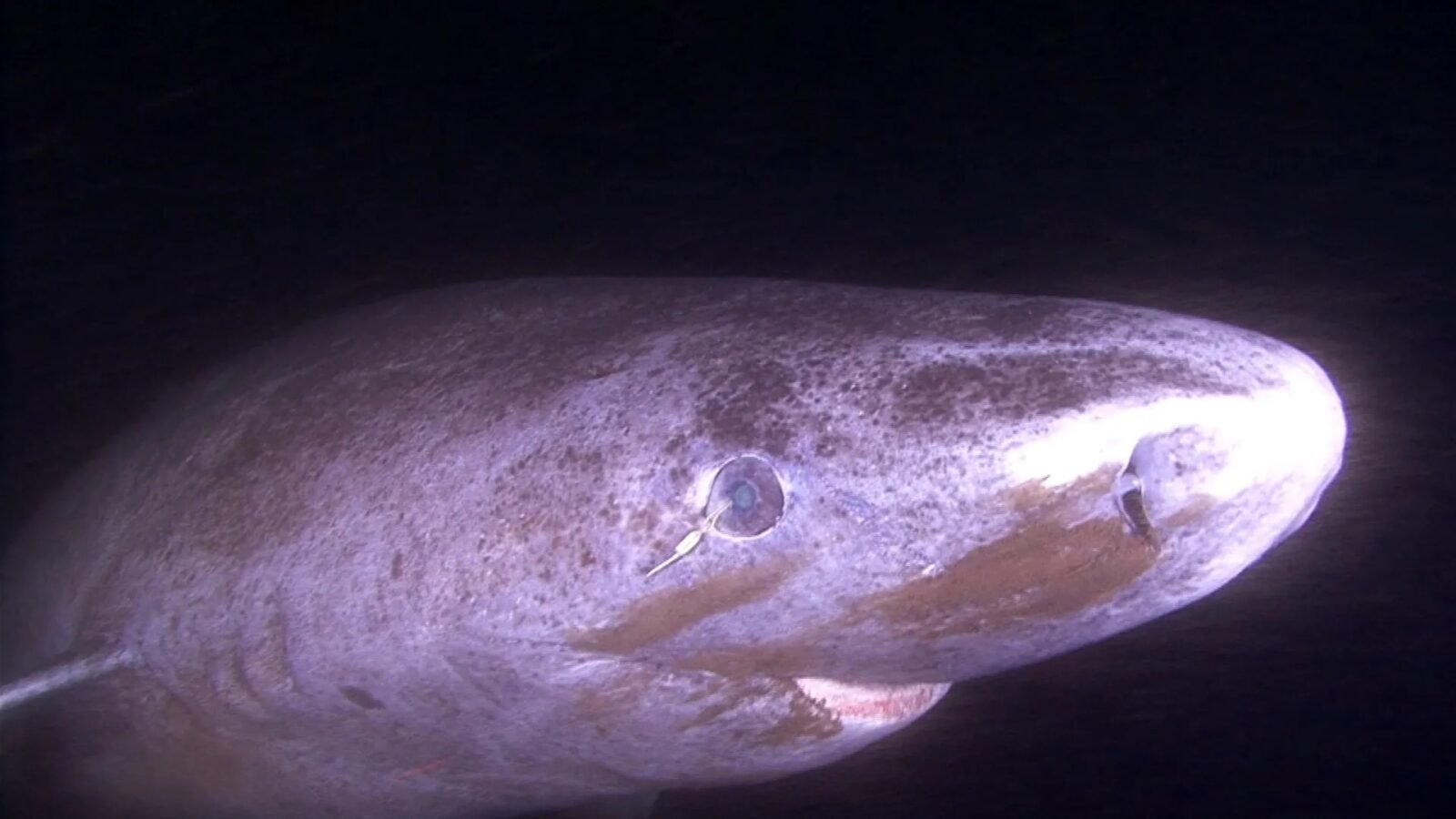

For decades, much of ageing research has focused on understanding why our tissues deteriorate over time. But there is another increasingly powerful way to approach the problem: studying animals that appear to have partially solved it. The Greenland shark (Somniosus microcephalus) is becoming one of the most fascinating natural models for doing exactly that. This enormous inhabitant of the deep Arctic can reach ages approaching 400 years, making it the longest-lived vertebrate currently known. Now, research into its visual system is revealing something even more intriguing: some of its tissues appear capable of remaining remarkably well preserved for more than a century.
Research published in Nature Communications examined the visual system of adult Greenland sharks using a combination of genomics, transcriptomics, histology and functional analyses. The researchers found that the retinas examined — from animals estimated to be more than 100 years old, with the oldest analysed individual exceeding 130 years — retained their principal cellular layers without obvious evidence of retinal degeneration. Tests designed to detect DNA fragmentation associated with cell death also found no positive cells in untreated samples. This is particularly interesting because normal ageing of the human retina is associated with the progressive loss of photoreceptors and the accumulation of cellular damage.
It is not simply about living longer. It is about preserving function
This distinction explains why the Greenland shark is so interesting to longevity science. Geroscience is not simply concerned with extending survival. Its deeper objective is to understand how biological systems can remain functional for longer.
The researchers found that the shark’s visual system remains molecularly active. Its retina is dominated by rods, the photoreceptors specialised for vision under very low-light conditions — precisely what would be expected from an animal adapted to the dark waters of the Arctic depths. Rhodopsin, the protein essential for low-light vision, remains functional and shows sensitivity adapted towards shorter wavelengths that are particularly useful in this environment.
But one of the findings with the greatest potential relevance to longevity lies elsewhere: the mechanisms responsible for maintaining and repairing DNA.
Every cell accumulates molecular damage throughout its existence. DNA is continuously exposed to alterations and, when the biological systems responsible for detecting and repairing those alterations become less effective, mutations and cellular dysfunction can accumulate. Maintaining genomic integrity for decades is therefore one of the fundamental biological challenges associated with a long life.
The study identified strong activity in genes associated with DNA repair in the Greenland shark retina. Researchers paid particular attention to the ERCC1-XPF complex, which is involved in genomic repair mechanisms and has also been associated with retinal health. They found that particularly long-lived shark species retain the ercc1 gene and that the Greenland shark shows high expression of ercc4, which encodes XPF.
The researchers propose that a robust DNA repair system could contribute to maintaining retinal integrity over exceptionally long periods. For the moment, however, this remains a mechanistic hypothesis rather than proof that these genes directly cause the animal’s extreme longevity.
Nature could become a library of solutions to ageing
This is where one of the most exciting trends in the future longevity industry begins to emerge. For decades, mice, yeast, worms and flies have been essential organisms for studying ageing. But there is another enormous biological laboratory that science is only beginning to explore systematically: species that evolution has equipped with exceptional longevity.
Bowhead whales can live for more than 200 years. Certain giant tortoises can survive for well over a century. Some bats live extraordinarily long lives relative to their body size. Naked mole-rats display unusual resistance to several age-related biological processes. And Greenland sharks can potentially survive for centuries.
Each represents a natural experiment conducted by evolution over millions of years.
The scientific — and eventually commercial — question is becoming increasingly compelling: can we identify the biological strategies behind these extraordinary lifespans, understand them at molecular level and safely reproduce some of their protective effects in humans?
That does not mean that discovering a gene in a shark will immediately produce a human longevity drug. The biological distance between species is enormous, and longevity mechanisms are usually complex, multifactorial and highly dependent on environmental and physiological context. Greenland sharks also inhabit extremely cold waters and have metabolic characteristics radically different from humans. Confusing correlation with causation would therefore be a serious mistake.
But comparative biology should not be underestimated either. Discovering exceptional protective mechanisms in other species can provide new therapeutic targets that can subsequently be investigated in human cells, organoids, animal models and, eventually, clinical trials.
From studying why tissues become diseased to understanding why some tissues do not
This approach could gradually change the way longevity medicine thinks about disease. Conventional medicine frequently begins with the question: what mechanism causes this disease?
Longevity biology adds another question: what biological mechanisms allow certain organisms to avoid, delay or withstand deterioration for extraordinarily long periods?
The difference is profound.
Instead of looking exclusively at biological failure, researchers can investigate exceptional biological resilience.
In the Greenland shark, the retina provides a particularly interesting model because it is neural tissue whose cells must remain operational over extraordinary periods. Understanding how the animal preserves cellular architecture, maintains its visual machinery and protects genomic integrity could reveal principles relevant to the study of ocular and neuronal ageing.
The first practical applications are unlikely to involve humans “living for 400 years”. They will probably be far more targeted: understanding retinal degeneration, identifying mechanisms that protect against genomic damage, discovering previously unknown proteins or molecular pathways, and developing therapies capable of extending the functional lifespan of particular tissues.
In the longer term, however, this approach fits into a much more ambitious vision of medicine: moving from repairing organs once they begin to fail towards intervening in the biological mechanisms that determine how long those organs can remain functional.
A new frontier for longevity biotech
From a business perspective, this field could eventually generate a new generation of biotechnology companies built around what might be described as extreme longevity biology: studying exceptionally long-lived organisms to identify mechanisms that could potentially be translated into human medicine.
Comparative genomics, artificial intelligence, advanced sequencing, proteomics, cellular biology and computational modelling are making it possible to analyse these species at a depth that would have been unimaginable only a few years ago.
AI could accelerate this process considerably. Researchers can increasingly compare enormous quantities of genomic and proteomic information across species, searching for patterns associated with DNA repair, genomic stability, cancer resistance, neuronal preservation or metabolic resilience.
This creates an entirely new discovery landscape.
For pharmaceutical companies and investors, the ultimate asset would not be the shark itself. It would be the intellectual property created by translating a naturally occurring longevity mechanism into a reproducible therapeutic intervention.
A protective pathway discovered in an Arctic shark could theoretically become the starting point for a drug target. A protein identified in an exceptionally long-lived whale could inspire a new approach to cancer prevention. A cellular mechanism found in another species could provide clues for preserving human neurons or repairing DNA more effectively.
Most discoveries will never reach clinical practice. Some may fail during validation, others during drug development and others during clinical trials. But only a small number need to succeed for comparative longevity biology to become an important source of future biotechnology innovation.
The next longevity revolution may already exist in nature
We are still far from knowing whether any of the mechanisms identified in the Greenland shark will ultimately produce treatments for humans. Extreme lifespan does not automatically reveal a transferable longevity intervention, and much more research will be required before these biological observations can be translated into medicine.
Nevertheless, the discovery highlights a powerful idea for the emerging Longevity Economy.
Some of the biological technologies required to preserve tissues throughout much longer lives may already have existed in nature for millions of years.
The future of longevity may therefore depend not only on inventing new technologies, molecules and therapies. It may also depend on discovering solutions evolution has already created and learning how to translate them into human biology.
If that translation becomes possible, animals capable of living for centuries could become unexpected guides towards a new generation of therapies designed not simply to extend lifespan, but to preserve the tissues, organs and capabilities that make those additional years worth living.
Lead the business opportunities created by longer lives
The science of ageing is opening opportunities far beyond biotechnology. Preventive health, Longevity Living, technology, insurance, nutrition, wellness, Real Estate and financial services are all being transformed by populations that will live longer and demand more years of health, independence and quality of life.
The FIFTIERS MBA in Longevity Business prepares executives, entrepreneurs and investors to understand this transformation and identify, design and scale new business models within the global Longevity Economy.
Discover the FIFTIERS MBA in Longevity Business
See you in Madrid: 4th FIFTIERS Congress
Participants of the FIFTIERS MBA in Longevity Business will meet in Madrid on November 27 for the 4th FIFTIERS Congress, a meeting point for executives, entrepreneurs, investors and professionals interested in understanding how longevity is reshaping healthcare, technology, Real Estate, financial services, consumer markets and the global economy.
It will also be an opportunity to move beyond theory, connect with other professionals working across the Longevity Economy and explore the business models that could define one of the most important economic transformations of the coming decades.
Discover the 4th FIFTIERS Congress and reserve your place
Discover more from FIFTIERS
Subscribe to get the latest posts sent to your email.
What's Your Reaction?