

Apple discovers the premium technology consumer many brands are still overlooking: the 50-plus market

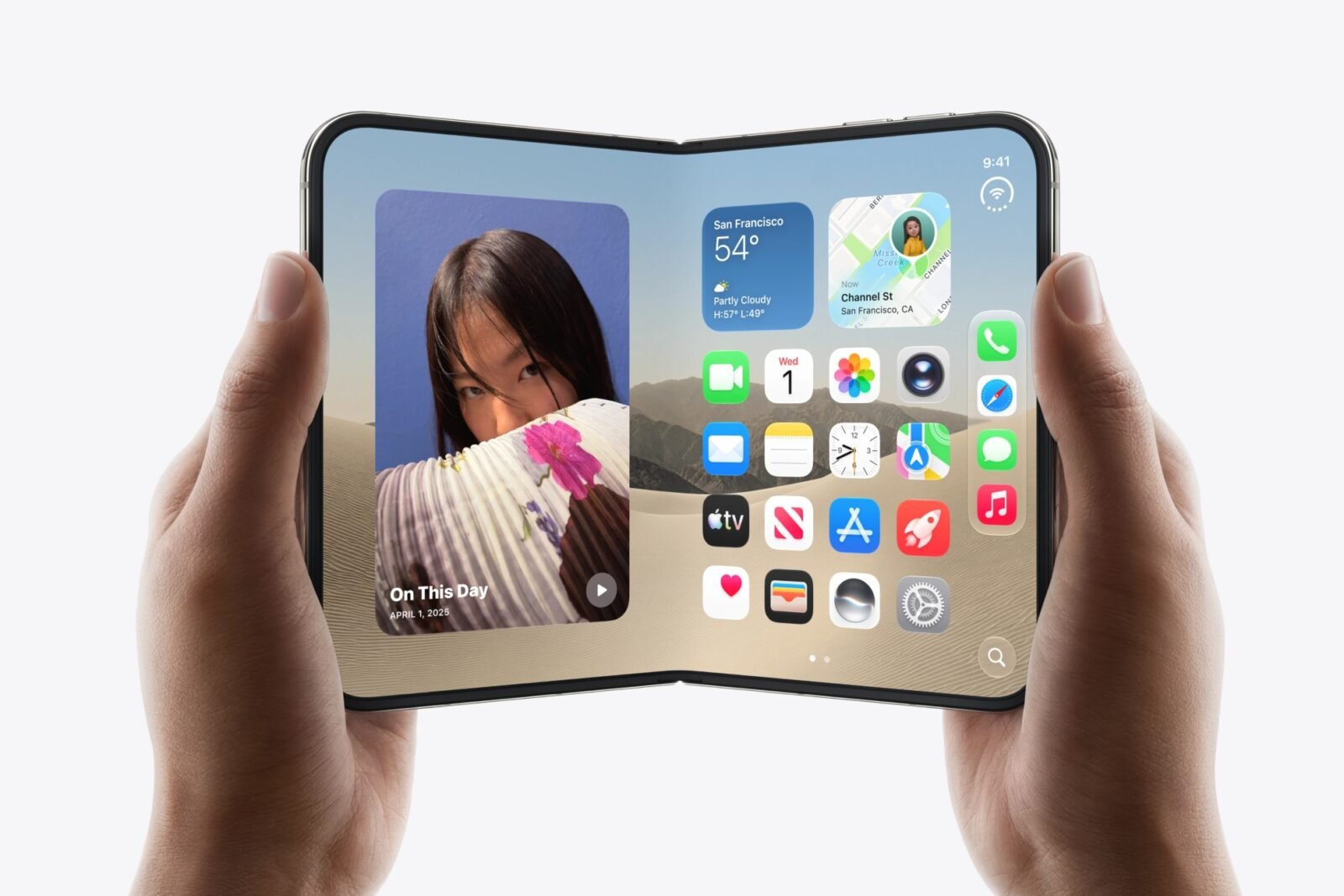

Apple has just unveiled the iPhone Duo, its first foldable iPhone, and while the company is not positioning it as a device for older people, it may have created one of the clearest examples of where the technology market is heading in a longevity society. Priced at $1,999, the device unfolds horizontally to reveal a 7.6-inch internal display while retaining a 5.4-inch external screen. Apple emphasises productivity, multitasking, entertainment, privacy and design. Reuters Breakingviews, however, introduces a particularly interesting strategic interpretation: a substantially larger display inside a device that still fits in a pocket has obvious appeal to a customer base that is getting older, increasingly values easier reading and often has greater financial capacity to pay for premium technology. Apple does not need to label the product “50+”. That may be precisely where the opportunity lies.
For too long, the technology industry has associated innovation almost exclusively with youth. Much advertising still centres consumers in their twenties or thirties, while accessibility and ageing are treated as secondary categories. The economic data tell a very different story. According to AARP’s 2026 Longevity Economy Outlook, Americans aged 50 and older generated approximately $12.5 trillion in annual economic activity in 2024, indirectly supported around 98 million US jobs, and households headed by someone aged 50+ accounted for $10.7 trillion in consumer spending, more than half of all consumption in the country. AARP projects that spending to reach approximately $22 trillion by 2060, representing more than 61% of total US consumption.
Technology is directly participating in this redistribution of purchasing power. Spending by Americans 50+ on communications and electronics has increased approximately 62% since 2018. In 2025, 71% of adults aged 50+ purchased technology, up from 67% the previous year, collectively spending an estimated $94.5 billion, or an average of $756. That average is almost twice the $394 reported before the pandemic in 2019. Smartphone ownership among the group has reached 90%, while 77% own smart TVs, 70% laptops, 58% tablets, 51% Bluetooth headphones or earbuds and 36% wearables. The average 50+ adult owns seven technology devices, and virtually all own at least one major connected device. The idea that mature consumers are technologically marginal is obsolete.
Yet another statistic is perhaps even more important: three in five adults over 50 say technology is not designed with their age in mind. The industry therefore faces an extraordinary contradiction. It has an enormous group of digitally engaged consumers with considerable purchasing power and growing technology needs, while many of those same consumers believe product design continues to overlook them. For Apple, Samsung, Google, Meta, Amazon and thousands of smaller companies, this should not be viewed simply as an accessibility issue. It is a market gap.
The iPhone Duo illustrates how that gap can be addressed without making the traditional mistake of creating “technology for old people”. A 58-, 63- or 70-year-old consumer does not necessarily want a simplified plastic phone with oversized buttons and an aesthetic associated with dependency. They may want exactly the opposite: the most advanced, elegant and expensive device on the market, but with a screen that is easier to read, an interface with less friction, longer battery life, better audio, captions, health tools, AI capable of simplifying complex operations and safety features working discreetly in the background. That is the difference between senior tech and longevity tech. The former designs products for old age. The latter designs exceptional products capable of evolving with customers as they age.
Apple has been quietly building this architecture for years. Its ecosystem includes larger text, Zoom, VoiceOver, Magnifier, Voice Control, Accessibility Reader, captions, hearing-support features, cognitive settings and multiple health and safety capabilities. In May 2026, Apple announced new accessibility features powered by Apple Intelligence, bringing natural-language navigation and richer descriptions to tools including VoiceOver, Magnifier, Voice Control and Accessibility Reader. Apple now also provides dedicated guidance explaining how iPhone, iPad, Apple Watch and other products can be personalised to support greater independence among older adults, addressing vision, hearing, mobility, speech, cognition, organisation, health, safety and communication.
This has enormous strategic implications because ageing does not happen overnight. Vision may change gradually, hearing may decline, manual dexterity can become less precise, some cognitive tasks can require more effort, and concerns around health and safety may increase. A technology ecosystem that can progressively adapt to those changes can retain the same customer for decades. Accessibility therefore stops being an additional feature and becomes a customer-retention strategy.
Consider customer lifetime value. Someone who buys an iPhone at 50 could remain inside Apple’s ecosystem into their eighties or nineties. During that period they may purchase multiple phones, Apple Watches, AirPods, iPads and Macs, as well as iCloud storage, Apple Music, Apple TV+, apps, financial services and potentially future health and AI services that do not yet exist. A 50-year-old is not a customer approaching the end of their consumption cycle. They could represent four additional decades of monetisation.
Age also intersects with wealth. The Federal Reserve’s Survey of Consumer Finances shows that family wealth rises substantially with age, with households aged 65–74 among the wealthiest age groups in the survey. Between 2019 and 2022, median net worth for this cohort increased by roughly 33%. Many members of mature generations have spent decades accumulating property, investments, pensions and other assets. The implications for premium technology are straightforward: the stages of life when accessibility needs begin to increase often overlap with stages when financial capacity is particularly strong.
That makes the $1,999 iPhone Duo particularly interesting. Analysts cited by Reuters expect Apple to capture a substantial share of the foldable market rapidly, with forecasts suggesting around one-third of the category in 2026 and potentially 40% by 2027. Apple is entering years after Samsung and Huawei, after observing many of the durability, hinge, display-crease, camera and battery problems that characterised earlier generations.
Apple’s strategic advantage may therefore lie less in inventing the foldable smartphone than in changing who believes they need one. Until now, foldables have often been marketed primarily as demonstrations of technological innovation. Apple can make the larger display about everyday utility: documents, multitasking, maps, reading, video, photography and communication. For a 60-year-old experiencing presbyopia, that additional screen area can deliver an extremely practical benefit without requiring the customer to acknowledge that they are buying an accessibility feature. That is precisely how universal design works: it improves the experience for people with specific needs without diminishing its desirability for everyone else.
This philosophy could become one of the largest technology opportunities of the next two decades. Mature consumers do not necessarily want products that constantly remind them of their age. They want products that quietly solve the changes associated with it. Larger text, stronger contrast, bigger displays, better speech recognition, easier authentication, longer battery life, health alerts, fall detection and AI capable of summarising complex information may disproportionately benefit mature users while never needing to be labelled as “old-age features”.
Hearing offers another powerful example. AirPods can evolve from entertainment accessories towards products sitting increasingly close to consumer health and hearing assistance. Apple Watch has followed a similar trajectory, moving from a technology accessory towards a platform associated with exercise, heart health, safety and monitoring. The phone, watch and earbuds therefore form a system that remains physically close to the user for much of the day. For a company seeking a position within healthy longevity, few competitive advantages are stronger than already having sensors on the wrist, in the ear and in the pocket of hundreds of millions of users.
Artificial intelligence could multiply that advantage. For a 65-year-old consumer, the most valuable use of AI may not be image generation or coding. It could be saying: “find the insurance bill I received six months ago”, “summarise this hospital letter”, “make this page easier to read”, “explain this contract simply”, “remind me about my medication”, “where did I park?” or “contact my daughter if you detect that I have fallen”. Conversational interfaces have the potential to remove many barriers created by decades of menus, settings, passwords and complex digital navigation. For generations that did not grow up with digital interfaces, AI may paradoxically become the technology that removes the need to learn technology.
Trust will be equally important. AARP research identifies privacy, data security and uncertainty around the value of new products among the main barriers to technology adoption for adults 50+. This can favour companies with established brands, ecosystems and longstanding customer relationships. Apple is explicitly emphasising privacy and on-device processing as differentiators in its AI strategy. For a mature consumer using the same ecosystem for communications, payments and health, trust may matter even more than having the technically most advanced feature.
The opportunity extends far beyond Apple. Every technology company should reassess its 50+ strategy. Television manufacturers have opportunities around vision and hearing; automotive companies around safety and assisted driving; smart-home companies around ageing in place; fintech around fraud prevention and financial simplification; wearables around healthy longevity; augmented reality around vision and assistance; robotics around home independence; and generative AI around reducing digital complexity. Populations are ageing at precisely the moment technology is gaining the ability to adapt individually to each user.
The mistake would be to create an “Internet for seniors”. The opportunity is to make the entire Internet, every device and every interface work better throughout the whole life course. A feature that makes an iPhone easier for a 75-year-old may also improve the experience for a 35-year-old who is driving, temporarily injured, wearing glasses, standing in a noisy environment or simply wants to complete a task faster. Longevity design and universal design ultimately converge.
There is also a direct luxury dimension. Technology has historically positioned aspirational innovation around younger consumers, while luxury has long understood that many of its highest-value customers are considerably older. Apple occupies an almost unique position between those two worlds: it sells mass technology using a premium economic architecture. The iPhone Duo pushes that model even further. A $1,999 device needs customers who value design and utility but also have the financial capacity to absorb the price. The Silver Economy and technology premiumisation are increasingly converging around the same customer.
AARP estimates that Americans over 50 already drive roughly 56% of US consumer spending, with that share projected to exceed 61% by 2060. Technology spending by the 50+ population has also been projected to reach around $120 billion by 2030. The boardroom question is therefore not whether designing for mature people is commercially worthwhile. The better question is why so many companies continue designing predominantly around youth when spending power, accumulated wealth and longevity increasingly point in the opposite direction.
Apple may be unintentionally demonstrating the answer. Do not create a “senior iPhone”. Create the best possible iPhone for a 90-year life: desirable at 35, productive at 50, easier to read at 65, useful for health management at 75 and sufficiently accessible to remain connected at 85. If the same product architecture can remain relevant across all those stages, the result is not merely accessibility. It is an exceptional lifetime-value strategy.
For executives, the conclusion extends far beyond technology. The Longevity Economy requires companies to stop asking “how do we adapt our product for older people?” and start asking “how do we design a product that remains exceptional when our customer is twenty or thirty years older?”
Apple has not introduced the iPhone Duo as a phone for seniors. That may be the most important lesson of all. The future of the 50+ market may belong to companies that successfully design for age without turning age into the identity of the product.
The real premium product of the Longevity Economy will not be the one that reminds us that we have aged. It will be the one that ensures ageing does not force us to give anything up.
Discover more from FIFTIERS
Subscribe to get the latest posts sent to your email.
What's Your Reaction?