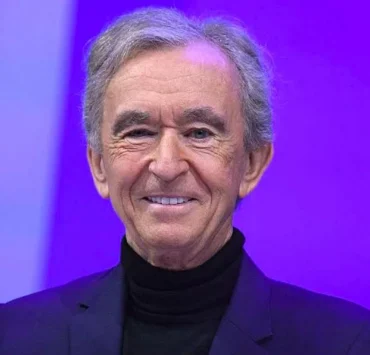






THE 100 MOST INFLUENTIAL FIFTIERS OF THE WORLD — Global Ranking 2027 #006 | #006 | Larry Ellison: at 82, one of the world’s richest men is still betting on AI, medicine and longer human lives

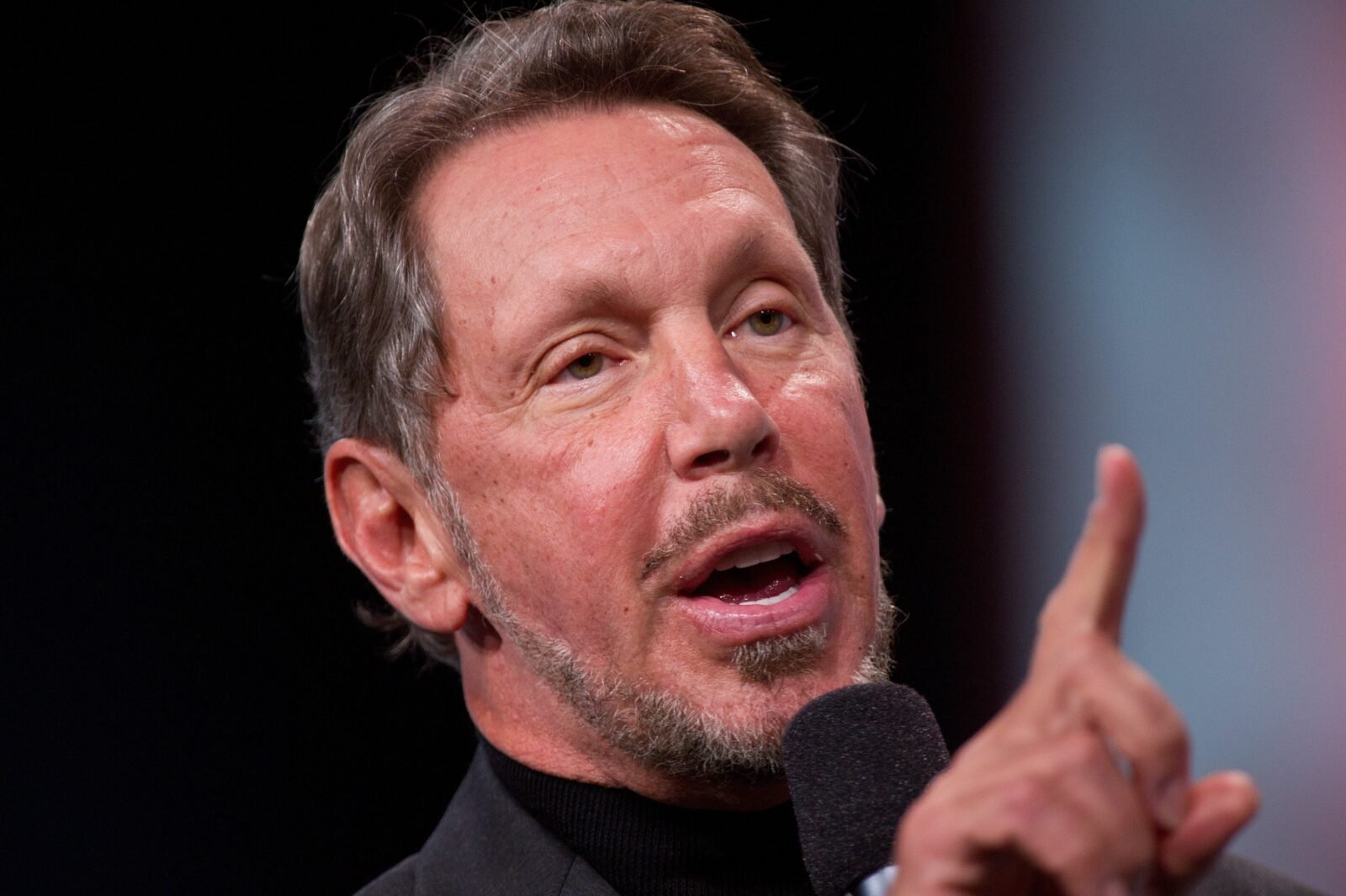

Most entrepreneurial biographies eventually become stories about legacy. Larry Ellison is doing precisely the opposite. He turned 82 on August 17, 2026, and remains Executive Chairman and Chief Technology Officer of Oracle, the company he co-founded in 1977. Nearly half a century later, he is not simply administering what he built. He is participating in one of the most aggressive technological transformations of his career, driven by artificial intelligence, cloud infrastructure, data and an ambition that increasingly extends into medicine and the emerging longevity economy.
Ellison offers one of the clearest demonstrations of why THE 100 MOST INFLUENTIAL FIFTIERS OF THE WORLD — Global Ranking 2027 cannot treat age as a secondary biographical detail. At 82, his financial, technological and entrepreneurial capacity to shape markets exceeds that of almost any executive alive. On September 3, 2026, Forbes again estimated his fortune at more than $200 billion, placing him seventh among the world’s richest people. He still owns roughly 40% of Oracle, meaning that much of his personal wealth remains directly linked to the future he is attempting to build.
Oracle itself is undergoing an extraordinary reinvention. Fiscal 2026 revenue reached a record $67.4 billion, up 17%; cloud revenue increased 39% to $34 billion, while Oracle Cloud Infrastructure grew 77%. Even more strikingly, the company ended the fiscal year with $638 billion in remaining performance obligations, driven largely by massive artificial-intelligence infrastructure contracts. Oracle no longer intends to be remembered simply as the database company that dominated generations of enterprise computing. It is positioning itself as one of the infrastructures on which the AI economy will operate.
For FIFTIERS, however, Ellison becomes even more compelling when his decades-long involvement with health and aging is considered. Long before longevity became a fashionable venture-capital category, he created the Ellison Medical Foundation, which supported biomedical research into aging, age-related disease, genetics, physiology and cellular mechanisms. Its aging program was built around an idea now fundamental to the longevity economy: understanding the biological processes underlying aging may enable medicine to prevent or reduce age-related disease and disability.
That commitment did not remain an isolated philanthropic chapter. In 2016, Ellison donated $200 million to establish the Lawrence J. Ellison Institute for Transformative Medicine in Los Angeles, designed to bring oncology, genomics, proteomics, engineering, physics, mathematics and technology together around new approaches to cancer prevention, diagnosis and treatment. The organization has evolved into today’s Ellison Medical Institute, integrating research, artificial intelligence, molecular analytics, preventive medicine, clinical trials and personalized care.
His most ambitious scientific project, however, may now be emerging in Oxford. The Ellison Institute of Technology, founded by Larry Ellison, is building a model that combines science, artificial intelligence, entrepreneurship and commercialization to address health and medical science, generative biology, food security, climate, AI and robotics. Its philosophy is particularly relevant to FIFTIERS because the Institute explicitly identifies the challenge of rethinking work to support longer, healthier lives, while arguing that global healthcare must move from treatment toward prevention.
The scale is remarkable. EIT’s strategic alliance with the University of Oxford involves at least £130 million of investment, including £100 million for joint research programs. Its Oxford campus, scheduled for full opening in 2027, began with plans for more than 300,000 square feet of laboratories and collaborative facilities and is now expanding toward an approximately two-million-square-foot complex capable of supporting up to 7,000 people. EIT describes the first major phase as a project costing more than £1 billion. This is not conventional philanthropy distributing grants from a distance. Ellison is attempting to construct an environment where scientists, physicians, engineers, entrepreneurs, AI systems, autonomous laboratories and commercial capabilities operate together.
That distinction matters. Scientific philanthropy has traditionally funded discovery and left commercialization to others. Ellison’s emerging model attempts to connect scientific discovery, technology and commercial deployment from the beginning. For the longevity economy, that could prove crucial because many advances fail not through lack of scientific insight, but because of the enormous gap between a laboratory discovery and a solution capable of reaching millions of people.
Oracle completes the architecture from the technology side. Throughout 2026, Oracle Health introduced AI capabilities across electronic health records, clinical documentation, patient portals, operating rooms and healthcare data analysis. Its Clinical AI Agent had already saved U.S. physicians more than 200,000 hours of documentation, while its Life Sciences AI Data Platform combines generative AI with more than 129 million de-identified longitudinal health records to support pharmaceutical research, medtech and clinical development. Oracle has stated that it expects AI to reshape healthcare, from physician workflows and patient care to molecular design and the speed at which new medicines can reach patients.
Ellison’s connection to longevity, therefore, is not based on claiming that he has discovered how humans can live to 120. He has not. His influence is structural: he is positioning capital, computing power, medical data, scientific institutions and entrepreneurial capability around systems that may determine how long people remain healthy. Early diagnosis, prevention, personalized medicine, clinical AI, drug discovery, aging biology and generative biology increasingly look less like separate industries and more like components of a single emerging architecture.
There is another reason his story belongs at the center of FIFTIERS.
Larry Ellison is 82.
That fact changes the interpretation of everything else.
Traditional narratives would place an octogenarian technology founder in the phase of retrospectives, succession planning or ceremonial philanthropy. Ellison remains directly involved in Oracle’s technology strategy while creating institutions intended to operate for decades into the future. His current projects are not designed to preserve yesterday.
They are designed to influence tomorrow.
This is legacy building in the future tense.
And it captures one of the most powerful ideas behind the emerging longevity economy: longer life becomes valuable not merely because it contains additional years, but because those years can contain entirely new chapters of creation, investment, leadership and transformation.
FIFTIERS EDITORIAL VERDICT: Larry Ellison deserves consideration among the leading candidates for THE 100 MOST INFLUENTIAL FIFTIERS OF THE WORLD — Global Ranking 2027 because at 82 he combines extraordinary wealth, technological power, scientific investment, entrepreneurial influence and long-term vision. He helped build one of the essential technology companies of the past half-century and is now directing part of that intellectual and financial capital toward artificial intelligence, preventive medicine, biomedical research and generative biology. His career demonstrates that advanced age does not have to represent the decline of influence. It can become the moment when decades of experience, capital and accumulated knowledge achieve their greatest capacity to reshape the future.
Discover more from FIFTIERS
Subscribe to get the latest posts sent to your email.
What's Your Reaction?