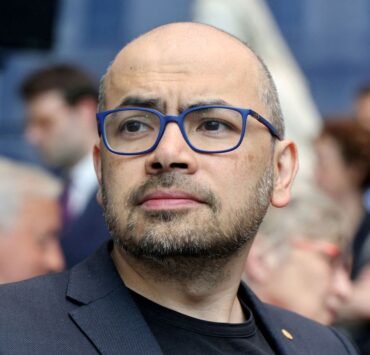






THE 100 MOST INFLUENTIAL FIFTIERS OF THE WORLD — Global Ranking 2027 #007 | Juan Carlos Izpisúa Belmonte: at 65, the Spanish scientist trying to teach our cells how to become young again


There is an enormous difference between researching how humans can live longer and investigating whether the biology of aging itself can be modified. Juan Carlos Izpisúa Belmonte has spent much of his career operating precisely at that frontier. Born in Hellín, Spain, on December 16, 1960, he is now 65 years old and remains fully active internationally as a Founding Scientist and Senior Vice President at Altos Labs, one of the most ambitious scientific organizations ever created around cellular rejuvenation and regenerative medicine. Just weeks ago, on August 12, 2026, he received Spain’s Distinción Europa and once again expressed an idea that captures his career remarkably well: the objective is not simply to live longer, but to live better.
That is what makes his candidacy for THE 100 MOST INFLUENTIAL FIFTIERS OF THE WORLD — Global Ranking 2027 particularly compelling. He is not an entrepreneur who has recently discovered the economic potential of longevity. He is one of the scientists who have spent decades building the biological knowledge on which parts of that future industry may eventually depend. His career has crossed Spain, Italy, Germany, the United Kingdom and the United States. He spent close to three decades associated with California’s Salk Institute and also helped establish and lead the Center for Regenerative Medicine in Barcelona. Today, at Altos Labs, he is working to understand how adult and diseased cells might be programmed toward states resembling those found earlier in healthy life.
The critical word is reprogramming. In 2006, Shinya Yamanaka demonstrated that differentiated adult cells could be returned to a pluripotent state through four transcription factors that became known as the Yamanaka factors. That discovery created an extraordinary question: could scientists use part of that mechanism without pushing a cell completely backward, preserving its identity while removing some of the changes associated with aging? Izpisúa Belmonte became one of the central researchers pursuing that possibility. In 2016, his team published landmark work in Cell on partial in vivo reprogramming. In a mouse model of premature aging, intermittent activation of these factors improved several physiological characteristics and extended survival by approximately 30%; normally aged animals also showed regenerative improvements in selected tissues. These were experimental findings and do not demonstrate safe human rejuvenation, but they helped turn an extraordinary hypothesis into a research program that could be scientifically tested.
A decade later, that research continues to evolve. In April 2026, Izpisúa presented new work examining the restoration of cellular identity and disease reversal through partial reprogramming. One of the perspectives being explored views aging not only as accumulated damage but also as a gradual loss of the identity that allows individual cells to perform their functions correctly. Under this framework, rejuvenation would not necessarily mean replacing an old cell with a new one. It could mean enabling the existing cell to recover some of the information, organization and resilience it possessed earlier in life.
This line of research helps explain why Altos Labs matters so much to the emerging economics of longevity. The company publicly launched in January 2022 with $3 billion in committed funding, an extraordinary amount of capital for a biotechnology organization centered on fundamental science. Its mission is to understand the deep biology of cellular rejuvenation programming, restore cellular health and resilience, and ultimately apply that knowledge to reversing disease, injury and disability. Izpisúa currently occupies one of the senior scientific positions inside that organization.
The potential economic implications are enormous. If medicine eventually becomes capable of intervening in fundamental mechanisms associated with age-related decline, the effects would extend far beyond pharmaceuticals. Healthcare systems, insurance, employment, pensions, housing, financial planning and consumer behavior would all be affected. The economic difference between adding ten years of life and adding ten years of healthy, independent life is immense. That distinction between lifespan and healthspan sits at the core of the emerging longevity economy.
Izpisúa also embodies something fundamental to the FIFTIERS vision: the convergence between accumulated experience and frontier science. At 65, he is not closing a scientific career. He is participating in what may ultimately become one of its most ambitious chapters. In January 2026, he joined leading international researchers in a major Nature Aging paper examining the past, present and future of aging science. In June, he appeared as a co-author on another paper exploring an entropic view of aging connecting thermodynamics and biology. His scientific activity therefore remains firmly in motion at an age that twentieth-century career models frequently treated as the beginning of professional withdrawal.
His personal story makes the journey even more remarkable. Before becoming an internationally recognized scientist, he spent part of his youth in Benidorm, worked in hospitality and even played football for Benidorm Club Deportivo. He later studied pharmacy at the University of Valencia, completed doctoral work between Valencia and Bologna, trained across European institutions and eventually moved to California. In 2026, Benidorm recognized that international trajectory by awarding him its Distinción Europa as a global reference in regenerative biology and advanced medicine.
Yet his most important contribution may still be impossible to measure.
The longevity economy today resembles other transformative technological industries before their commercial expansion: humanity understands the scale of the problem, science is discovering entirely new mechanisms through which it may be addressed, and enormous amounts of capital are beginning to finance potential solutions. What remains unknown is which technologies will ultimately work in humans, how safely they can be deployed and how long translation will take.
That is precisely why science must be separated from promise. Cellular reprogramming remains experimental, and there is currently no sufficient clinical evidence to claim that it can safely rejuvenate a human being. That uncertainty does not diminish Izpisúa’s importance. It reinforces it. The largest industries of the future often begin decades earlier, when scientists largely unknown to the public turn impossible questions into possible experiments.
FIFTIERS EDITORIAL VERDICT: Juan Carlos Izpisúa Belmonte deserves consideration among the leading candidates for THE 100 MOST INFLUENTIAL FIFTIERS OF THE WORLD — Global Ranking 2027 because few careers connect so directly with the scientific frontier of the longevity economy. At 65, he continues pursuing one of the defining questions of our generation: whether age-related cellular deterioration can be partially reprogrammed and whether that knowledge might eventually be used to keep people free from disease for longer. If future medicine succeeds in moving beyond treating individual diseases toward intervening in some of the biological processes that make multiple diseases increasingly common with age, scientists such as Izpisúa will have helped write the opening chapters of that transformation.
Discover more from FIFTIERS
Subscribe to get the latest posts sent to your email.
What's Your Reaction?