






Nestlé puts healthy longevity at the heart of global consumer-brand strategy

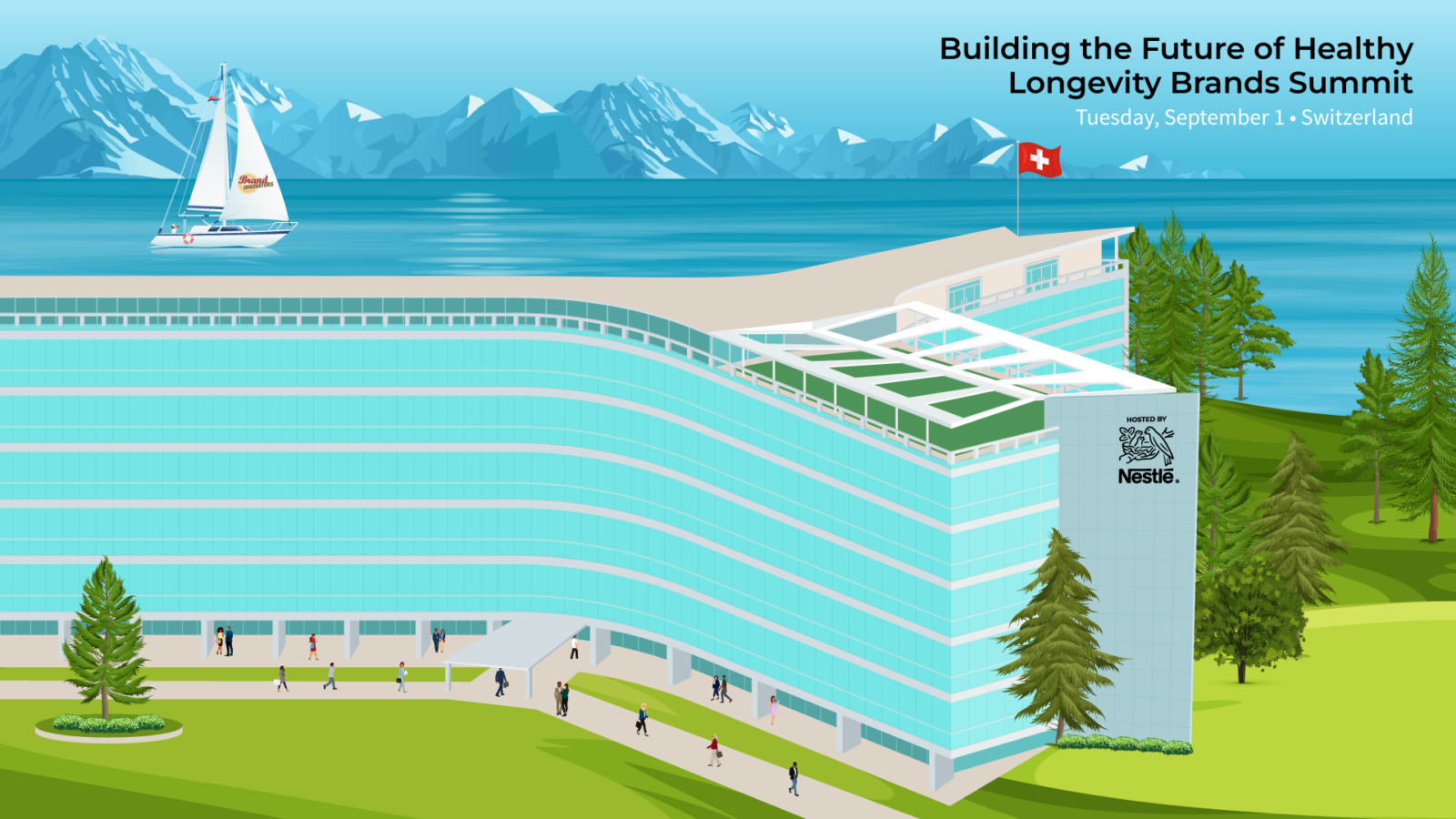

Something important is happening today, September 1, 2026, in Vevey, Switzerland. Nestlé is hosting the Building the Future of Healthy Longevity Brands Summit, an event whose relevance extends far beyond food or supplements. Executives and specialists from Nestlé, the World Economic Forum, Google, Roche Diagnostics, Bayer, Zurich, McKinsey Health Institute, Samsung Electronics, Clinique La Prairie, Decathlon and other organisations are discussing how healthy longevity can become a new brand promise. The programme includes conversations entitled Why Healthy Longevity is the Next Growth Chapter, Longevity as a Brand Promise, From Lifespan to Healthspan and The New Longevity Economy: Where Brands Go Next. It is difficult to find a clearer indication that longevity is moving beyond clinics, biotechnology companies and businesses serving older adults and entering the strategic core of major consumer corporations.
Nestlé’s move deserves particular attention because it is not simply responding to a trend with another product. The company has explicitly identified healthy longevity as one of its strategic growth platforms and is attempting to build an entire category around it. In February, it launched Nestlé Vital, its first global product line specifically dedicated to healthy longevity, aimed at consumers from midlife onwards and designed around needs including energy, strength, sleep, recovery and cognitive function. In parallel, Nestlé has created Smart Aging, a platform combining nutritional products with guidance around nutrition, movement and mental wellbeing. Nestlé Vital is launching in Latin America before later expansion into Europe and Asia. The business ambition behind this extends far beyond selling another nutritional beverage: it is about building a relationship with consumers from midlife and accompanying them for decades as they actively manage their longevity.
This could fundamentally change how large brands understand the 50+ market. Traditionally, much of consumer industry followed a relatively simple structure: mainstream products throughout youth and adulthood, followed by “senior” products once age-related needs began to appear. Healthy longevity breaks that boundary. A 42-, 48- or 55-year-old does not necessarily identify as old, yet may care deeply about maintaining muscle, sleeping better, protecting cognitive performance, preserving metabolic health and reaching 70 with strong physical capacity. The commercial opportunity therefore begins decades before retirement. Nestlé specifically identifies midlife as an important inflection point and notes that almost half of the global population is projected to be over 40 by 2040. For brands, longevity can therefore become a mass-market consumer category rather than a niche for older people.
The difference between this category and traditional “anti-ageing” is equally important. Anti-ageing marketing was frequently constructed around fighting visible signs of deterioration. Healthy longevity offers a much broader proposition. It does not promise to stop ageing; it promises to help people manage how they age. The objective moves from fighting age towards preserving capability: strength, sleep, cognition, metabolism, mobility, recovery, independence and wellbeing. That creates the possibility of bringing together industries that previously operated separately. Nutrition, fitness, sleep, beauty, preventive medicine, wearables, mental health, diagnostics, insurance and hospitality can all compete to solve different parts of the same consumer need: remaining well throughout a longer life.
This is precisely why the diversity of companies represented in today’s summit matters. Healthy longevity cannot be built by a food company alone. Google can contribute data, interfaces and artificial intelligence; Roche Diagnostics can contribute biomarkers and diagnostics; Zurich can address insurance and risk; Bayer brings healthcare; Samsung can contribute connected devices; McKinsey Health Institute can analyse healthspan; Clinique La Prairie can connect preventive medicine with wellness; Decathlon can address movement and physical activity; and Nestlé can operate through everyday nutrition. The Longevity Economy is beginning to display a characteristic previously seen with digitalisation: no company owns the entire value chain, while almost every industry has a potential entry point.
Nestlé also possesses an extraordinary structural advantage: frequency. A longevity clinic may interact with a patient several times per year. A food company can enter that person’s routine every day. Economically, this difference is enormous. If longevity becomes an everyday behaviour, companies able to occupy recurring moments — breakfast, exercise, supplementation, monitoring, recovery or sleep — can build unusually long consumer relationships. The strategic asset may gradually shift from each individual product towards continuity of engagement over twenty, thirty or forty years.
This is why Smart Aging may ultimately prove even more strategically interesting than Nestlé Vital itself. A digital platform offering micro-habits, information, guidance and potentially personalisation allows the company to move from a transactional relationship — buying a drink — towards a relational model — managing aspects of health over time. If such platforms eventually integrate wearables, biomarkers, AI, metabolic information and personalised nutrition, they could evolve into genuine healthy-longevity management systems. Nestlé is already strengthening research in precision nutrition, microbiome science, biomarkers and emerging AI tools to inform future innovation.
Science, however, will become the critical competitive battleground. The more companies use the word longevity, the greater the risk that it becomes another marketing label. A conventional food does not acquire longevity properties merely because its packaging changes, and a nutritional drink does not extend lifespan simply because it contains selected nutrients. Companies seeking to lead this category will need evidence for the outcomes associated with their formulations and discipline around the claims they make. Nestlé is investing accordingly, linking healthy longevity to R&D, clinical research, microbiome and metabolic science and a multi-year partnership with Nanyang Technological University Singapore investigating how nutrition may influence biological processes related to ageing, mobility, sleep, metabolism and women’s health.
That final area points towards another major opportunity: women’s longevity. Women and men do not experience ageing through identical biological trajectories, and hormonal, metabolic, cardiovascular and musculoskeletal transitions can differ substantially. Nestlé has identified women’s health, healthy longevity and weight management among its strategic growth opportunities. The market may consequently move towards far more sophisticated solutions segmented by life stage, biology, metabolism, activity and risk, gradually replacing the generic “senior product” with personalised longevity architectures.
The movement should also attract attention from luxury and beauty executives. If consumers increasingly seek not merely to look younger but to feel and function better for longer, beauty can evolve into skin longevity; hospitality into longevity travel; gyms into functional-longevity platforms; insurance into preventive longevity; banking into Financial Longevity; Real Estate into Longevity Living; food into longevity nutrition; and technology into continuous health-management systems. This is not the birth of a single market. It is the possibility that one idea will simultaneously reshape multiple existing industries.
Marketing itself may need to change. Consumer segmentation has traditionally relied heavily on age brackets. In a longevity society, those categories become less informative. Two 60-year-olds may have completely different health, wealth, behaviours and aspirations. Future segmentation may increasingly incorporate functional capacity, metabolic risk, lifestyle, independence, expected healthspan and personal objectives. Longevity may force brands to move from age-based marketing towards life-trajectory marketing.
Boards should also reconsider customer lifetime value. In many sectors, acquiring a 45- or 55-year-old customer was historically considered less attractive than acquiring someone at 25 because there were assumed to be fewer years of consumption remaining. Ninety- and 100-year lives change that calculation. A 50-year-old customer may continue consuming for another four or five decades and may also be entering years of considerable purchasing power. The combination of longevity, wealth and consumption makes mature consumers one of the most strategically valuable markets in the world.
This is why today’s Nestlé summit in Vevey matters far more than another corporate conference might suggest. It represents a signal. When one of the world’s largest food companies begins openly discussing healthy longevity as “the next growth chapter”, the question is no longer whether a longevity market will exist. The questions become who will define it, who will earn consumer trust and which organisations can build relationships throughout much longer lives.
The next battle between major consumer brands may not simply be about selling food, cosmetics, watches, insurance or holidays. It may be about demonstrating that they can help consumers preserve what will become increasingly valuable in a world of 90-year lives: the ability to continue living the way they want for as many of those years as possible.
Discover more from FIFTIERS
Subscribe to get the latest posts sent to your email.
What's Your Reaction?