




Longevity radar — September 14, 2026: Capital moves decisively into longevity, AI becomes infrastructure for ageing at home and Alzheimer’s prevention shifts back towards midlife


On Monday, September 14, 2026, longevity is moving rapidly from a scientific and demographic conversation into an investment, infrastructure, Real Estate, preventive-health and corporate-strategy category. Two major European gatherings open today — the Longevity Investors Conference in Gstaad and the SilverEco & Ageing Well International Festival in Cannes — while Alzheimer’s evidence reinforces midlife prevention and India reveals an enormous gap between Senior Living demand and supply.
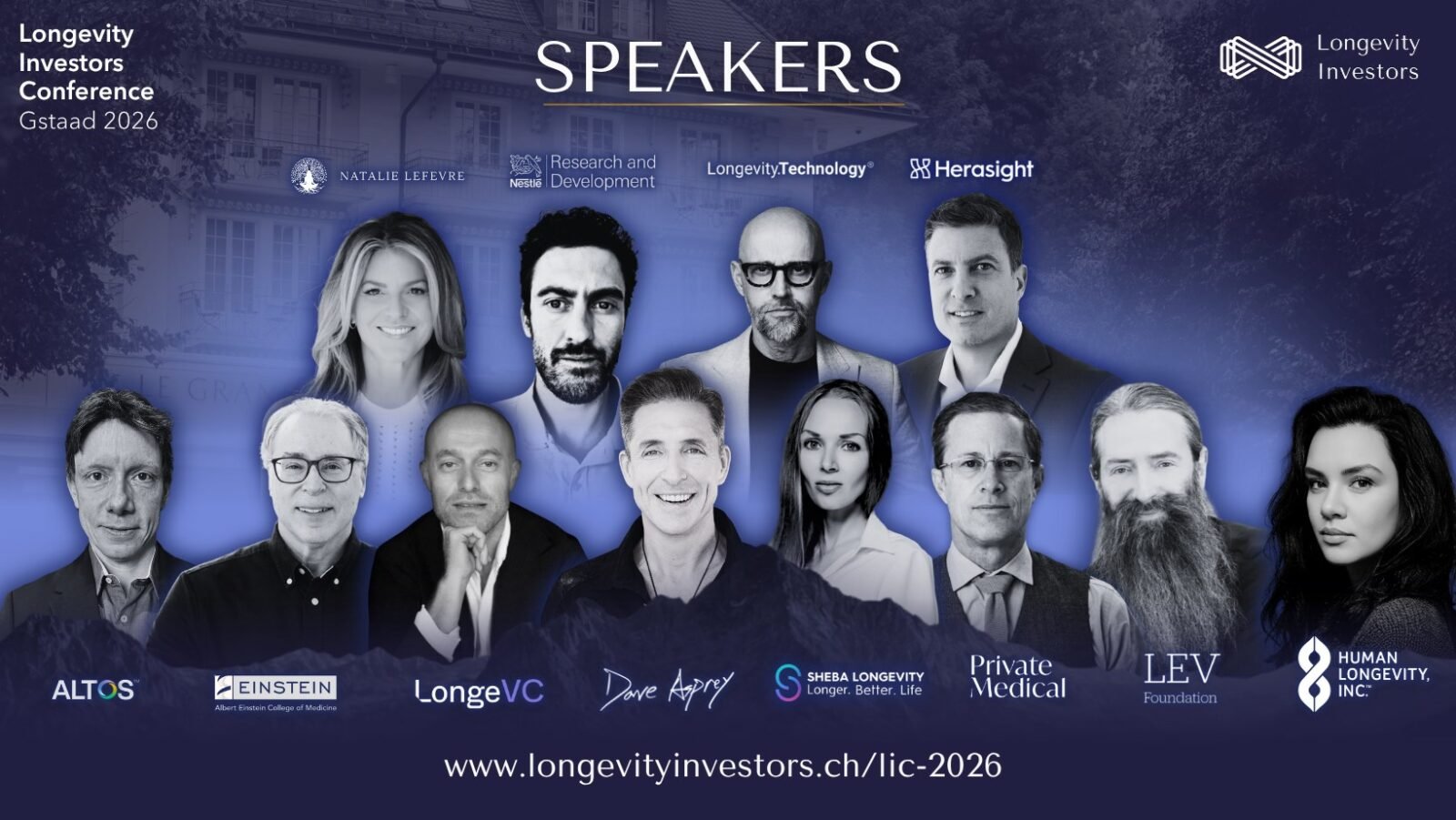
Gstaad is bringing institutional capital, family offices and longevity science into the same investment thesis. The Longevity Investors Conference 2026 opens today and runs through September 17. Organisers report an acceptance rate of around 20% and explicitly aim to connect institutional investors, funds, family offices and private capital with scientists and companies turning ageing research into investable opportunities. Speakers include Steve Horvath of Altos Labs, Nir Barzilai of the Institute for Aging Research, Collin Ewald of Novartis Biomedical Research, Michael Ringel of Life Biosciences and investors from organisations including HSBC Private Bank, LongeVC and Day One Ventures.
Executive impact: the key development is not another conference; it is the composition of the room. Longevity is increasingly being evaluated alongside biotech, consumer health, diagnostics, prevention and clinical services as a capital-allocation thesis. Companies will increasingly need to demonstrate scientific evidence, a viable regulatory or commercial pathway and an addressable market rather than merely making claims about living longer.
Cannes is turning the Silver Economy into an integrated industry spanning housing, care, AI, health and independence. The SilverEco & Ageing Well International Festival opens today at the Palais des Festivals with six dedicated summits covering nursing homes, ageing at home, caregivers, citizenship, SilverTech & AI, and healthy ageing. It also incorporates B2B matchmaking and international awards.
The nominated AgeTech solutions illustrate where the market is heading: agentic AI for age-related clinical trials, privacy-first AI voice companions, non-invasive AI and IoT monitoring for older people living at home, AI-supported care operations and voice-based clinical documentation. Executive impact: AgeTech is moving beyond emergency buttons and isolated devices towards an invisible intelligence layer across housing and care: sensors, voice, AI models, remote monitoring, workflow automation and risk prediction.
Regenerative medicine for frailty and Alzheimer’s is also seeking capital today in New York. Longeveron is presenting at the H.C. Wainwright Global Investment Conference on September 14. Its lead candidate, laromestrocel — Lomecel-B —, is an allogeneic mesenchymal stem-cell therapy. The company is pursuing four indications including Alzheimer’s disease and ageing-related frailty, while its Alzheimer’s programme has received both FDA Regenerative Medicine Advanced Therapy and Fast Track designations.
Executive impact: frailty may become one of longevity medicine’s most commercially relevant frontiers because it sits at the intersection of sarcopenia, inflammation, falls, hospitalisation and loss of independence. Geroscience companies may reach the market not by asking regulators to approve a therapy “for ageing,” but by targeting defined diseases and syndromes with measurable endpoints.
Alzheimer’s is sending a highly practical message this weekend: blood testing is advancing, but for people without symptoms, prevention still begins in midlife. The FDA has cleared four blood tests to help diagnose Alzheimer’s in people with cognitive symptoms, with p-tau217 emerging as an important biomarker. However, dementia specialists caution that these tests are not currently recommended for general screening of symptom-free individuals.
A study involving more than 12,000 people, followed for decades from an average age of roughly 56, found that people reaching midlife without hypertension, type 2 diabetes or smoking lived almost 13 additional years free of dementia compared with those carrying all three risks. Even APOE4 carriers benefited from healthier cardiovascular profiles.
Executive impact: brain health can become a prevention product twenty years before dementia. Employers, insurers and longevity clinics can build 50+ programmes around blood pressure, glucose, strength, physical activity, sleep, hearing and cognitive risk. The economic opportunity is not only earlier diagnosis; it is delaying millions of people from entering the most expensive stages of cognitive decline.
India is showing where one of the world’s largest Longevity Living booms could emerge. JLL reports that India already has 166.9 million people aged 60+, projected to reach 191.5 million by 2030 and 346 million by 2050. Yet the organised Senior Living sector had only about 25,050 units in June 2026. Penetration remains approximately 1.5%, compared with 6–7% in the US and 14–15% in New Zealand, while well-managed communities sustain occupancy of 80–85%.
Under JLL’s policy-driven scenario, stock could rise to approximately 74,000 units by 2030, requiring around $7.7 billion in capital investment and creating a total opportunity of roughly $10.1 billion across independent living, assisted care and integrated health services.
Executive impact: global Senior Living is no longer primarily a US or European story. Some of the largest opportunities may emerge where rapid ageing, urbanisation, internationally dispersed families and declining informal caregiving capacity converge.
Behind all of today’s developments sits a number every board should know: people aged 60+ represent approximately 15% of the global population but control 27% of consumer spending — around $19 trillion in 2026. That is projected to reach $34 trillion by 2036, when almost one in every three consumer dollars globally could be spent by someone over 60. Silver Economy markets already represent roughly $4.5 trillion and are expanding by around 7% per year.
Executive takeaway — September 14
The common thread is institutionalisation. Longevity now has dedicated investor gatherings, international B2B platforms, an accelerating AgeTech ecosystem, regenerative-medicine companies pursuing regulatory routes, dementia prevention moving into midlife and Real Estate markets treating ageing as structural demand.
The relevant boardroom question is no longer “do we have a strategy for older customers?” It is: what changes in our business when close to one-third of global consumer spending may increasingly come from people over 60 who expect to remain healthy, independent, technologically capable and economically active for decades?
That is the scale of the opportunity. The Longevity Economy is not merely building products for older people. It is building the infrastructure of longer lives.
Discover more from FIFTIERS
Subscribe to get the latest posts sent to your email.
What's Your Reaction?