


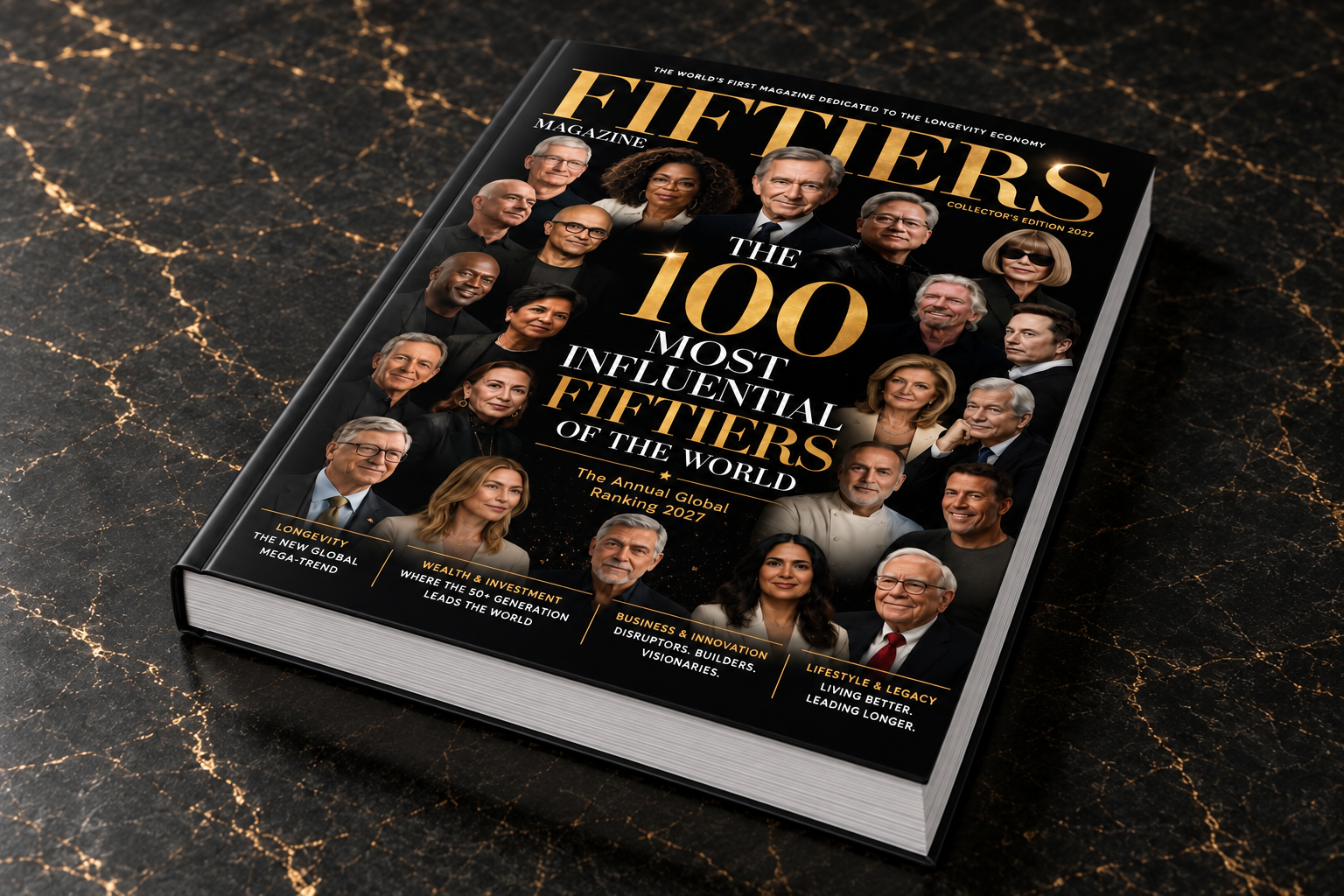

THE 100 MOST INFLUENTIAL FIFTIERS OF THE WORLD — Global Ranking 2027 #009 | Bill Gates: at 70, the man who helped put a computer on every desk now wants his next revolution to be longer, healthier lives

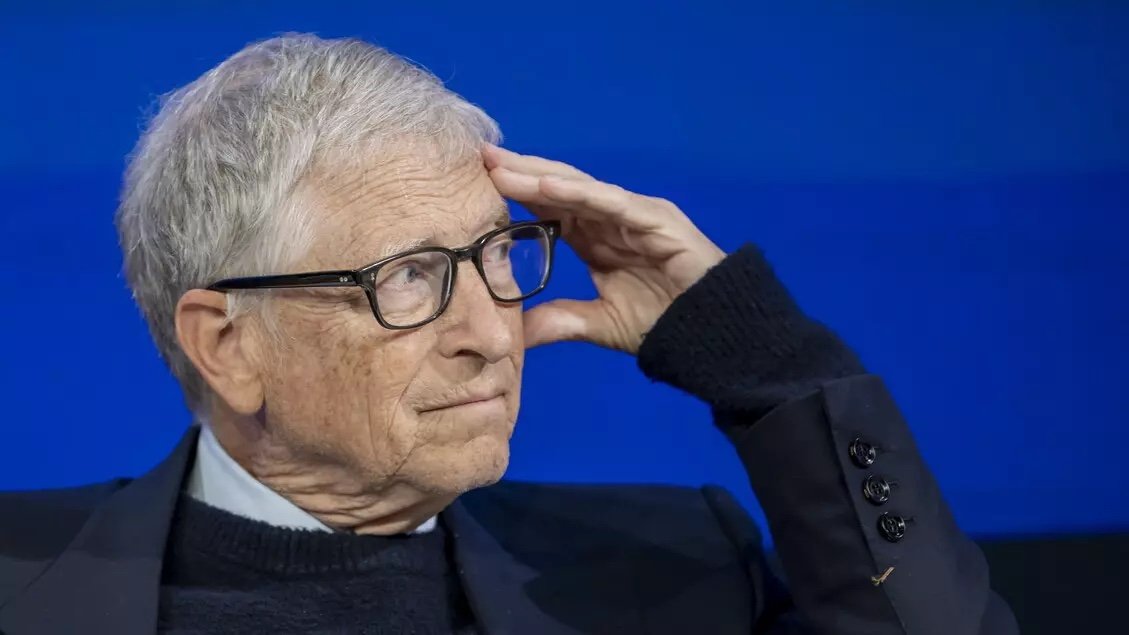

For four decades, Bill Gates was one of the defining figures of the digital revolution. At 70, his objective is very different: using capital, technology, science and global coordination to help millions of people live longer, healthier and more productive lives. Born on October 28, 1955, he remains fully active as Chair of the Gates Foundation, shaping its strategy and overall direction, while Gates Ventures pursues additional work spanning artificial intelligence, Alzheimer’s disease, healthcare, energy and climate technology.
His candidacy for THE 100 MOST INFLUENTIAL FIFTIERS OF THE WORLD — Global Ranking 2027 does not need to rest on Microsoft alone. That story is already historic: Gates co-founded Microsoft with Paul Allen in 1975 and helped turn software into one of the fundamental infrastructures of the modern economy. What is more revealing today is what happened afterwards. While many founders devote the second half of their lives to preserving the wealth created during the first, Gates has decided to execute one of the largest voluntary transfers of private wealth in history.
In May 2025, he announced that he would give away virtually all of his remaining wealth through the Gates Foundation and that the organization itself would permanently close on December 31, 2045. Between 2000 and 2025, the foundation distributed more than $100 billion. During its final two decades, it expects to spend roughly another $200 billion, about twice what it deployed throughout its first quarter-century. For 2026, its board approved a record annual payout of $9 billion. This is not an institution being designed to exist forever. It is capital being deployed against a deadline, while Gates can still participate directly in the decisions.
Even after decades of philanthropy, his financial capacity remains extraordinary. Forbes estimated his fortune at approximately $115 billion on September 10, 2026, ranking him 17th among the world’s richest people. The paradox is revealing: Gates remains one of the richest individuals alive while deliberately attempting not to remain one forever.
For FIFTIERS, however, the central point lies elsewhere. Bill Gates represents longevity at population scale. He is not primarily financing the idea that a small number of individuals might reach 130. His work targets something that may ultimately matter even more economically: enabling millions of people to live further into their lives without dying prematurely from infectious disease, maternal complications, lack of vaccination, malnutrition or weak health systems.
The Gates Foundation’s final chapter is organized around three major goals: eliminating preventable deaths among mothers, babies and children; helping the next generation grow up without deadly infectious diseases; and enabling hundreds of millions of people to escape poverty. The foundation says its support for Gavi and the Global Fund since 2000 has contributed to saving 82 million lives. Much of the approximately $200 billion it plans to deploy before 2045 will be directed toward Africa and other places where advances in vaccines, diagnostics, nutrition and primary care can reshape decades of healthy life and productivity.
That requires a broader definition of the longevity economy. Longevity does not begin at 60. It begins when a child survives early life, gains access to prevention, avoids treatable disease, receives adequate nutrition and reaches adulthood healthy enough to study, work, build a career, save and create wealth. Every additional year of healthy life is also a potential year of education, consumption, employment, investment and contribution to society.
Gates is therefore working on the invisible infrastructure of global healthspan.
In 2026, a new force is accelerating that strategy: artificial intelligence. In February, the Gates Foundation, Novo Nordisk Foundation and Wellcome announced a combined $60 million investment to evaluate AI tools in primary healthcare across low- and middle-income countries. In May, the foundation and Anthropic expanded that agenda through a $200 million four-year partnership combining grants, technical resources and support for AI-based public goods in health, education and agriculture. The objective is not merely to deliver advanced models to wealthy markets, but to use AI to expand scarce medical and technical capacity where it is needed most.
Perhaps the most direct connection between Gates and advanced longevity, however, involves a disease inseparable from aging: Alzheimer’s. Gates Ventures has spent years funding research, data infrastructure and new collaborative models in dementia science. In June 2026, Gates described the field as entering a potential “golden age” of Alzheimer’s research, driven by better diagnostics, emerging treatments and AI’s ability to find patterns across enormous volumes of biomedical data.
The Alzheimer’s Disease Data Initiative ecosystem now includes more than 340 datasets, over 10,000 registered researchers and users from more than 129 countries. In March 2026, a Gates-backed competition ultimately awarded two $1 million prizes to agentic AI systems designed to accelerate dementia research. Then in June, Gates Ventures, ADDI and Alamar Biosciences announced an international project to profile more than 40,000 plasma samples, creating a major proteomic resource for discovering biomarkers linked to early diagnosis, disease progression and treatment response.
This may become one of Gates’s most consequential contributions to the future longevity economy: turning biomedical data into shared infrastructure. In complex diseases such as Alzheimer’s, Parkinson’s and ALS, individual hospitals and laboratories each hold incomplete pieces of the problem. Combining genomic, proteomic, imaging, clinical and trial data gives AI the opportunity to identify relationships that might otherwise remain hidden for years.
Half a century ago, Gates understood that software would become more powerful as computers became connected to information.
He is now applying a similar logic to biology.
There is also a profoundly generational dimension to his story. Gates turns 71 in October and has designed a plan that ends when he is 90. That fundamentally challenges the conventional narrative of retirement. At 70, he is not winding down his work; he has established a twenty-year execution horizon for the final phase of his largest philanthropic project.
That is precisely one of the ideas FIFTIERS seeks to represent. As healthy life expectancy expands, people in their 60s and 70s can begin projects whose time horizons would have seemed improbable to previous generations. Accumulated capital, experience, global networks and the ability to distinguish temporary fashions from structural change can make these years exceptionally productive.
Gates also possesses a rare advantage: he has personally lived through two technological revolutions. He helped shape the PC era and now watches the rise of generative AI from a position where he can connect technology with health, education, energy and international development.
His next legacy may therefore not be another technology product.
It may be proving that the most valuable innovation is not necessarily the one that allows machines to do more, but the one that gives more people more healthy years in which to do more themselves.
FIFTIERS EDITORIAL VERDICT: Bill Gates deserves a prominent position among the candidates for THE 100 MOST INFLUENTIAL FIFTIERS OF THE WORLD — Global Ranking 2027 because at 70 he continues to deploy an almost unmatched combination of capital, technology, science, philanthropy and global convening power. After helping transform personal computing, he has defined a second mission for the next two decades: use virtually all of his fortune to improve health, reduce mortality, accelerate research and expand opportunity. His influence on the longevity economy is not merely about adding years at the end of human life. It is about trying to add healthy years to millions of lives from beginning to end.
Discover more from FIFTIERS
Subscribe to get the latest posts sent to your email.
What's Your Reaction?