




Age Spots After 50: Why They Appear, When You Should Be Concerned, and the Most Effective Ways to Remove Them


As life expectancy continues to rise, more people are focusing not only on living longer but also on maintaining healthy, vibrant skin throughout their lives. The skin is the largest organ in the human body and one of the first to reveal the passage of time. Among all visible signs of ageing, age spots—also known as sun spots or solar lentigines—are perhaps the most common concern after the age of 50. While most of these pigmented lesions are completely harmless, some may be the first visible sign of skin cancer. Understanding why they develop, how to prevent them, and the treatments available has become an important aspect of both preventive healthcare and healthy ageing.
For many years, age spots were considered an inevitable consequence of getting older. Modern dermatological research has completely changed that perspective. Experts now estimate that up to 80% of visible skin ageing is caused not by chronological ageing itself, but by cumulative exposure to ultraviolet (UV) radiation, a process known as photoaging. In other words, most age spots are not simply the result of turning 50 or 60—they are the visible record of decades of sun exposure.
Every time the skin is exposed to sunlight, specialized cells called melanocytes produce melanin, the pigment responsible for protecting our DNA from ultraviolet damage. During youth, this protective response is generally well regulated, creating an even tan. However, after years of repeated UV exposure, melanocytes begin to function irregularly. Some produce excessive amounts of melanin while others become less active, leading to uneven pigmentation and the appearance of dark spots.
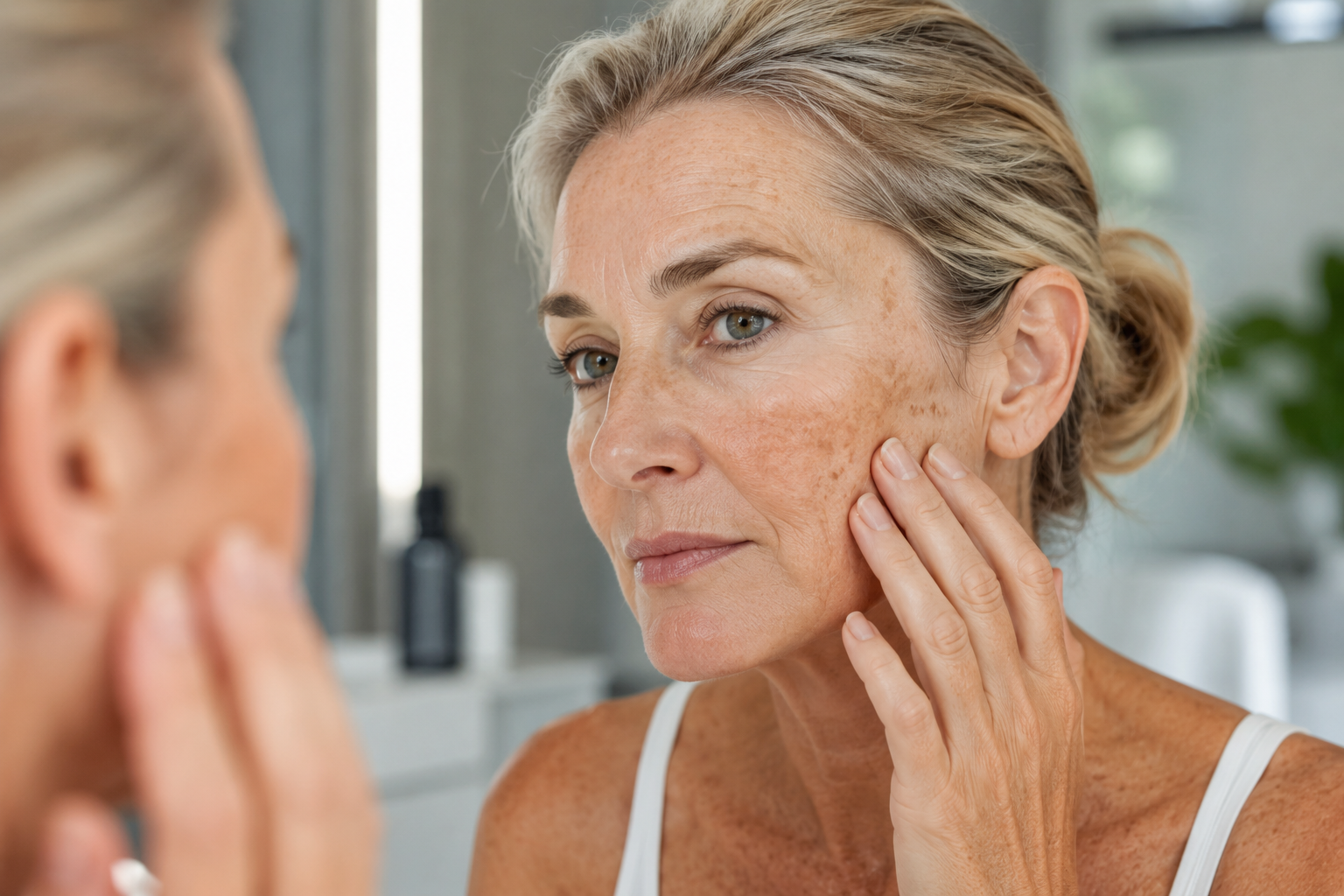
The most common pigmented lesions after the age of 50 are solar lentigines, often referred to as “age spots” or “liver spots,” although they have no connection to liver disease. These flat, well-defined brown spots typically appear on areas that have received the greatest lifetime sun exposure, including the face, hands, shoulders, forearms, chest, and upper back. Although entirely benign, they are widely regarded as one of the clearest visible signs of photoaging.
Another common pigmentation disorder is melasma, although it occurs far more frequently in women and is usually associated with hormonal changes, genetic predisposition, and sun exposure. In men, cumulative UV damage remains by far the leading cause of facial pigmentation changes later in life.
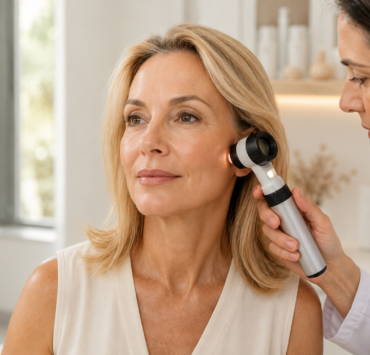
Not every dark spot should be dismissed as a harmless cosmetic concern. Dermatologists emphasize that any new lesion that changes rapidly in size, shape, colour, or texture, develops irregular borders, bleeds spontaneously, becomes persistently itchy, or fails to heal should be evaluated promptly by a dermatologist. Skin cancer is now the most frequently diagnosed cancer worldwide, and its incidence continues to increase every year. Fortunately, when detected early, the vast majority of skin cancers can be treated successfully.
The principal cause of these pigmentation changes is ultraviolet radiation. Many people still associate sun damage primarily with beach holidays, but scientific evidence tells a different story. Most lifetime UV exposure occurs during everyday activities: driving, walking outdoors, exercising, gardening, commuting, or simply sitting near windows. Unlike UVB rays, UVA radiation penetrates glass and remains relatively constant throughout the year, regardless of season or cloud cover. These rays penetrate deep into the skin, accelerating collagen degradation, damaging elastic fibres, increasing oxidative stress, and disrupting normal pigment production.
Ageing itself also contributes to visible pigmentation changes. From approximately the age of 30, collagen production declines by around 1% each year, skin renewal slows, antioxidant defences weaken, and the skin becomes less efficient at repairing DNA damage caused by ultraviolet light. As a result, pigmentation becomes increasingly uneven, and existing sun damage accumulated over previous decades becomes more visible.
The encouraging news is that modern dermatology offers highly effective treatments capable of dramatically improving skin tone and reducing unwanted pigmentation. However, every dermatologist agrees on one essential principle: no treatment will provide long-lasting results unless daily sun protection becomes part of the routine. Broad-spectrum sunscreen with an SPF of 50 or higher should be applied every day of the year, even during cloudy weather or when spending most of the day indoors with natural daylight. Daily photoprotection remains the single most effective strategy for preventing new age spots and stopping existing ones from becoming darker.
Medical-grade skincare also plays an important role. Among the most scientifically supported ingredients are retinoids, vitamin A derivatives that stimulate collagen production, accelerate cellular turnover, and gradually reduce superficial pigmentation. Vitamin C acts as a powerful antioxidant, neutralising free radicals generated by UV exposure while helping brighten the complexion. Niacinamide helps regulate melanin transfer within the skin and strengthens the skin barrier, while ingredients such as azelaic acid, kojic acid, glycolic acid, tranexamic acid, and cysteamine have all demonstrated effectiveness in treating different forms of hyperpigmentation.
For more pronounced pigmentation, in-office dermatological procedures often produce faster and more dramatic improvements. Chemical peels remove damaged superficial skin layers while stimulating new skin regeneration. Intense Pulsed Light (IPL) has become one of the most widely used treatments for multiple sun spots affecting the face, neck, chest, and hands. Meanwhile, advanced pigment lasers—including Q-switched lasers and the latest picosecond laser systems—allow dermatologists to selectively target melanin with remarkable precision while minimising recovery time.
One of the strongest trends in aesthetic dermatology is the use of combination therapies. Rather than focusing solely on removing individual spots, many dermatologists now develop personalised treatment protocols that combine prescription skincare, laser technology, chemical peels, collagen-stimulating procedures, and advanced regenerative techniques. The objective is no longer simply to erase pigmentation but to restore healthier skin quality, improve luminosity, and achieve a more youthful, even complexion.
Lifestyle choices also influence long-term skin health. A Mediterranean-style diet rich in colourful fruits, vegetables, extra virgin olive oil, oily fish, nuts, and antioxidant-rich foods helps reduce oxidative stress, one of the major drivers of premature skin ageing. Avoiding smoking, maintaining adequate hydration, exercising regularly, sleeping well, and managing chronic stress further support healthy skin function. While nutrition alone cannot eliminate existing age spots, it contributes to healthier skin that is more resilient against future damage.
Aesthetic medicine has evolved dramatically over the past decade. Today’s goal is no longer to erase every sign of ageing but to preserve healthy, natural-looking skin that reflects vitality rather than artificial perfection. Modern treatments aim to improve skin quality while maintaining natural facial expression, allowing individuals to look refreshed without appearing overtreated.
Ultimately, age spots should not be viewed merely as a cosmetic issue. They are visible evidence of a lifetime of sun exposure and, in some cases, may serve as an early warning sign requiring medical evaluation. Daily sun protection remains the most powerful preventive strategy, while advances in dermatology now provide highly effective solutions for those wishing to improve skin appearance safely and naturally. In an era when people routinely live well into their eighties and beyond, caring for the skin has become an essential part of healthy longevity. Looking after your skin is not simply about aesthetics—it is about preserving one of your body’s most important organs while reflecting health, confidence, and vitality at every stage of life.
Discover more from FIFTIERS
Subscribe to get the latest posts sent to your email.
What's Your Reaction?