


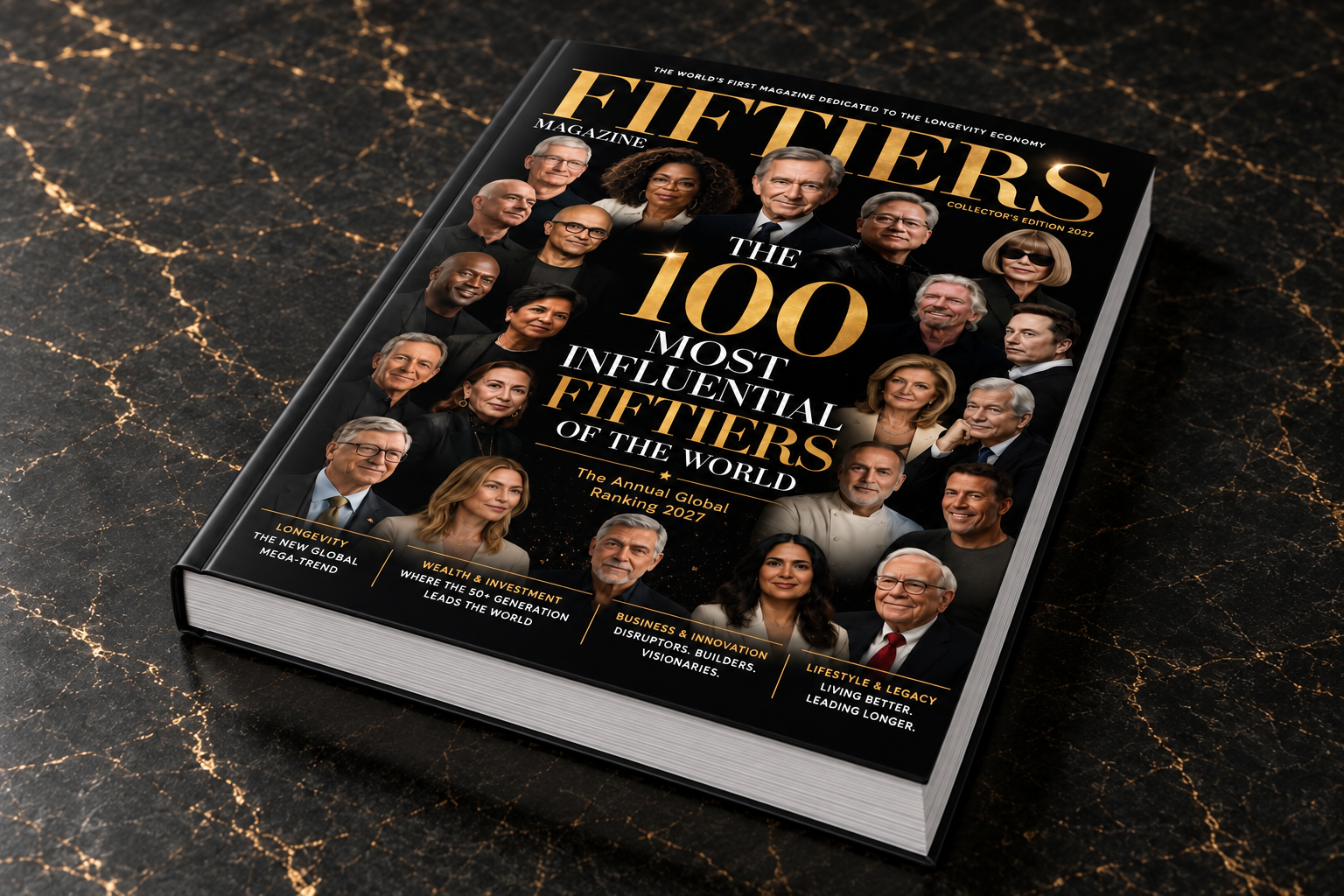
THE 100 MOST INFLUENTIAL FIFTIERS OF THE WORLD — Global Ranking 2027 #011 | Warren Buffett: at 96, the investor who turned time into capitalism’s greatest competitive advantage

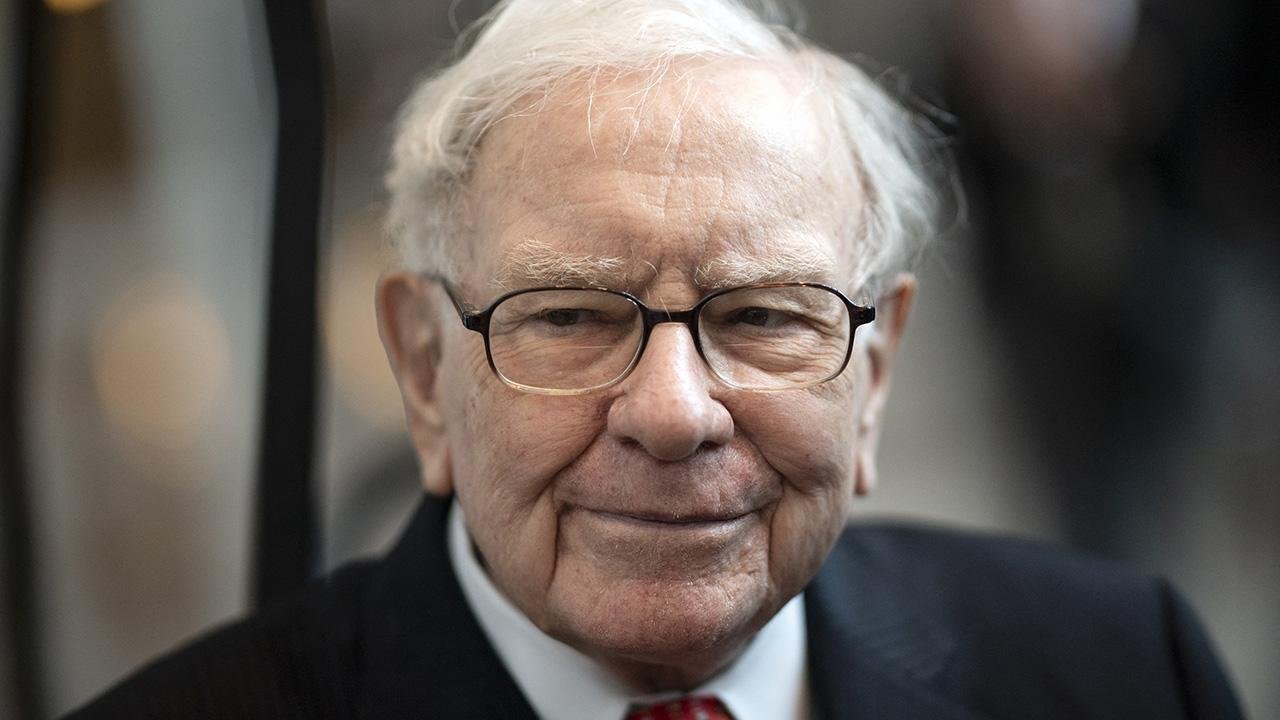

Some business leaders derive their influence from a technology, a company or a transformative transaction. Warren Buffett’s influence derives from something even scarcer: time. Born in Omaha on August 30, 1930, he has just turned 96 and remains alive, active and connected to Berkshire Hathaway as Chairman after handing the CEO role to Greg Abel on January 1, 2026. It is the first time in six decades that Buffett has not served as chief executive of the conglomerate he transformed from a struggling textile company into one of the world’s most formidable business organizations. The transition does not mean disappearance: he remains chairman, a major shareholder and a figure whose judgment continues to carry extraordinary weight inside Berkshire.
His candidacy for THE 100 MOST INFLUENTIAL FIFTIERS OF THE WORLD — Global Ranking 2027 is almost unavoidable, but not simply because he is one of history’s most successful investors. Buffett represents a central proposition of the emerging longevity economy: what happens when an exceptionally long professional life allows knowledge, reputation, capital and experience to compound for seven or eight decades instead of being interrupted by conventional retirement.
Buffett purchased his first stock at 11. More than eight decades later, he is still interpreting markets. Between those two moments, he created an investment philosophy that changed how generations of executives and capital allocators think: buy understandable businesses, demand durable competitive advantages, trust capable management, avoid unnecessary leverage and allow compounding to do over decades what others attempt to achieve through constant activity.
The defining word of his career may therefore not be “investing.”
It is patience.
Berkshire Hathaway is the corporate experiment demonstrating how far that philosophy can travel. At the end of June 2026, Berkshire reported $747.9 billion in shareholders’ equity and approximately $359.2 billion in cash, cash equivalents and U.S. Treasury bills across its insurance and other businesses. During 2026 alone, it completed the acquisition of OxyChem for approximately $9.4 billion and Taylor Morrison for roughly $6.8 billion. Even after the leadership transition, Berkshire retains capital-allocation capacity matched by very few private enterprises anywhere in the world.
The 2026 transition also offers an extraordinary lesson in leadership and institutional longevity. At Berkshire’s annual meeting in Omaha on May 2, Buffett was no longer at center stage. He sat with the board while Greg Abel led the gathering for the first time as CEO. Buffett spoke briefly and said the new arrangement was working. The visual message was almost as important as the words: one of the most recognizable business figures of the past century was demonstrating that a founder’s final responsibility is not to remain in control forever, but to make sure the institution can continue when somebody else takes over.
That transition matters because Berkshire was not designed solely around founder charisma. Buffett spent decades attempting to build a culture: decentralization, trust in managers, financial rationality, autonomy, reputation and an exceptionally long time horizon. Its real test now begins. If Berkshire preserves those characteristics ten, twenty or thirty years from now under new leadership, Buffett’s greatest asset will not have been a stock portfolio. It will have been a decision-making system capable of surviving its creator.
At 96, his personal fortune still places him among the wealthiest people on earth. Forbes estimated his net worth at approximately $144 billion on September 10, 2026, placing him once again around tenth globally. The figure becomes even more extraordinary when considered alongside the fact that Buffett has spent decades giving Berkshire stock away. Forbes estimated in February 2026 that his lifetime philanthropy had already reached $68.3 billion; in July, he added another transfer of Berkshire shares worth nearly $6 billion to four family-linked foundations.
His current plan pushes that transfer even further. Buffett has stated that he intends to dispose of all his remaining Berkshire shares over roughly the next eight years, establishing December 31, 2034 as the ultimate date by which those holdings should have passed to four family foundations. At 96, he is therefore managing two transitions simultaneously. One is corporate, placing Berkshire into a new generation of leadership. The other is patrimonial, transforming one of the world’s largest private fortunes into philanthropic capital.
This second transition has enormous relevance to the longevity economy because it anticipates a question that will affect millions of families in the decades ahead: what happens when people live longer and wealth remains under the control of its creators for far more years? Longer lives are already changing succession planning, family offices, trusts, taxation, corporate governance and philanthropy. It will become increasingly insufficient to plan only for what happens at death. More families will need wealth transitions lasting twenty or thirty years, allowing several generations to collaborate while founders remain alive.
Buffett has become, perhaps unintentionally, one of the most important case studies in that emerging architecture.
Yet there is an even deeper reason he belongs in FIFTIERS.
Warren Buffett demonstrates that the economic value of experience does not necessarily decline with age. It can increase.
His competitive advantage today is not that he works longer hours than a thirty-year-old portfolio manager or reacts faster to a trading screen. It is that he has observed inflation, recessions, wars, technology bubbles, banking crises, market crashes, speculative frenzies and corporate transformations for longer than almost any active investor. Every new cycle can be compared against an internal library of previous ones.
That is accumulated cognitive capital.
And the longevity economy will need to learn how to value it.
Much of twentieth-century employment architecture assumed that accumulated knowledge rapidly lost economic relevance after a particular age. A society in which healthy people increasingly reach their 90s or even 100 requires another model. Not everyone will work until 96, nor should they. But millions of experienced professionals will be able to remain economically active far longer through boards, investing, entrepreneurship, mentoring, teaching, consulting and entirely new ventures.
Buffett represents the extreme version of that possibility: a professional life spanning more than eighty years.
His lifestyle has also made him a cultural figure. The Omaha home purchased in 1958, his highly publicized affection for Coca-Cola, straightforward breakfasts and deliberate absence of much of the extravagance associated with extreme wealth contrast sharply with a fortune larger than the annual output of many countries. That simplicity is part of the Buffett brand, but it also reflects an economic principle: money has historically offered him greater utility as deployable capital than as immediate consumption.
That is why his story is inseparable from compounding. Compounding does not primarily reward someone for being brilliant for one year. It rewards the ability to remain in the game for a very long time.
This may be the most powerful connection between Buffett and longevity.
If an individual can extend healthy years, they also extend the period over which knowledge, relationships, reputation and capital can accumulate. Five or ten additional productive years can dramatically alter personal wealth. Twenty can transform a business. Fifty can create an institution.
Buffett has had longer than almost anyone to demonstrate the principle.
His story does not need to be turned into a biological formula for longevity. Buffett has spent decades joking about a diet that hardly resembles conventional health advice. It would be absurd to derive medical recommendations from his case. What matters is not why Warren Buffett reached 96, but what he did with those years.
He used time as an asset.
He allowed small decisions to become enormous outcomes.
He converted reputation into access.
He converted decades of learning into judgment.
And now he is attempting to convert private wealth into institutional legacy.
FIFTIERS EDITORIAL VERDICT: Warren Buffett deserves consideration among the leading candidates for THE 100 MOST INFLUENTIAL FIFTIERS OF THE WORLD — Global Ranking 2027 because at 96 he may represent the most powerful business example of the economic value of an extraordinarily long professional life. His influence spans investing, corporate leadership, wealth, philanthropy, governance and global financial culture. But his greatest lesson for the longevity economy reaches even further: when time is combined with discipline, sufficient health, knowledge and capital, the final chapters of a life can remain as consequential as the first. Buffett turned compound interest into an investment philosophy. His own career has ultimately become a demonstration of compounding applied to life itself.
Discover more from FIFTIERS
Subscribe to get the latest posts sent to your email.
What's Your Reaction?