



THE 100 MOST INFLUENTIAL FIFTIERS OF THE WORLD — Global Ranking 2027 #010 | Ray Kurzweil: at 78, the inventor who has spent six decades trying to push technology beyond the limits of biology

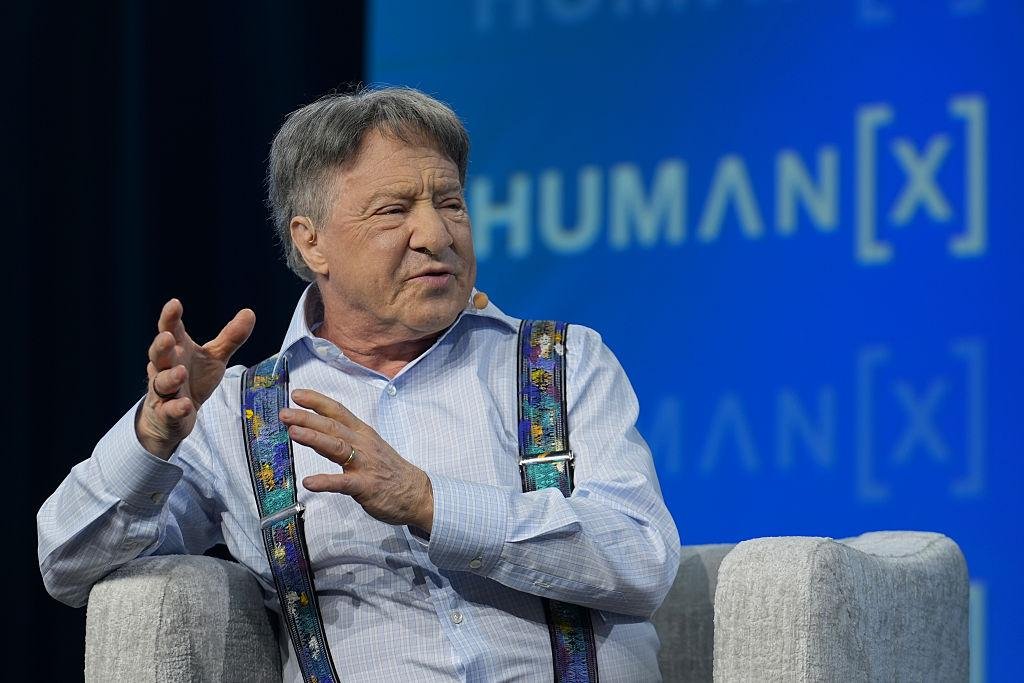

Some futurists write about technologies invented by other people. Others first help invent the future and then attempt to anticipate what comes next. Ray Kurzweil belongs firmly in the second category. Born in New York on February 12, 1948, he is now 78 years old, remains active in artificial intelligence and has just added another role to a career spanning more than six decades: on September 3, 2026, he joined neurotechnology startup Subsense as Product and Vision Advisor, while continuing his association with Google as an AI researcher and visionary. At an age when conventional career models would suggest withdrawal, Kurzweil is still working on a radically different question: what happens if technology expands not only human capability, but the biological limits of human life itself?
His candidacy for THE 100 MOST INFLUENTIAL FIFTIERS OF THE WORLD — Global Ranking 2027 does not depend on whether every one of his predictions proves correct. Some remain highly debated within science and technology. His influence comes from something considerably harder to achieve: for decades, he has placed questions on the technological agenda that later evolved into major industries. Artificial intelligence, speech recognition, human-machine interfaces, computational biology, digital knowledge and radical life extension appeared throughout his work long before they became everyday topics in Silicon Valley.
Long before becoming one of the world’s best-known futurists, Kurzweil had already built an extraordinary career as an inventor. He was a principal developer of omni-font optical character recognition, the first print-to-speech reading machine for blind people, major text-to-speech and speech-recognition technologies, and the Kurzweil synthesizer capable of reproducing acoustic instruments with remarkable fidelity. He received the National Medal of Technology in 1999, the $500,000 Lemelson-MIT Prize in 2001 and was inducted into the National Inventors Hall of Fame in 2002. His career therefore did not begin by imagining what others might invent. It began by repeatedly turning ideas that appeared futuristic into functioning technologies.
That history is central to understanding why his theories have carried such influence. Kurzweil has long argued for what he calls the Law of Accelerating Returns: the idea that information technologies can advance exponentially rather than linearly. Under that framework, artificial intelligence, genetic sequencing, computational biology and other information-driven fields may appear to progress gradually for years before accelerating rapidly as computing power, data and knowledge compound.
His best-known prediction remains that AI could reach human-level capability around 2029, followed by increasingly deep integration between human and machine intelligence. His book The Singularity Is Nearer, the successor to The Singularity Is Near, extends that thesis into AI, brain-computer integration, biotechnology, nanomedicine and radical life extension. These remain forecasts rather than established outcomes, and their timelines should be treated accordingly. Yet it is increasingly difficult to ignore how many subjects that sounded like science fiction twenty years ago — conversational AI, generative models, neural interfaces and computational protein modeling among them — now sit squarely inside the global technology agenda.
For FIFTIERS, however, Kurzweil’s most provocative idea may be Longevity Escape Velocity. The concept describes a hypothetical point at which medical progress adds more than a year to a person’s remaining life expectancy for every chronological year that passes. Aging would continue, but advances in diagnosis, biotechnology, AI, regenerative medicine and other interventions would theoretically extend remaining healthy life even faster. Kurzweil believes humanity could approach such a threshold in the years ahead. Current science cannot establish that this will occur on his proposed timetable, and human longevity still faces formidable biological constraints. Yet the question he raises is becoming one of the most important economic propositions of our era: what happens when the speed of medical innovation begins competing with the speed of aging?
The economic consequences would be enormous. Medicine capable of delaying cardiovascular disease, cancer, neurodegeneration, frailty, cognitive decline or loss of physical function would create far more than another healthcare market. It would reshape pensions, insurance, savings, housing, education, employment, consumer behavior, tourism, wealth management and estate planning. People remaining healthy for longer could work for additional years, launch several careers, accumulate capital for longer periods and reorganize the traditional division of life into education, work and retirement. Longevity would cease to be merely a medical issue and become a new economic architecture for human life.
Kurzweil has spent decades anticipating precisely this convergence between artificial intelligence and biology. His argument is that as biology becomes increasingly measurable, modelable and simulatable as information, computational methods will play a growing role in medicine. Today’s rapid development of protein models, AI drug discovery, genomics, diagnostics, biomarkers and molecular design does not automatically validate his most radical predictions. It does, however, move medicine in a direction he has described for years: biology becoming progressively readable and programmable.
In 2026 that vision entered another frontier. On September 3, Kurzweil appeared in Palo Alto to announce his role with Subsense, a four-year-old neurotechnology company that has raised approximately $27 million and remains at the preclinical stage. Subsense is investigating a brain-computer interface approach involving nanoparticles introduced intranasally and externally controlled magnetic fields designed to read or stimulate neuronal activity, potentially avoiding the cranial surgery required by other BCI systems. The technology remains years from proving clinical viability and is currently being tested through individual components and animal work, but Kurzweil will advise its product road map and its vision for the convergence of AI and neural interfaces.
The move is remarkably consistent with an idea he has promoted for decades: the next major leap may not involve creating increasingly intelligent computers outside the human body, but expanding human intelligence through deeper connection with computation. At the AI for Good Global Summit in July 2026, Kurzweil again argued that AI may ultimately merge with humanity rather than simply replace it. He even appeared alongside RAI, a digital avatar built from decades of his writings, memories and interviews. Earlier in the year, at HumanX San Francisco, he was still publicly discussing agentic systems, exponential science and the next stage of human-AI interaction.
And this reveals a second, profoundly FIFTIERS dimension to Ray Kurzweil.
He is 78 years old.
He has worked in artificial intelligence since the field itself was in its infancy. He witnessed the mainframe, the personal computer, the internet, smartphones, cloud computing, machine learning, transformers and generative AI emerge in succession. Instead of becoming merely a historical witness to those revolutions, he is still attempting to influence the next one.
Few careers illustrate productive longevity more clearly. His asset today is not simply technical knowledge. It is six decades of watching which technologies scale, which fail and how ideas initially dismissed as marginal can eventually become global platforms. In exponential industries, that historical memory can itself become an extraordinary competitive advantage.
Kurzweil also requires us to maintain a necessary degree of skepticism. Some of his most ambitious forecasts — the technological singularity, extensive medical nanobots, direct integration of human intelligence with cloud computation and radical life extension — remain hypotheses. Treating them as certainties would confuse futurism with science. But dismissing them solely because they still sound extreme would create the opposite error. The value of thinkers such as Kurzweil is that they expand the range of questions society considers worth investigating.
Fifty years ago, it seemed extraordinary that a machine might read a printed book aloud to a blind person.
Thirty years ago, that a computer could naturally recognize human speech.
Twenty years ago, that artificial intelligence could sustain a complex conversation.
Today, all three belong to ordinary technological life.
The important question is therefore not whether every remaining Kurzweil prediction will prove correct.
It is which things we currently consider impossible will look completely ordinary by the time he turns 90.
FIFTIERS EDITORIAL VERDICT: Ray Kurzweil deserves consideration among the leading candidates for THE 100 MOST INFLUENTIAL FIFTIERS OF THE WORLD — Global Ranking 2027 because at 78 he represents an exceptional combination of invention, artificial intelligence, long-range vision and longevity thinking. His impact comes not merely from forecasting technologies, but from having directly helped create several of them. Today he remains active at the convergence of AI, neurotechnology and human capability while advancing one of the most radical propositions in the longevity economy: that technological progress could one day move faster than biological aging itself. His timetable may change. Some predictions may never materialize. Yet for more than six decades, Kurzweil has repeatedly helped transform questions that sounded like science fiction into technological programs that somebody eventually tries to build.
Discover more from FIFTIERS
Subscribe to get the latest posts sent to your email.
What's Your Reaction?