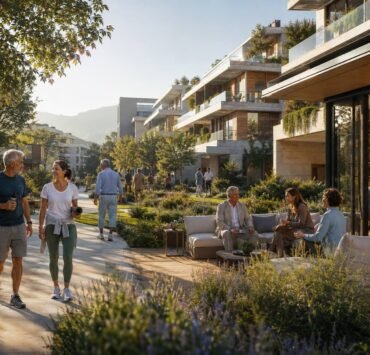





Spain has everything it needs to become Europe’s Longevity Living™ capital: the next major Real Estate opportunity



Spain is approaching 50 million residents, already has approximately 10.5 million people aged 65 and over, offers a life expectancy of 84 years, could reach 6.7 million one-person households by 2041, welcomed 96.8 million international tourists in 2025 and attracted €4.593 billion of investment into Living assets during the first half of 2026 alone. The opportunity is not to build more housing associated with old age, but to create the residential infrastructure required by longer, more active and more demanding lives.
For too long, Spain has viewed longevity almost exclusively as a source of pressure on pensions, healthcare, dependency and care services. Yet living longer also transforms housing, wealth, tourism, consumption, relationships, work, mobility and the way people wish to organize the final four or five decades of adult life. This transformation could open one of the country’s largest undeveloped real estate markets.
The opportunity is called Longevity Living™.
It is not a new name for care homes or a premium version of Senior Living. It is a much broader real estate category designed for people who want to preserve their health, independence, energy, relationships, decision-making ability and sense of purpose for longer. It can begin at 50 or 55, long before any care requirement appears, and accompany a person through multiple stages without forcing them to change their home, community or relationships whenever their circumstances evolve.
Spain possesses a combination few countries can offer simultaneously: longevity, climate, walkable cities, heritage, gastronomy, culture, air connectivity, healthcare infrastructure, tourism leadership, hospitality talent, extensive homeownership among mature generations and a location capable of attracting residents from across Europe. What it does not yet possess is a professional Longevity Living™ supply capable of turning those advantages into an integrated product.
Longevity Living™ is not Senior Living under a different name
Senior Living has traditionally been developed around the resident’s age or level of independence. It can include independent housing for older adults, 55-plus communities, assisted living, memory care and residential formats connected with support and care. Its central question is: where should an older person live?
Longevity Living™ asks a different question: what should a residential environment provide to help people live better throughout a 90- or 100-year life?
That distinction changes the entire product. Residents do not have to see themselves as old, retired or in need of assistance. They may continue working, building companies, investing, travelling, studying, forming relationships and contributing actively to society. The product must therefore integrate housing, hospitality, preventive health, wellness, nutrition, movement, sleep, learning, culture, technology, nature, community and purpose.
Senior Living can form part of the ecosystem when support requirements emerge. Longevity Living™ begins earlier, aims to preserve human capacity and does not make chronological age the resident’s defining identity.
Senior Living organizes a solution around a stage of age. Longevity Living™ builds an ecosystem around a long life.
Spain already has approximately 10.5 million people aged 65 and over
Spain’s population reached 49,801,559 on 1 July 2026. People aged 65 and over account for 21.1% of the population, equivalent to approximately 10.5 million residents. Under the Spanish National Statistics Institute’s central scenario, that proportion could reach 30.9% by 2076. The Institute stresses that its projections are simulations based on demographic assumptions rather than predictions, but the structural direction remains clear: longer-living generations will represent an increasingly large part of the country.
The age of 65 no longer represents the immediate beginning of a final stage. Life expectancy at birth in Spain reached 84.01 years in 2024, with 81.38 years for men and 86.53 for women. A person reaching 65 could expect to live another 21.87 years on average: 19.87 years for a man and 23.64 for a woman. This period is as long as the journey from birth to completing a university degree.
The real estate consequence is profound. A home selected at 55, 60 or 65 may have to serve its resident for thirty or forty years. It must adapt to physical, family, professional and financial changes without prematurely becoming an institutional or care-oriented environment. The winning product will not remind residents of their age; it will allow them to forget it.
Demand will come not only from ageing, but from the transformation of households
Spain is projected to move from 19.76 million households in 2026 to 21.94 million in 2041, an increase of 11.1%. One-person households would experience the fastest growth, rising from 5.62 million to 6.72 million, an increase of 19.6%. By then, they would account for 30.6% of all households and become the country’s most common household type. Two-person households would reach another 6.69 million.
Not all these residents will be older, but the trend points towards smaller households, more individualized lives and a growing need to combine privacy with voluntary access to services and social connection. A conventional apartment may provide privacy, but it does not automatically address isolation, mobility, nutrition, activities, wellbeing or the gradual adaptation of the home.
CBRE estimates that more than two million people aged 65 and over live alone in Spain, approximately 20% of this population, while close to 40% are widowed, single or divorced. These figures should not be used to portray longevity as a problem. They show that demand is emerging for environments that respect independence without making unwanted loneliness the price of preserving it.
Longevity Living™ does not prescribe compulsory collective living. It offers something more sophisticated: a private home within an ecosystem that facilitates relationships, activity, optional support and belonging whenever residents choose to access them.
Mature generations hold housing wealth, but not always liquid income
One of Spain’s defining characteristics is the connection between longevity and property ownership. The latest detailed microdata from the Spanish Survey of Household Finances show median net wealth rising from €20,069 among households under 35 to €189,872 among those aged 55-64. It reaches a peak of €223,960 among households aged 65-74 and remains at €221,254 among those over 74.
Homeownership follows the same pattern. In 2022, 31.8% of households under 35 owned their primary residence, compared with 78.8% of those aged 55-64, 83% of those aged 65-74 and 84% of those over 74. Mature generations therefore hold much of their wealth in homes frequently designed for family structures that no longer exist.
Wealth, however, does not automatically translate into disposable income. Median annual household income stood at €27,416 among those aged 65-74 and fell to €19,651 among households over 74. Residents may own a valuable property while having limited monthly capacity to pay high service fees.
This apparent contradiction creates a major opportunity for residential and financial innovation. Spanish Longevity Living™ will need models capable of transforming illiquid housing wealth into housing, services and long-term security, with strong transparency and consumer protection. Ownership, rental, rights of use, cooperative formulas and hybrid models can coexist, including solutions in which part of the previous home’s value finances the next stage.
The conclusion for developers and investors is essential: Spain does not simply have a longer-living population. It has a longer-living population that owns substantial housing assets but requires propositions capable of converting those assets into a better quality of life.
Spain already possesses an international customer-acquisition platform: tourism
Spain welcomed 96.8 million international tourists in 2025, a new historic record. Their expenditure reached €134.712 billion, 6.8% more than in the previous year. The United Kingdom, Germany and France were among the leading source markets, and all three countries are experiencing rapid growth in mature generations.
Tourism contributed €200.699 billion to the Spanish economy in 2024, equivalent to 12.6% of GDP, and supported approximately 2.78 million jobs. Spain is therefore not starting from zero in Longevity Living™. It already has airports, destination brands, hotel operators, restaurants, wellness services, customer-experience talent, multilingual capabilities and an enormous capacity to attract international demand.
The next step is to convert part of this tourist relationship into a long-term residential relationship. Millions of Europeans already know Spain, return regularly, maintain emotional connections with specific destinations and may consider spending several months a year—or an entire stage of life—in the country.
This transition has already begun. Between 2019 and 2024, Spain’s foreign senior population increased by 46% to more than 510,000 residents. UK and German citizens lead the segment, and almost half are concentrated in Alicante, Málaga, Madrid and Barcelona.
International Longevity Living™ should not be confused with conventional residential tourism. The future resident will not seek only sunshine and a property. They will expect healthcare connectivity, prevention, safety, community, services, administrative support, culture, nutrition, mobility and the ability to maintain active connections with their country of origin.
Spain could evolve from being one of the world’s leading holiday destinations into one of the best places to live an active longevity.
Capital has already selected Living, but has not yet built a longevity category
Investment in Spanish Living assets reached €4.593 billion during the first half of 2026, representing 37% of all real estate investment in the country. Funds accounted for 74% of volume, while international capital contributed 53%. Multifamily received €3.56 billion, or 78% of the total; student housing attracted €608 million and flex living €425 million.
These figures carry a strategic message: institutional capital already understands housing as an operational, scalable asset class capable of producing recurring income. It does not need to be persuaded of the Living thesis. What is still absent as a separate category in these reports is Longevity Living™.
That is the white space.
Spain has professionalized multifamily, student housing and flex living quickly, but it has yet to build platforms capable of integrating housing with prevention, community, hospitality, technology and services across several decades of customer relationships.
The international context supports this evolution. The global wellness real estate market grew from $151 billion in 2017 to $876 billion in 2025 and is projected to reach $1.8 trillion by 2030. The Global Wellness Institute also places Spain among the fastest-expanding national markets between 2019 and 2025, indicating annual growth of 46%. Longevity Living™ does not represent the entire wellness real estate market, but it occupies the precise point at which wellness-oriented property, prevention and extended life converge.
A 1% market penetration would already represent more than 105,000 residents
The potential scale can be visualized through a conservative exercise. Spain currently has approximately 10.5 million people aged 65 and over. If just 1% chose a professional Longevity Living™ product over the coming years, the market would comprise approximately 105,000 residents. At 2%, it would exceed 210,000 residents.
This is not a forecast, but an illustrative scenario based on today’s demographic structure. It does not represent property units, since one home may accommodate one or two people. It also excludes the 50-64 population, one of Longevity Living’s most natural target audiences, and potential international residents who do not yet live in Spain.
The calculation demonstrates that the category does not need to attract a majority of the population to create a large-scale market. It can grow through networks of urban projects, destination communities, converted buildings, residential clubs and distributed services rather than depending entirely on isolated mega-developments.
Madrid, Valencia and the Balearic Islands emerge as growth territories, but the opportunity spans the entire country
The latest INE projections place the strongest relative population growth through 2041 in the Valencian Community, at 16.4%; the Balearic Islands, at 16.2%; and the Madrid region, at 14.4%. These are not specific Longevity Living™ demand forecasts, but they identify territories in which population growth, migration, housing and service pressure could intensify.
Madrid can develop urban longevity residences connected with hospitals, culture, airports, universities, restaurants and professional life. Barcelona combines international appeal, science, design, the sea and a strong service economy. Valencia and Alicante can combine urban life, the coast, comparatively competitive costs and foreign demand. Málaga and the Costa del Sol possess a powerful international brand, connectivity and a premium ecosystem especially suited to operational residential products.
The Balearic and Canary Islands can develop seasonal residence concepts, long-stay memberships and international communities, provided they integrate responsibly into local housing markets. Seville, Bilbao, San Sebastián, A Coruña, Santander, Zaragoza, Granada and other cities can build distinctive propositions around culture, gastronomy, knowledge, climate, nature and health.
Inland Spain offers a different opportunity. Towns, smaller cities, heritage buildings, underused hotels and obsolete assets can be converted into longevity communities connected with nature, physical recovery, learning, gastronomy and a slower pace of life. Such models will require connectivity, healthcare access, mobility and professional operations; lower land costs alone cannot compensate for absent services.
Spain already has an intergenerational precedent that anticipated part of this future
Alicante’s Municipal Project for Intergenerational Housing and Community Services began in 2003 and created 244 affordable homes across three urban sites for people over 65 and low-income residents under 35. Younger residents agree to interact with and support older neighbours, while the project includes gardens, a library, computer rooms, workshops, a health centre and community facilities.
The scheme does not represent the entire Longevity Living™ category, but it proves an essential point: Spain does not need to import every solution. It has already experimented with accessible housing, independent living, intergenerational relationships and integrated services in city centres.
The future can combine this social dimension with private investment, hospitality, prevention, technology, design and new operating models. Longevity Living™ should not become a development in which one generation is separated from the rest of society. Some of its most advanced projects will be those that mix ages, knowledge, professions and ways of life.
Six models could define Spanish Longevity Living™
The first major format will be the urban longevity residence: well-located private apartments, accessible without institutional aesthetics and connected with a service club, restaurants, physical activity, culture, learning, workspaces, concierge support and healthcare coordination. Residents will be able to select different service layers as their needs evolve.
The second will be the Mediterranean longevity community, serving both Spanish and international residents. It will not be merely a residential development with a swimming pool, but an ecosystem integrating movement, nature, nutrition, prevention, experiences, social programming, multilingual services and healthcare connections.
The third will be intergenerational living, bringing together different age groups around shared spaces, knowledge and activities. Spain can connect students, professionals, families, entrepreneurs and retired residents through affordable housing, mentoring, culture, education and community projects.
The fourth will be longevity retrofitting. Much of the opportunity will not require new construction. Residential buildings, hotels, offices, tourist complexes and existing neighbourhoods can incorporate accessibility, energy efficiency, cooling, air quality, shared spaces, services, technology and support networks. True scale will come from retrofit as well as new development.
The fifth will be the longevity campus, combining housing, hospitality, preventive medicine, physiotherapy, sport, research, education, food and beverage, laboratories, AgeTech companies and experiences. Spain could attract residents, professionals, researchers and visitors into the same mixed-use district.
The sixth will be the distributed residence network. A person may maintain a primary home in Madrid or Barcelona while accessing stays in Málaga, Alicante, the Balearic Islands, the Canary Islands or rural destinations through a membership. Longevity will also drive more mobile, seasonal and flexible lifestyles.
The business lies in the property—and in twenty years of resident relationships
Traditional Real Estate creates value through development, sales, rent and asset appreciation. Longevity Living™ adds an operational layer capable of generating recurring revenue over many years.
Housing can be combined with memberships, restaurants, personalized nutrition, fitness, physiotherapy, sleep programmes, wellness, activities, education, coworking, mobility, concierge services, travel, events, housekeeping, maintenance, telemedicine and home support. Residents should not be required to purchase every service. Modularity will be essential for affordability and autonomy.
This makes it possible to combine a property-owning company with a separate operator and to involve hospitality brands, healthcare groups, insurers, technology companies, sports operators, universities and cultural organizations. The asset stops being a development that ends when the keys are handed over and becomes a continuing relationship platform.
Metrics will also need to evolve. In addition to occupancy, price per square metre and financial returns, operators will need to measure retention, satisfaction, service use, community participation, mobility, activity and perceived wellbeing. When clinical or health outcomes are promised, projects will require evidence, qualified professionals, healthcare governance and rigorous data management.
The largest market will not be limited to luxury
The first highly visible projects will probably appear in Madrid, Marbella, Mallorca, Barcelona, the Costa del Sol or the Costa Blanca and target customers with considerable purchasing power. Premium projects can serve as innovation laboratories and finance complex operational systems.
However, limiting Longevity Living™ to international high-net-worth buyers would dramatically reduce Spain’s opportunity. The largest volume will lie among middle-income households, owners seeking to exchange oversized homes for more efficient residences and people requiring flexible services without paying for benefits they do not yet use.
Income and wealth data show that a high monthly fee alone will not solve the market. Spain will need multiple product levels, rental and ownership models, cooperatives, public-private collaboration, shared services, converted buildings and longevity clubs that also serve surrounding neighbourhoods.
An accessible version of Longevity Living™ can be as straightforward as an adaptable home within a walkable neighbourhood, with community spaces, nature, transport, culture and coordinated access to services. Not every project requires a clinic, spa or laboratory inside the building.
Sophistication does not mean accumulating amenities. It means delivering precisely what helps people live better, when it is needed and at a sustainable cost.
Spain’s climate is an advantage, but it also requires a new architecture of resilience
Climate is one of Spain’s greatest international attractions, but it can no longer be treated as an automatic advantage. Spain’s 2025 national climate-risk assessment identifies 141 risks and 51 key risks, with water, energy and health acting as critical nodes. It also highlights the exposure of tourism, coastal areas and other productive systems.
Longevity Living™ projects will need shade, efficient cooling, ventilation, air-quality management, vegetation, water efficiency, backup energy, routes that remain usable during extreme heat and protection plans for vulnerable residents. Climate resilience will not merely be an environmental requirement; it will be a health, safety and operational-continuity service.
Assets designed today to serve residents for thirty years will need to operate under climatic conditions different from those of the present. Ignoring this would mean designing the past under a future-oriented label.
The barriers that will determine who wins
The first barrier will be regulatory. Longevity Living™ sits at the boundary between housing, hospitality, social services, wellness and, in some cases, healthcare. Every project will need to define precisely what it provides, under which licences, through which professionals and with what responsibilities.
The second will be operational. Constructing an attractive building is easier than sustaining a living community, a coherent experience and a high-quality service network over many years. Spain will need specialized operators able to integrate Real Estate, hospitality, wellness, technology and personalized support.
The third will be economic. Excessive amenities, staffing and technology can produce an impressive but unaffordable product. Models must balance experience, service intensity and monthly pricing.
The fourth will be cultural. Nobody wants to purchase a home that communicates withdrawal, frailty or the end of a stage. Architecture, branding and language must communicate possibility, participation, freedom and a future.
The fifth will be trust. Sensors, wearables and artificial intelligence can personalize services and prevent risks, but they can also invade privacy. Residents must remain in control of their information and understand what is collected, why it is used and who can access it.
The sixth will be social licence. In a country facing housing-access challenges, Longevity Living™ cannot become an excuse to remove homes from local markets and convert them into closed enclaves. The strongest projects will generate employment, rehabilitate assets, share services with surrounding communities, contribute to cities and create value beyond their own residents.
Spain does not need to copy Florida—it can create its own model
Spain does not need to reproduce American 55-plus communities or simply import care-oriented Northern European formats. It can create a more urban, Mediterranean, intergenerational and culturally integrated model.
That model can combine the privacy of a private home with hospitality-quality service; prevention with a non-medicalized lifestyle; technology with respect for autonomy; international demand with local integration; and the housing wealth of mature generations with new ways of financing a longer life.
Spain brings together an exceptional combination: almost 50 million residents, approximately 10.5 million people aged 65 and over, more than twenty years of expected life after reaching that age, millions of smaller households, housing wealth concentrated among mature generations, tourism leadership, hospitality capability, foreign demand, attractive cities and institutional capital prepared to invest in Living.
What remains is to turn those components into a coherent category.
Spain’s next major real estate opportunity will not simply involve accommodating an ageing population. It will involve enabling millions of people to keep living, participating, learning, forming relationships and preserving their independence for longer.
Spain can evolve from being merely a country where people live for many years into the country where those years are lived better.
That could become the economic, real estate and human promise of Longevity Living™.
FIFTIERS is advancing Longevity Real Estate
The MBA in Longevity Business includes Longevity Real Estate among its four central business models and prepares investors, developers, operators, entrepreneurs and executives to convert demographic transformation into strategy, an operating model and a real business plan.
Participants in the MBA in Longevity Business will meet on 27 November 2026 at The Palace Madrid for the 4th FIFTIERS Congress, focused on interpreting the opportunities that the longevity economy is creating across investment, Real Estate, health, technology, talent and new lifestyles.
Discover more from FIFTIERS
Subscribe to get the latest posts sent to your email.
What's Your Reaction?