





Real Estate will no longer sell only square metres: Longevity Living™ will build the 100-year life


With 2.1 billion people aged 60 and over expected by 2050, a global 50-plus population on course to generate $118 trillion in economic activity and a wellness real estate market projected to reach $1.8 trillion by 2030, the next major Living revolution will not simply involve building more housing for older people. It will involve creating places that help people live longer with health, autonomy, connection and purpose.
For decades, the real estate industry has classified consumers mainly according to income, household composition, location and age. Rising longevity is forcing the sector to introduce an entirely new dimension: how long people will live, the condition in which those years will be lived and how the built environment can help preserve physical, cognitive, emotional, social and economic capacity for longer.
This shift is creating a new category: Longevity Living™.
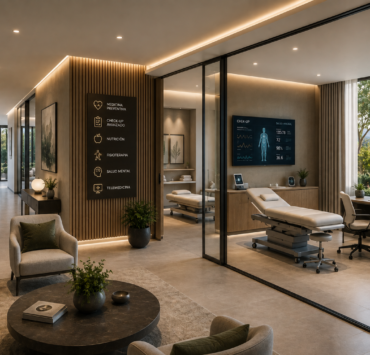
It is not about adding a gym, spa or medical consulting room to a residential development. Nor is it a more appealing name for traditional senior housing. Longevity Living™ proposes a different real estate and operating model at the intersection of property, prevention, hospitality, wellness, AgeTech, nutrition, mobility, lifelong learning, community and new forms of professional participation.
Its promise is not merely to provide a comfortable place to live. It is to enable people to live better for longer.
Senior Living and Longevity Living are not synonyms
Traditional Senior Living generally begins with age or care requirements. It can include independent living, 55-plus communities, assisted living, memory care, serviced residences and accommodation for people who already need varying levels of support. It answers an essential question: where and how should an older person live?
Longevity Living™ starts with a broader question: what should a residential environment provide in order to help people preserve their health, independence, relationships, activity and purpose throughout a 90- or 100-year life?
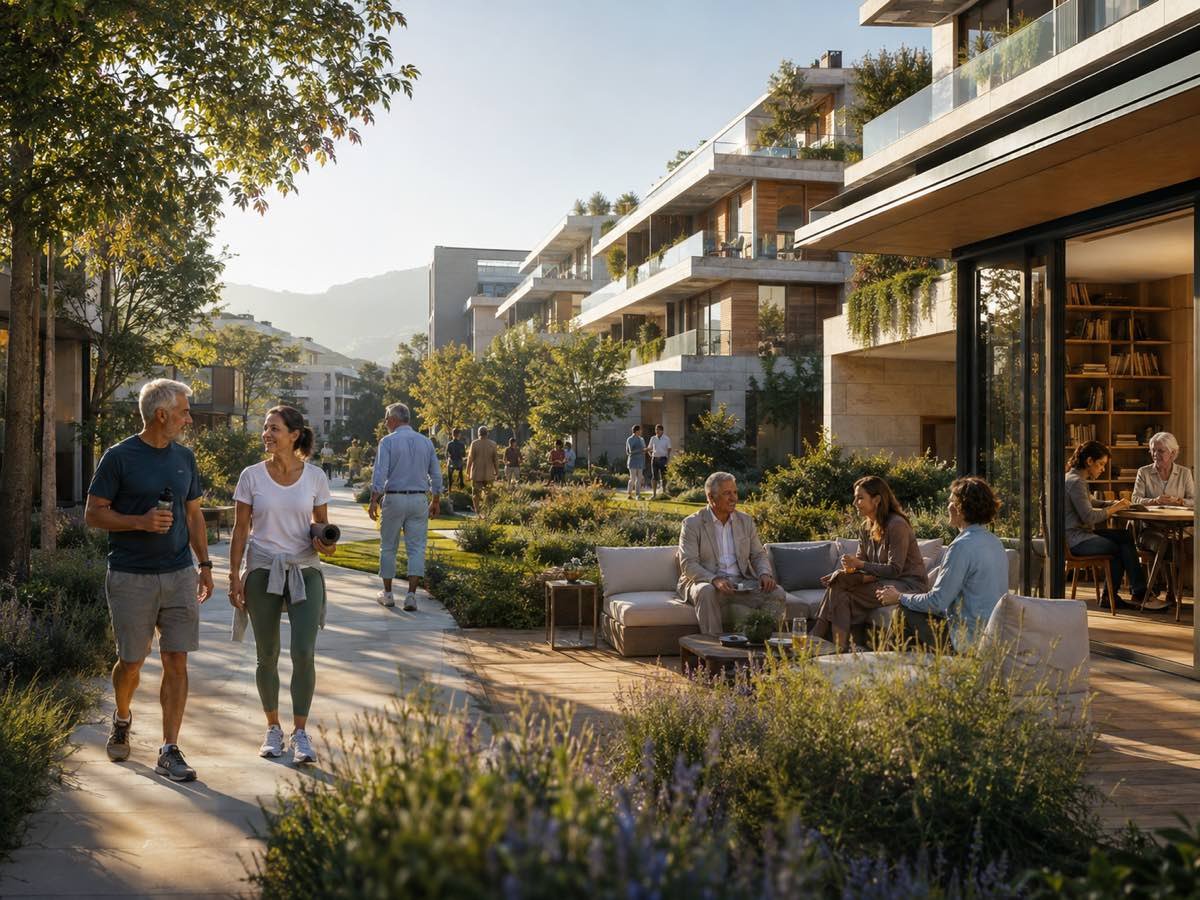
It does not have to begin at 70 or be restricted by age. It can serve people aged 45, 55, 65 or 80. It can be intergenerational and integrate flexible work, continuous education, preventive wellness, culture, experiences, technology, nature and progressive services that adapt without forcing residents to leave their community.
Senior Living can form part of the Longevity Living™ ecosystem, particularly when care requirements emerge. But Longevity Living™ is not a renamed version of Senior Living. It is a broader category that begins long before dependency and seeks to delay it.
Longevity Living™ = Real Estate + healthspan + hospitality + community + technology + purpose.
The largest demographic transformation in modern history requires new places to live
The World Health Organization estimates that by 2030 there will be 1.4 billion people aged 60 and over, representing one in six people worldwide. By 2050, this population will reach approximately 2.1 billion, while the number of people aged 80 and over will triple to 426 million. Around two-thirds of the world’s population over 60 will live in low- and middle-income countries, proving that longevity will not be limited to Europe, Japan or North America. It will be a global transformation.
The 50-plus population is also becoming an economic force of exceptional scale. AARP estimates that this group, currently comprising approximately 1.9 billion people, could reach 3.2 billion by 2050. Its contribution to the world economy, estimated at $45 trillion in 2020, could exceed $118 trillion by 2050 through consumption, employment, investment, entrepreneurship and contributions to families and communities.
The conclusion for Real Estate is profound: the population driving a large share of global consumption over the coming decades will need different homes, neighbourhoods, services and communities. Increasing the number of assisted-living facilities will not be enough. The industry will need to redesign a period of adulthood that may extend for forty or fifty years beyond the age of 50.
Living longer is not enough if those years are not lived in health
The opportunity does not arise only from increasing life expectancy. It also comes from the continuing distance between lifespan, the total number of years lived, and healthspan, the number of years lived in good health and with functional ability.
The latest globally comparable WHO data place world life expectancy at 71.4 years in 2021, while healthy life expectancy stood at 61.9 years. This represents a gap of approximately nine and a half years during which part of the population lives with illness, disability or reduced capacity. The WHO has also warned that the proportion of life spent in good health has not kept pace with rising longevity.
This is the true purpose of Longevity Living™: not to promise immortality or turn the home into a medical facility, but to make the built environment an everyday partner in prevention. Architecture can encourage or discourage movement; urban layouts can increase or reduce social interaction; lighting affects sleep; air quality affects wellbeing; proximity to nature encourages activity; and access to nutrition, learning, culture and community shapes how people age.
The WHO states that much of the variation in health experienced at older ages is connected to physical and social environments, including homes, neighbourhoods and communities. Safe, accessible and walkable places help people preserve the ability to do what they value.
The building therefore ceases to be a passive container. It becomes an infrastructure for behaviour, prevention and connection.
Today’s housing stock was not built for such long lives
Much of the world’s real estate was developed for a society with larger households, more linear careers and lower longevity. It was not designed for people who may work into their seventies, live alone for decades, move through several stages of independence or expect to remain active, connected and productive long after retirement.
The OECD reports that more than 30% of people aged 65 and over live alone across its member countries. At the same time, accessibility improvements are present in fewer than 20% of homes in the United States and Europe. Essential services, transport, shops, green spaces and social opportunities are also not always located close enough to support independent living.
This physical deficit is compounded by social disconnection. The WHO estimates that approximately one in six people worldwide experiences loneliness and associates loneliness with around 871,000 deaths each year. Although all age groups are affected, approximately 11.8% of older people report loneliness.
Longevity Living™ addresses both problems. Removing architectural barriers is not enough; opportunities for connection must also be designed. Installing sensors is not enough; communities must be built. Providing support only after capacity declines is not enough; the environment should help delay that decline.
Longevity-oriented housing should enable residents to remain within the same community as their requirements change. A person may arrive fully independent, progressively add nutrition, physiotherapy or preventive monitoring services and eventually access home support without losing relationships, routines or belonging.
A wellness real estate market heading towards $1.8 trillion
Longevity Living™ is not yet measured as a separate, globally standardized market. Assigning it a precise market value would therefore be misleading. Its potential can instead be assessed through the convergence of three major systems: the longevity economy, wellness real estate and institutional capital allocated to Living.
The closest measurable indicator is wellness real estate, defined by the Global Wellness Institute as built environments designed and operated to support the holistic health of residents, visitors and communities. The sector expanded from $151 billion in 2017 to $246 billion in 2019, $711 billion in 2024 and $876 billion in 2025. It is projected to reach approximately $1.8 trillion by 2030.
The market grew at an average annual rate of 23.6% between 2019 and 2025, nearly twice the growth of the next fastest-expanding wellness segment. Between 2024 and 2025 alone, it grew by 23%, compared with approximately 3% growth in global construction. Current projections indicate that it will pass $1 trillion in 2027 and expand by around 15% annually through 2030.
This momentum forms part of a broader economic shift. The global wellness economy reached $6.8 trillion in 2024, equivalent to 6.12% of global GDP, and is expected to approach $9.8 trillion by 2029. Wellness real estate is among its fastest-growing sectors.
Longevity Living™ does not encompass this entire market, but it has the potential to become one of its most powerful growth engines by applying wellness real estate principles to the structural need to live longer with health, independence and connection.
Growth will be global, but each region will follow a different path
Asia-Pacific was already the largest regional wellness real estate market in 2025, valued at approximately $350 billion, up from $88 billion in 2019. China accounts for $218 billion; Japan, $34 billion; India, $20.5 billion; and South Korea, $16.5 billion. Rapid ageing in China, Japan, Korea and Singapore will intersect with urbanization and expanding middle classes in India and Southeast Asia. Opportunities will range from urban communities to large mixed-use districts in cities still building much of their future residential infrastructure.
North America reached approximately $274 billion in 2025, with the United States accounting for $254 billion. It is among the most developed regions for seniors housing, wellness communities, branded residences and operational residential models. The next stage may move further upstream from dependency towards preventive, urban, connected and intergenerational communities for consumers who do not identify with Senior Living.
Europe reached approximately $205 billion in wellness real estate in 2025, up from $48 billion in 2019, with average regional annual growth of 27.3%. The United Kingdom, France, Germany, Spain and Italy rank among the world’s fifteen largest national markets, while Italy and Spain recorded the fastest percentage growth among the major economies analyzed.
Europe also combines ageing populations, residential wealth, walkable cities, established healthcare systems, cultural infrastructure and Mediterranean destinations. The opportunity will not lie only in new construction. It will include retrofitting buildings, regenerating neighbourhoods, adapting existing homes, creating service networks and connecting urban residences with seasonal destinations.
The Middle East and North Africa reached $42.6 billion in 2025, having expanded by an average of 30.3% a year since 2019. Saudi Arabia grew from approximately $200 million in 2017 to $28 billion in 2025, while the United Arab Emirates rose from $3.3 billion to around $14.6 billion. Together, the two countries have more than 555,000 wellness-focused residential units in their development pipelines, many within large mixed-use destinations and new cities.
Latin America and the Caribbean, although starting from a smaller base, recorded the fastest regional percentage growth between 2019 and 2025, reaching approximately $3.7 billion. Mexico, Costa Rica, Panama, Colombia, Brazil, Uruguay and selected Caribbean destinations could combine competitive costs, climate, nature, healthcare talent, tourism and international connectivity to serve both domestic and international residents.
Africa’s opportunity will emerge later but will be vast. With most future growth in the older population occurring in low- and middle-income economies, scalable and affordable solutions must be considered now rather than focusing exclusively on premium communities.
Capital is already moving towards Living assets
The rise of Longevity Living™ is not occurring in a financial vacuum. International real estate capital has already made Living one of its main areas of expansion. During the first half of 2026, global direct investment in Living exceeded $114 billion, approximately 9% more than in the same period of 2025. JLL reports that institutional investors are increasingly targeting specialized formats and platforms capable of scaling across markets.
In EMEA, Living accounted for approximately 30% of all direct real estate investment in 2025, making it the region’s largest sector for a second consecutive year. Transactions totalled around €62.2 billion, investment in care homes increased by 165% to approximately €14.4 billion and the number of new funds targeting Living rose by 47%.
The United States provides further evidence of investor appetite. Seniors housing generated $24 billion in transaction volume during 2025, its highest level in a decade. Occupancy approached 90%, average rents were 28.8% above pre-pandemic levels and 86% of surveyed investors said they intended to increase their exposure during 2026.
Seniors housing and Longevity Living™ are not the same category, but these figures demonstrate that capital, operators and investment structures are prepared to expand their exposure to housing connected with ageing. The next leap will extend the thesis from care and chronological age towards prevention, independence and a complete life experience.
The business will extend far beyond the property
Traditional Real Estate creates value through development, sales, rent and asset appreciation. Longevity Living™ can add a second layer: recurring revenues from services that accompany residents over many years.
Residential rent or sales can be combined with memberships, healthy food, housekeeping, maintenance, wellness, fitness, physiotherapy, prevention, sleep programmes, nutrition, mobility, concierge services, restaurants, travel, events, learning, professional spaces, culture, telemedicine and home support.
The result is closer to an operational residential platform than to a conventional development. The developer does not simply deliver a building; it creates an ongoing relationship. The operator does not manage only occupancy and maintenance; it manages wellbeing, community, experience and a network of services. The customer is no longer buying isolated square metres but access to an ecosystem.
Different combinations of property ownership and operations will emerge. A PropCo may retain the asset and collect rent; an OpCo may manage services and community; hospitality, healthcare, wellness, insurance and technology brands may participate through management agreements, licensing, subscriptions or joint ventures.
Revenue diversification is the core advantage. Operational complexity is the central challenge. In Longevity Living™, the quality of operations may become as important as location and architectural design.
The formats that will define the next decade
One of the most promising models will be the urban longevity residence, integrated into established neighbourhoods and connected to culture, transport, shops, restaurants and healthcare. It will not be an isolated enclave, but a residential base from which people can continue participating fully in city life.
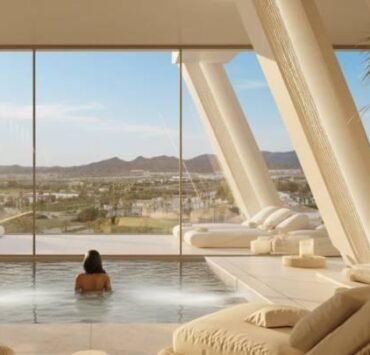
Destination longevity communities will also expand in coastal, rural and natural locations, combining housing, hospitality, physical activity, preventive medicine, gastronomy, learning and experiences. Some will function as primary residences, while others will support seasonal stays or a life distributed across several destinations.
Intergenerational communities will avoid age segregation and create relationships among students, professionals, families, entrepreneurs and retired residents. They will share workspaces, culture, learning, gardens, restaurants, sport and mentoring programmes.
Longevity campuses will combine residences, preventive clinics, laboratories, research centres, hospitality, executive education, sport and AgeTech or biotechnology companies within mixed-use developments.
Branded longevity residences will apply the branded-hospitality model to residential longevity. Brands will provide more than visibility: they will introduce protocols for nutrition, sleep, fitness, prevention, hospitality and experience. Their credibility will depend on demonstrating outcomes rather than simply attaching a name to an amenity package.
Finally, one of the largest opportunities will be longevity retrofitting: transforming existing buildings, hotels, housing developments and neighbourhoods through discreet accessibility, technology, energy efficiency, shared services, social programmes and connections with health networks. The global scale of the challenge makes it impossible to solve through new construction alone.
The new luxury will be the preservation of human capacity
Traditional luxury Real Estate has been defined by views, location, space, design, privacy and service. Longevity Living™ adds another dimension: the ability to protect what is difficult to recover, including time, mobility, energy, sleep quality, cognitive function, relationships and independence.
This does not mean transforming the home into a hospital. The best projects will make preventive infrastructure almost invisible. Universal design will not appear institutional; lighting will support circadian rhythms without requiring intervention; technology will identify risks without invading privacy; stairs will invite use; pathways will encourage movement; shared spaces will generate natural encounters; and healthy food will be part of everyday life.
The real luxury will not be an empty medical room. It will be waking up each day in an environment that makes it easier to sleep, move, eat, learn, connect and retain a personal sense of purpose.
Technology and data: from home automation to longevity intelligence
Technology will be an essential layer, but it should not become the visible centre of the product. Environmental sensors, wearables, artificial intelligence, adaptive lighting, fall-prevention systems, telemedicine and coordination platforms can personalize services and identify changes before they become major problems.
The most interesting evolution will be the transition from comfort-oriented home automation to residential longevity intelligence. With informed consent, systems could connect sleep, activity, nutrition, air quality, social participation and mobility data to provide recommendations or activate support.
This layer introduces critical challenges. Health and behavioural data require privacy, cybersecurity, governance and clear boundaries. Residents must retain control over their information. Technology should expand autonomy rather than become a surveillance mechanism. Projects that fail to establish trust from the design stage will damage their own value proposition.
Longevity Living™ cannot become a product only for millionaires
The first highly visible projects will probably emerge in premium segments because these markets can finance innovation, services and complex operations. However, the category’s long-term growth will depend on its ability to reach middle-income consumers.
Most people living longer will not reside in resorts or branded residences. They will live in apartments, neighbourhoods and cities that require adaptation. The opportunity therefore includes affordable rental housing, cooperatives, cohousing, public housing, office conversions, urban regeneration, shared services and subscription systems that provide access to selected benefits without requiring residents to pay for an entire complex.
Scale will come from modularity. Not every resident needs an on-site clinic, spa and permanent concierge. Many need an adaptable home, a walkable neighbourhood, transport, nature, an active community and flexible access to services when required.
Longevity Living™ will need to prove that it can create value in an ultra-premium Dubai development, a Madrid urban conversion, a coastal community in Mexico, a new Chinese district and an affordable apartment network in a Latin American city.
The mistakes that could destroy value
The first is wellness washing: using words such as longevity, health and wellbeing without materially changing design, operations or experience. A gym, sauna and indoor plants do not turn a building into Longevity Living™.
The second is confusing prevention with medical practice. Projects must distinguish residential and wellness services from activities requiring regulated healthcare professionals, clinical consent or health-data management.
The third is designing for a stereotype. There is no typical person aged 65, 75 or 85. The WHO notes that some 80-year-olds retain capacities comparable to much younger people, while others experience limitations earlier. Designing only around chronological age leads to rigid and potentially ageist products.
The fourth is assuming that community appears automatically when a building opens. Community requires programming, leadership, rituals, appropriate spaces and a culture of participation. It is an operating function, not the spontaneous result of adding a lounge to the ground floor.
The fifth is overloading projects with services until they become financially inaccessible. Future models will require flexibility, allowing each resident to contract different layers of experience and support according to changing requirements.
Three numbers that should not be added, but must be interpreted together
The economic contribution of the world’s 50-plus population could reach $118 trillion by 2050. Wellness real estate may grow to $1.8 trillion by 2030. The Living sector already attracted more than $114 billion in global direct investment during the first half of 2026 alone.
These figures measure different realities and should not be added together to manufacture a market size. Taken together, however, they describe an exceptional convergence: a longer-living population with growing economic power, rapidly expanding demand for environments that support wellbeing and institutional capital seeking specialized, scalable residential formats.
That convergence suggests that Longevity Living™ could become one of the new frontiers of global Real Estate during the coming decade.
Longevity Real Estate will be sold through outcomes, not age
The major commercial shift will involve moving away from selling a product “for older people.” Future generations will not want to purchase an identity based on age. They will want freedom, time, convenience, relationships, experiences, prevention, security and the ability to continue making their own decisions.
They will not choose a community because it reminds them how old they are, but because it helps them imagine everything they can still do.
Longevity Living™ should therefore communicate possibilities rather than dependency. It should design the active extension of life rather than its final stage. It should connect people with society instead of separating them from it. And it should not wait for frailty to emerge before providing a solution.
The next great real estate transformation will not simply involve building more housing. It will involve building better years of life.
Investors, developers, operators, architects, brands, insurers, technology companies, healthcare groups and governments that understand this distinction today will be able to participate in the creation of a global category whose future leaders are still being defined.
Senior Living builds solutions for one stage of life. Longevity Living™ builds the infrastructure for a long life.
FIFTIERS is advancing the new Longevity Living™ economy
The MBA in Longevity Business prepares executives, investors, entrepreneurs and professionals to identify and develop the business models emerging around longevity, including Real Estate, hospitality, preventive health, technology, finance and new lifestyles.
Participants in the MBA in Longevity Business will meet in Madrid on 27 November 2026 at the 4th FIFTIERS Congress, alongside companies, investors, institutions and leaders building the new longevity economy.
Discover more from FIFTIERS
Subscribe to get the latest posts sent to your email.
What's Your Reaction?