



Singapore shows how Senior Living can evolve into an entirely new real estate and services market

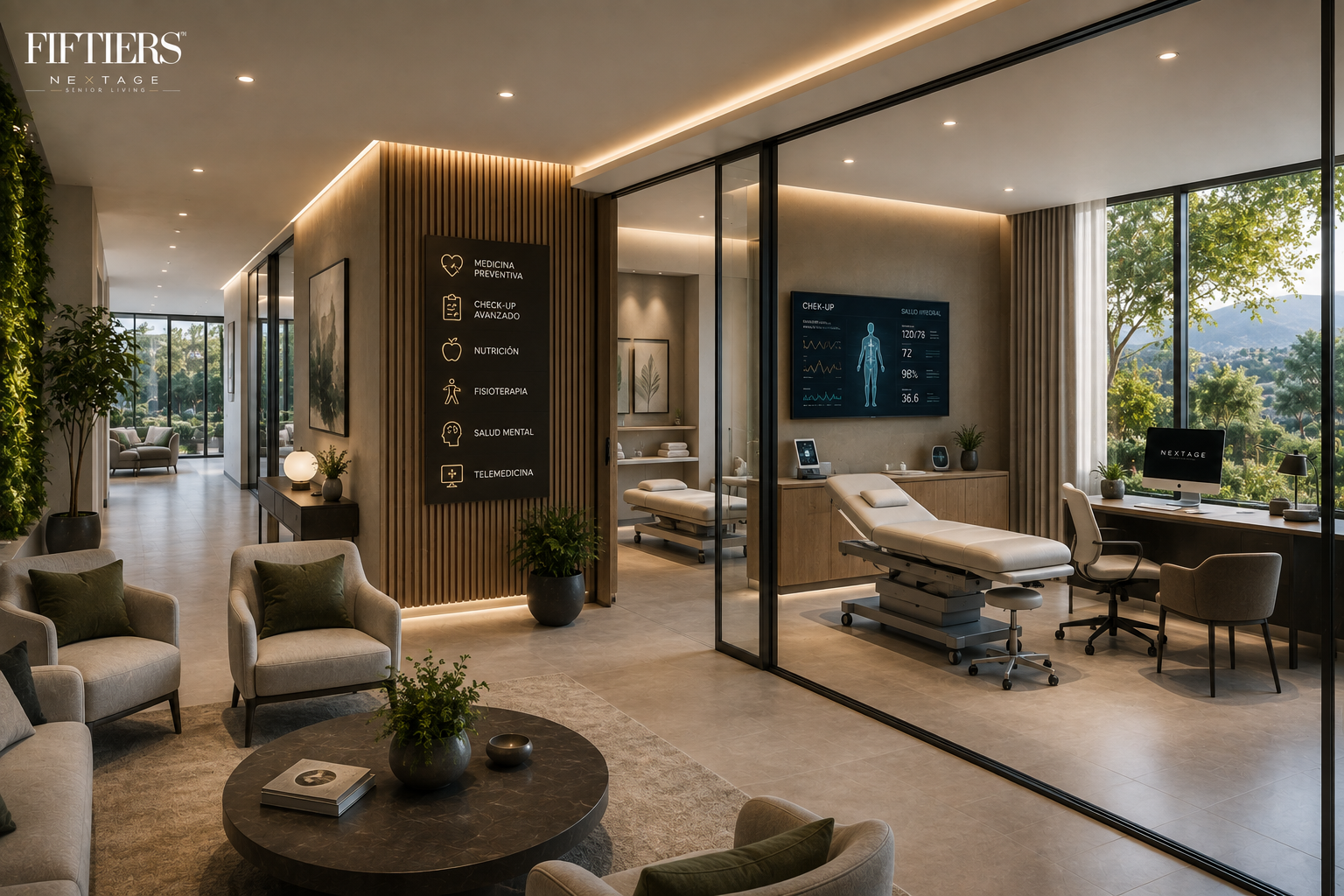

Population ageing is beginning to transform Senior Living into something far broader than a care category. Singapore is currently providing one of the most interesting examples. Perennial Living began operations on August 18 as the country’s first private assisted-living development, spanning approximately 195,000 sq ft and incorporating 200 assisted-living apartments, 100 nursing beds, dining, rehabilitation, Western and Traditional Chinese Medicine, fitness, wellness and social spaces. The apartments are designed for people who retain considerable independence but require varying levels of support, while residents can move towards higher levels of care as their needs evolve. Assisted-living packages currently begin at around S$8,000 per month and nursing packages at approximately S$7,600, initially positioning the concept within an affluent segment.
The important story, however, is not simply the opening of another property development for older people. It is the emergence of a category between the two extremes that have dominated residential ageing for decades: remaining in one’s conventional home until doing so becomes extremely difficult, or moving into institutional care once dependency has developed. Between those two points lies an enormous economic opportunity. Millions of people can remain largely independent for years while simultaneously requiring security, prevention, nutrition, rehabilitation, medical supervision, exercise, domestic assistance, technology, social connection or occasional care. When those services are integrated around housing, something different from conventional Senior Living begins to emerge: a longevity services platform. The property is no longer the entire product; it becomes the infrastructure through which a potentially long-term relationship with the resident is delivered.
That fundamentally changes the economics of the sector. Traditional residential models generate much of their value through property sales or rental income. An integrated longevity model can combine real estate revenue with medical services, rehabilitation, physiotherapy, dining, wellness, care, maintenance, activities, technology, transport, pharmacy, monitoring and personal services. The opportunity is to increase customer lifetime value by accompanying residents through different phases of ageing instead of offering a solution only once dependency appears. Someone may enter requiring relatively little support, later add medical monitoring or daily assistance and eventually require more intensive care. Operators capable of managing that transition within a single ecosystem could build customer relationships lasting many years.
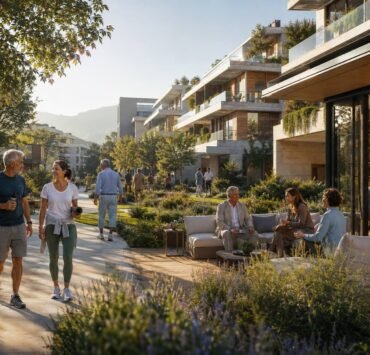
The product itself is also changing. Today’s mature generations have very different expectations around consumption, privacy, design, technology and hospitality. They do not necessarily want to live somewhere that constantly reminds them that they are ageing. They want attractive apartments, good food, privacy, activity, social connection, wellness and the ability to preserve their lifestyle. Perennial Living includes private apartments, dining, a swimming pool, entertainment facilities and an integrated healthcare and wellness centre. The model therefore brings Senior Living closer to hospitality, residential real estate and wellness than to the traditional institutional nursing-home proposition.
This could become one of the major real-estate opportunities of the Longevity Economy. Older populations are not homogeneous. Between a fully independent 60-year-old and a dependent 90-year-old lie countless different circumstances. Markets will require active communities, serviced apartments, assisted living, memory care, nursing, temporary rehabilitation, intergenerational housing and hybrid models. The most powerful platforms may ultimately be those capable of allowing residents to remain within the ecosystem as their needs evolve. The future may be less about “moving into a care home” and much more about entering a housing and services ecosystem designed to accompany twenty or thirty years of longevity.
The next challenge will be making these models accessible beyond premium consumers. Land, construction and labour costs mean that early private developments frequently emerge at the upper end of the market. Real scale could arrive when technology, operational design, shared services and new financing structures lower costs. Discreet sensors, remote monitoring, AI, administrative automation, fall prevention, telemedicine and digital care coordination could enable professionals to support larger populations while maintaining quality. Insurers, real-estate investors, healthcare operators and governments may eventually experiment with models in which housing and prevention are financed together because preserving independence for longer can be economically preferable to funding intensive dependency.
For real-estate investors, Senior Living should therefore no longer be considered merely another alternative-property asset class. It can become a recurring-services infrastructure connected to ageing. For insurers, it offers an opportunity to integrate prevention with housing. For hospital groups, it extends care beyond hospital walls. For technology companies, it creates real environments in which monitoring, AI and assistance can be deployed. For hospitality companies, it opens a residential category built around decades-long customer relationships. And for operators, it offers a pathway from managing buildings to managing longevity ecosystems.
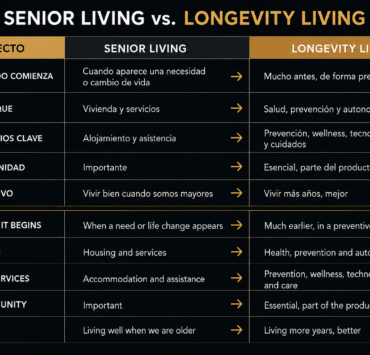
This evolution could ultimately create something that remains insufficiently defined across the market: Longevity Living. Homes and communities designed not simply for older people, but to allow people to live longer while preserving independence, health, relationships and quality of life. In that model the building matters, but the true value proposition consists of everything that happens around the resident.
Singapore may be offering an early glimpse of that future. Twenty-first-century Senior Living may not simply be somewhere people spend the final years of their lives. It could become an entirely new real-estate, healthcare, technology and services category designed around one of the defining economic transformations of our time: much longer lives.
Learn to build businesses within the Longevity Economy
The FIFTIERS MBA in Longevity Business prepares executives, entrepreneurs and investors to identify opportunities across Senior Living, Real Estate, healthcare, technology, financial services, wellness and the new business models created by longer lives.
Discover the FIFTIERS MBA in Longevity Business
See you in Madrid at the 4th FIFTIERS Congress
Participants of the FIFTIERS MBA in Longevity Business will meet in Madrid on November 27 at the 4th FIFTIERS Congress, where we will explore the business opportunities being created by the Longevity Economy.
Discover the 4th FIFTIERS Congress and reserve your place
Discover more from FIFTIERS
Subscribe to get the latest posts sent to your email.
What's Your Reaction?