




Living longer is no longer enough: WHO focuses on the gap between gaining years and retaining independence


Longevity poses a question that no life-expectancy figure can answer on its own: under what conditions will the extra years be lived? The midpoint assessment of the United Nations Decade of Healthy Ageing, released by the World Health Organization on 1 October 2026, recognises progress and calls for greater investment. It brings renewed attention to the distance between living longer and retaining health, functional ability and access to support. For FIFTIERS, its significance lies in the change of perspective it demands: assessing longevity through what people can do in their everyday lives, as well as through the length of those lives.
WHO reports that the gap between life expectancy and healthy life expectancy at age 60 widened between 2000 and 2023. Its assessment identifies advances in policy alongside material constraints: 33.8% of reporting countries say they have very little or no dedicated resources for developing long-term care, while only 22.7% can track older people’s health over time. These proportions refer to countries, not to individual members of the world’s population. They reveal a tension between objectives, funding and the ability to understand outcomes; they do not establish that all health systems are developing in the same way.
The distance between policy and everyday life
The Pan American Health Organization provides a regional perspective that helps explain the issue. In the Americas, it reports that a person aged 60 can expect to live approximately 23 more years, about 16 of them in health, leaving a gap of roughly seven years. These are regional averages, not predictions of an individual’s trajectory, and they do not imply seven identical years of dependency for everyone. Their value is to show why the discussion needs complementary indicators. Two societies with similar lifespans may offer very different experiences when health conditions, available environments and access to support differ.
Independence provides a concrete way of examining that gap. In FIFTIERS’ analysis, the questions include whether a person can organise their day, maintain relationships, move around and participate in decisions affecting them, with whatever support they need. This perspective avoids reducing healthy ageing to the absence of diagnoses. A difficult-to-use home, an incomprehensible administrative process or inaccessible transport can create obstacles that cannot be resolved in a consultation alone. The editorial question is how to connect services usually planned separately, so that people encounter a coherent response rather than having to coordinate a succession of institutions and procedures themselves.
Care as the infrastructure of a long-lived society
Long-term care deserves a central place in this conversation because it requires attention to continuity, quality and sustainability. From a business and social perspective, counting places or offering an application is insufficient if the actual experience includes interruptions, missing information or difficulties maintaining personal relationships. The challenge is to identify the support each person needs, who provides it and how it fits with their surroundings. Funding matters, but so does organisation: investment can produce more useful services when objectives are defined from the start and there are mechanisms for understanding what happens after those services begin operating.
Technology can open possibilities here, although evaluation should begin with the problem it is intended to solve. A monitoring tool could be useful if it addresses a specific need and forms part of a service with clear responsibilities; its availability alone does not demonstrate improved independence. FIFTIERS proposes examining accessibility, consent, response capacity and the burden of use before celebrating a solution. Users should not have to maintain a complex system in order to receive basic care. Innovation becomes meaningful when it makes life easier for people and those supporting them, and when its benefits can be demonstrated in practice.
Economic opportunity requires a question about outcomes
For housing, mobility, health and service businesses, WHO’s assessment can be read as an invitation to define more clearly the value they offer. Opportunity extends beyond serving a larger population group: it includes meeting needs that arise throughout varied lives. This is FIFTIERS’ interpretation, not a revenue forecast from the organisation. Turning it into strategy requires listening to users, testing local needs and deciding which outcomes to measure. A generic promise of “wellbeing” may help a campaign; demonstrating that a service reduces a particular difficulty provides a much stronger foundation for sustaining it.
The second half of the Decade of Healthy Ageing therefore presents a test of delivery. Commitments need resources, monitoring and participation by the people they are intended to serve. The most relevant message for readers is that longevity is not built exclusively in laboratories or determined solely in clinical consultations. It is also organised in neighbourhoods, homes, care work and everyday services. Gaining years expands a possibility. Turning that possibility into a life with choices, relationships and appropriate support requires continuing effort, measurable through real experiences. That conversation should accompany every new advance concerning how long we might live.
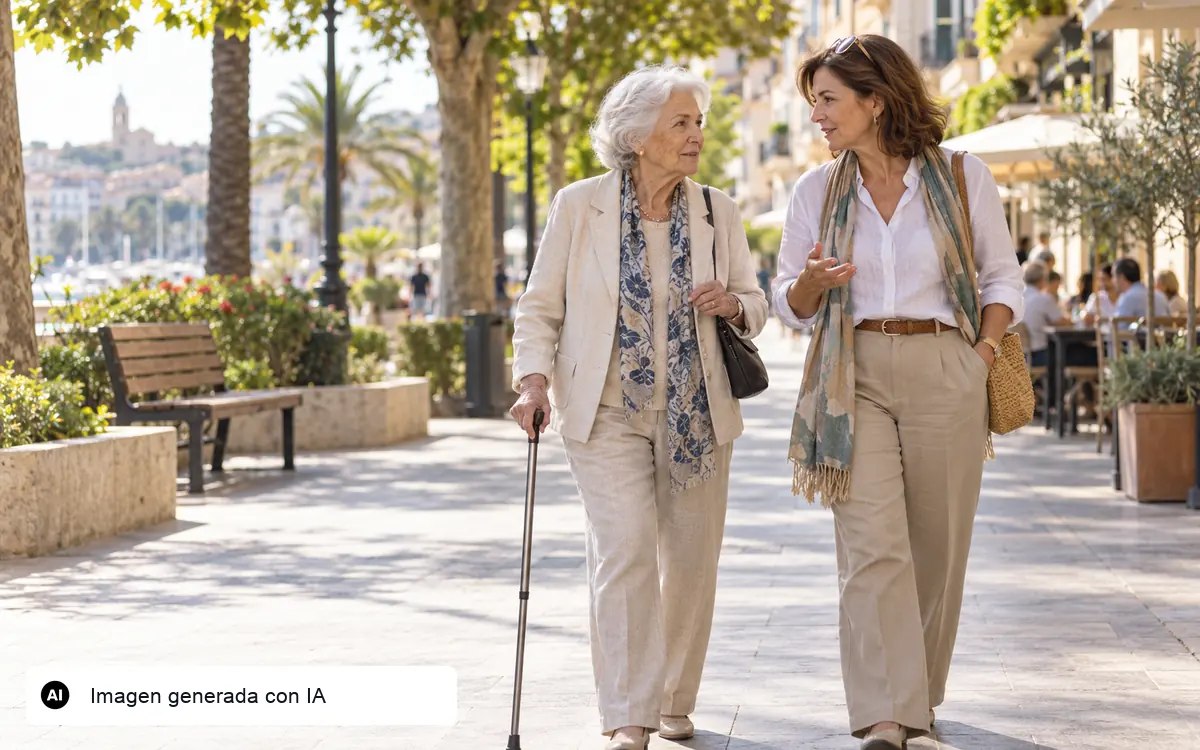
Sources: WHO, midpoint assessment of the Decade of Healthy Ageing, 1 October 2026; PAHO, progress and gaps in healthy ageing in the Americas, 6 October 2026. The business implications are FIFTIERS editorial analysis. This article was prepared with artificial intelligence assistance. The image is an AI-generated conceptual illustration and does not document the people or programmes cited.
Discover more from FIFTIERS
Subscribe to get the latest posts sent to your email.
What's Your Reaction?