






Harvard Identifies a Gene-Regulating Protein That Could Open New Frontiers in the Fight Against Aging

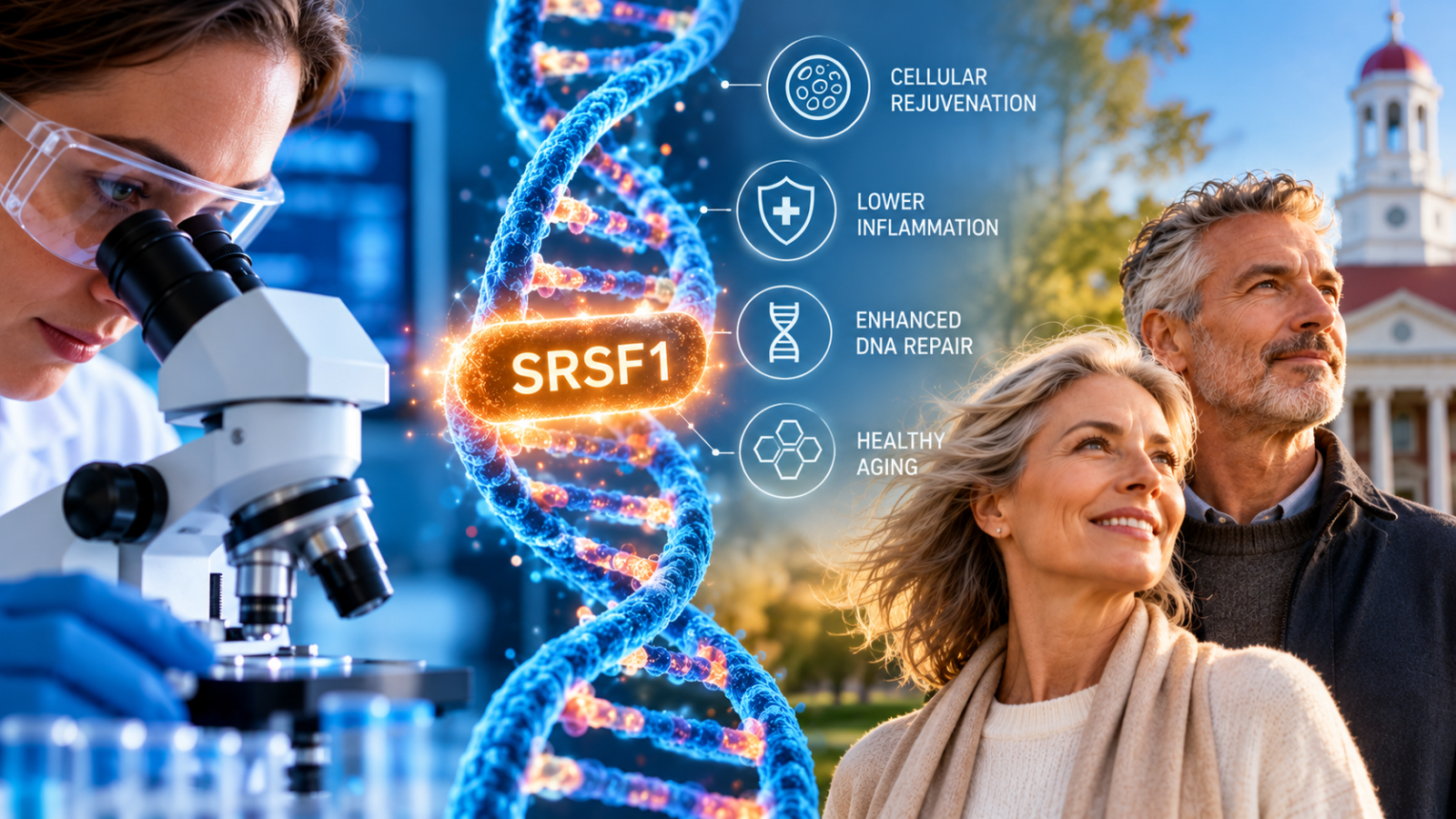

Scientists at Harvard University’s Wyss Institute have identified SRSF1 as a promising molecular regulator of age-related cellular changes. Experimental findings suggest that modifying the networks responsible for gene expression could eventually help restore biological functions that deteriorate with age, opening a new chapter in longevity research and the future of healthy aging.
For decades, scientists have approached aging as an inevitable biological process in which cells progressively accumulate damage, lose their ability to repair themselves, and become less efficient at performing the functions necessary to maintain human health. Yet one of the most ambitious questions in modern biomedical science is whether some of these changes could be reversed by intervening directly in the molecular mechanisms that regulate cellular activity. Rather than simply extending the number of years people live, researchers are increasingly interested in understanding why tissues age, which biological functions deteriorate first, and whether those functions can be restored before age-related diseases begin to develop.
Research involving scientists at Harvard University’s Wyss Institute offers a new perspective on this challenge. The work focuses on SRSF1, a protein involved in RNA processing that influences how genetic information is translated into cellular activity. By investigating the effects of modifying this regulatory mechanism, researchers have uncovered promising experimental evidence suggesting that certain gene-expression networks associated with aging may be more adaptable than previously assumed.
The importance of this discovery lies in a fundamental change of scientific perspective. Instead of treating every age-related disease as an entirely separate condition, researchers are attempting to identify the underlying biological processes that contribute to the deterioration of multiple organs and tissues. If these mechanisms can eventually be modified safely, future medicine may gain new tools to prevent, delay, or potentially reverse specific aspects of age-related biological decline.
However, an essential distinction must be made from the outset. Harvard has not discovered a cure for aging, nor has it demonstrated that activating SRSF1 can rejuvenate human beings. The findings remain within the field of preclinical research. Their importance lies in the scientific possibilities they create, rather than in the availability of any proven anti-aging treatment.
Why Aging Is Becoming One of the Most Important Challenges in Modern Medicine
Human longevity has increased dramatically over the past century, largely because of improvements in sanitation, nutrition, vaccination, medical treatment, and public health. However, living longer does not automatically mean remaining healthy for longer. Millions of people spend their later years managing chronic diseases, reduced mobility, cognitive impairment, cardiovascular conditions, and other limitations associated with biological aging.
This distinction has given rise to one of the most influential concepts in longevity science: healthspan, the period of life during which an individual remains healthy, independent, and capable of maintaining a good quality of life.
While lifespan measures how long someone lives, healthspan considers how well those years are lived. The ambition of modern longevity research is therefore not simply to add years to human existence, but to increase the proportion of life spent in good health.
This objective is reshaping biomedical research, pharmaceutical development, preventive healthcare, and investment in biotechnology. Scientists are increasingly studying aging itself as a collection of interconnected biological processes that influence the development of multiple diseases.
These processes include genomic instability, mitochondrial dysfunction, cellular senescence, chronic inflammation, alterations in nutrient-sensing pathways, and changes in the regulation of gene expression. Although each mechanism operates differently, they frequently interact, creating complex biological networks that influence how organisms age.
Understanding these networks is essential because a therapeutic intervention targeting a shared mechanism could potentially affect several age-related conditions simultaneously. That possibility represents one of the most compelling directions in contemporary longevity science.
What Is SRSF1, and Why Has It Attracted Harvard Researchers’ Attention?
SRSF1, short for Serine and Arginine Rich Splicing Factor 1, is a protein involved in the processing of RNA, the molecular intermediary that allows cells to use the information encoded in DNA.
To understand its importance, it is useful to consider how genetic information operates inside the human body. DNA contains the instructions necessary for cells to produce proteins and carry out their biological functions. However, those instructions are not used directly. They are first transcribed into RNA, which undergoes several processing steps before guiding protein production.
One of these steps is known as alternative splicing. Through this mechanism, a single gene can generate different RNA products, allowing cells to produce distinct protein variants depending on their needs.
SRSF1 participates in the regulation of this process. It helps determine how RNA is processed and, consequently, influences the proteins that cells produce.
This makes SRSF1 particularly interesting because its activity is not limited to a single biological function. Changes in RNA processing can affect numerous cellular pathways, including those involved in maintaining tissue function, responding to stress, and regulating cellular behavior.
As organisms age, the mechanisms responsible for coordinating gene expression and RNA processing can become disrupted. These alterations may contribute to declining cellular performance and reduced resilience against biological stress.
The Harvard-associated research explores whether intervening in this regulatory system could help restore more youthful patterns of cellular activity.
The underlying scientific question is particularly ambitious: rather than repairing each consequence of aging individually, could researchers modify the molecular instructions that influence how cells behave as they grow older?
Reprogramming Gene Expression: A Different Approach to Biological Rejuvenation
One of the most fascinating developments in longevity research is the growing understanding that cellular aging is not exclusively the result of irreversible physical damage.
Cells also undergo changes in the way they interpret and use their genetic information. Although the DNA sequence remains largely the same, patterns of gene activity evolve throughout life, affecting metabolism, repair mechanisms, stress responses, and communication between cells.
These changes help explain why a cell from an older organism can behave differently from a genetically similar cell in a younger organism.
Researchers investigating biological rejuvenation are increasingly interested in whether some of these altered patterns can be modified.
This approach is related to the broader field of cellular reprogramming, which studies how changes in gene-regulatory mechanisms can alter cellular identity or function.
The research involving SRSF1 is particularly interesting because it examines RNA processing and gene-expression networks as potential points of intervention. Rather than relying exclusively on the replacement of damaged cells, scientists are exploring whether existing cells can recover aspects of their previous functionality.
In experimental models, manipulating these regulatory mechanisms has produced encouraging findings related to age-associated biological changes and longevity.
Nevertheless, such results must be interpreted carefully. Improvements observed in laboratory organisms do not establish that the same intervention will be safe or effective in humans. Biological aging is influenced by numerous interacting mechanisms, and modifying one regulatory protein can have different consequences depending on the tissue, dosage, duration, and biological context.
SRSF1 also participates in processes relevant to cell proliferation and disease, meaning that any potential therapeutic strategy would require particularly careful safety evaluation.
The challenge is not simply to make cells behave as though they were younger, but to do so without disrupting the regulatory systems necessary for normal biological function.
What Have Scientists Actually Demonstrated?
The research reported by Harvard’s Wyss Institute describes experimental work investigating how the regulation of gene-expression networks may influence aging-related biological processes.
The findings suggest that SRSF1-related mechanisms could be useful targets for future therapeutic research. Experiments in aging models have provided evidence that manipulating these pathways may improve certain measures of biological function and, in specific experimental settings, influence longevity.
This is an important scientific distinction. Researchers can measure several different outcomes when studying aging, including changes in gene expression, cellular stress resistance, tissue function, physiological performance, and survival.
An improvement in one of these measures does not necessarily mean that an organism has been comprehensively rejuvenated.
Similarly, extending lifespan in an experimental animal does not demonstrate that the same intervention will extend human life.
The results therefore represent evidence supporting further investigation, not proof of an effective human treatment.
Before such findings could lead to clinical applications, researchers would need to establish how the intervention works in different human cell types, whether its effects can be reproduced, how long those effects last, and whether altering SRSF1 activity introduces unacceptable risks.
Any future therapy would also need to undergo rigorous preclinical testing and appropriately designed human clinical trials.
These requirements are especially important in longevity medicine, where treatments may eventually be considered for individuals who are otherwise healthy. In such circumstances, the acceptable level of risk must be exceptionally low.
Could This Discovery Help Prevent Alzheimer’s, Cardiovascular Disease, or Other Age-Related Conditions?
One reason researchers are interested in the biological mechanisms of aging is that many chronic diseases share underlying processes associated with cellular deterioration.
Neurodegenerative diseases, cardiovascular disorders, metabolic dysfunction, and age-related loss of physical resilience can involve overlapping mechanisms such as inflammation, impaired cellular maintenance, altered protein regulation, and declining tissue repair.
If scientists can identify interventions that improve the functioning of these shared biological systems, they may eventually develop treatments capable of addressing more than one aspect of age-related decline.
The SRSF1 findings contribute to this broader scientific ambition by highlighting RNA processing and gene-expression regulation as potential areas for therapeutic development.
However, it would be premature to conclude that manipulating SRSF1 can prevent Alzheimer’s disease, protect against cardiovascular events, or treat other specific conditions in humans. Such applications remain hypotheses requiring dedicated research.
The long-term opportunity is to move toward a medical model in which age-related deterioration is identified and addressed earlier, potentially reducing the burden of chronic disease before irreversible damage occurs.
This would represent an evolution from healthcare focused primarily on treating established illness toward healthcare increasingly capable of preserving biological function.
The Future of Longevity Medicine May Depend on Understanding Cellular Instructions
The history of medicine contains numerous examples of discoveries that initially appeared to concern a narrow biological mechanism but eventually transformed entire therapeutic fields.
Research into cholesterol metabolism helped produce widely used cardiovascular treatments. Understanding insulin regulation revolutionized diabetes care. Advances in molecular biology have enabled targeted cancer therapies and new approaches to genetic disease.
Longevity research is now investigating whether a comparable transformation could occur through a deeper understanding of the molecular mechanisms that govern aging.
SRSF1 belongs to a particularly interesting category of regulatory proteins because it influences how genetic information is processed rather than acting solely as a component of a single metabolic pathway.
This creates opportunities for studying the relationships between RNA processing, cellular stress, tissue maintenance, and biological aging.
At the same time, it introduces considerable complexity. A regulatory mechanism capable of influencing numerous biological pathways may offer broad therapeutic possibilities, but it may also produce unintended effects.
Future progress will therefore depend on developing interventions that are sufficiently precise to modify harmful age-associated processes without interfering with essential cellular functions.
Researchers may also need to identify which tissues, stages of aging, and patient populations could benefit from particular interventions.
Rather than producing one universal treatment against aging, the field may ultimately develop a range of therapies targeting different mechanisms of biological decline.
Why This Research Matters for People Over 50
For people entering their fifties, sixties, seventies, and beyond, the development of longevity science represents an important change in how society understands later life.
Traditionally, aging has often been associated with a gradual and unavoidable loss of physical capacity, professional relevance, and personal independence.
Contemporary research is challenging the assumption that every aspect of age-related deterioration must be accepted without investigation.
The emerging scientific perspective recognizes that chronological age and biological condition are not identical. Two individuals of the same age may have very different levels of cardiovascular fitness, metabolic health, muscular strength, cognitive performance, and functional independence.
Genetics, environment, healthcare access, and lifestyle all contribute to these differences.
The possibility of developing future therapies that target biological aging adds another dimension to this understanding.
For today’s over-50 population, however, experimental discoveries should not be confused with immediately available medical interventions.
The most reliable strategies for protecting healthspan continue to include regular physical activity, appropriate strength training, adequate sleep, balanced nutrition, cardiovascular risk management, preventive healthcare, and maintaining meaningful social relationships.
These approaches are supported by substantially more human evidence than experimental interventions targeting SRSF1.
The real opportunity is to combine established preventive practices with the responsible development of new biomedical technologies as their safety and effectiveness become better understood.
Longevity Is Becoming a New Frontier for Biotechnology and the Global Economy
Scientific discoveries related to aging also have implications extending far beyond hospitals and research laboratories.
As populations live longer, governments, healthcare systems, employers, insurers, and businesses face the challenge of adapting to societies in which increasing numbers of people remain active for several decades after the age traditionally associated with retirement.
This transformation is creating opportunities in preventive healthcare, biotechnology, personalized medicine, digital health, rehabilitation, nutrition, lifelong education, financial planning, and age-inclusive products and services.
Companies developing technologies capable of improving healthspan may eventually address some of the most pressing economic and social challenges associated with demographic change.
However, the commercial development of longevity medicine also raises important questions about affordability, access, clinical evidence, regulation, and the responsible communication of scientific findings.
A treatment that successfully modifies a biological marker of aging is not automatically a treatment that improves health outcomes.
For the longevity sector to achieve lasting credibility, companies will need to demonstrate measurable benefits for patients rather than relying on promises of biological rejuvenation.
The distinction between scientific progress and commercial speculation will become increasingly important as investment in longevity biotechnology continues to grow.
A New Vision of Aging: From Managing Decline to Preserving Human Potential
Perhaps the most compelling aspect of the Harvard-associated research is not the possibility of a single future treatment, but the broader scientific question it represents.
For much of modern medical history, aging has been treated primarily as the background condition against which diseases develop.
Today, scientists are increasingly investigating aging as a dynamic biological process involving mechanisms that can be measured, studied, and potentially modified.
This does not mean that aging has become reversible or that science is approaching the elimination of mortality.
It means that researchers are developing more sophisticated tools to understand why biological functions deteriorate and how some of those changes might eventually be prevented or corrected.
The investigation of SRSF1 illustrates this transition. By examining the regulatory systems that influence cellular behavior, researchers are moving beyond the simple observation that cells age and toward a deeper understanding of the molecular processes involved.
The next challenge will be translating laboratory discoveries into interventions that are safe, reproducible, clinically effective, and accessible.
That process may require many years, and some promising experimental approaches will inevitably fail during development.
Yet the scientific direction is increasingly clear: the future of longevity medicine will depend not only on treating diseases more effectively, but also on understanding the biological mechanisms that make people vulnerable to them as they age.
For a world experiencing unprecedented demographic transformation, this research represents a powerful reminder that the science of longevity is ultimately about preserving human capability, independence, and quality of life.
The most exciting possibility is not simply that future generations might live longer. It is that more people could eventually spend a greater proportion of their lives healthy, active, intellectually engaged, and free to pursue new ambitions well beyond the age of 50.
Discover more from FIFTIERS
Subscribe to get the latest posts sent to your email.
What's Your Reaction?