






Ageing leaves its mark on blood vessels: an atlas of 375,829 cells opens new questions about longevity


The ageing of the vascular network is coming into increasingly sharp focus. A study published in Nature Aging on 23 October 2026 brings together information from 375,829 endothelial cells across twelve human tissues to investigate how the inner lining of vessels changes with age. The scale of the work allows researchers to explore differences that would remain hidden in an overly general description of the body. Its principal contribution is a research map: it does not present a rejuvenating treatment, a commercial test for vascular age, or evidence that altering a single process can reverse ageing in a person.
The analysis combines 290 samples from 34 public datasets and distinguishes arterial, capillary, venous and lymphatic endothelial populations. The patterns described include changes related to inflammation and senescence, the extracellular matrix and mechanical signalling, together with a decline in programmes associated with vessel formation in certain venous cells. The work also investigates a transcriptional programme associated with p21. These results must be read alongside their limitations: combining data from different studies, uneven age distributions and the limited representation of very advanced ages all constrain the conclusions. An association in these data does not, by itself, establish clinical causation.
A map for asking more precise questions
The word atlas captures the kind of progress this research represents. A map does not automatically change the territory, but it helps us navigate it and decide where to look more closely. In the biology of ageing, a detailed reference can help compare cell populations, identify patterns and design subsequent experiments. FIFTIERS’ interpretation is that its interest lies in this ability to sharpen questions. Rather than simply asking whether vessels age, the approach encourages researchers to examine differences between cell types, the environments in which they emerge and the extent to which they can be reproduced using other methods and independent samples.
It also changes the way the news should be told. Referring to “blood vessels” is convenient in a headline, but the phrase groups together diverse structures and functions. Research at the cellular level encourages us to resist that simplification and recognise the considerable heterogeneity within a single anatomical label. For general readers, the point is not to learn a list of molecular markers. It is to understand why constructing one overarching explanation of ageing is so difficult. A result may be convincing within one population while requiring a different test in another. That precision makes the story more demanding, but also more interesting than the promise of a universal switch capable of resolving every age-related change.
The distance still separating laboratory research from clinical care
A gene-expression map describes biological activity through signals that researchers must interpret. Turning one of those signals into a clinical tool requires additional steps: establishing that the measurement is consistent, defining the health question it answers and demonstrating that it helps with real decisions. An intervention would also need investigation of its effects and safety. Neither the size of a database nor the prestige of a journal can substitute for that work. Research quality is best appreciated through an understanding of its particular purpose. Demanding an immediate application it has not assessed distorts both the finding and the reader’s expectations.
The same care should guide business communication about longevity biomarkers. A variable associated with age can be scientifically interesting without being validated for selecting a treatment or predicting an individual’s future. In FIFTIERS’ editorial analysis, the relevant question for any commercial proposition is what evidence connects its measurement with a demonstrable improvement in care. An impressive visualisation or an appealing molecular explanation does not answer that question on its own. The market can benefit from studies of this kind if it uses them to raise the standard of validation, rather than converting every association into a new promise of personalised precision.
The biological infrastructure of a longer life
The study has narrative power because it connects longevity with an infrastructure extending throughout the body. Alongside the search for a single biological-age number, it offers an interpretation in which tissues, populations and contexts matter. For people following the sector, that perspective can help assess both progress and limitations more thoughtfully. Sufficiently detailed research does not always yield simpler answers; sometimes it reveals that a question was framed too broadly in the first place. Recognising that complexity does not prevent progress. It helps researchers design the next study more effectively and distinguish more clearly between a promising hypothesis and a demonstrated use.
The findings therefore deserve a place in the longevity conversation without an announcement of a premature therapeutic revolution. Their value lies in expanding the available cartography and providing material against which explanations of vascular ageing can be tested. The decisive steps will be to establish which observations hold, which mechanisms help explain them and which eventually prove relevant to human health. For FIFTIERS, following that entire chain is part of responsible coverage: observing how evidence is built, explaining what it supports and keeping open the questions that still require work. A good atlas points out possible routes; travelling them requires research.
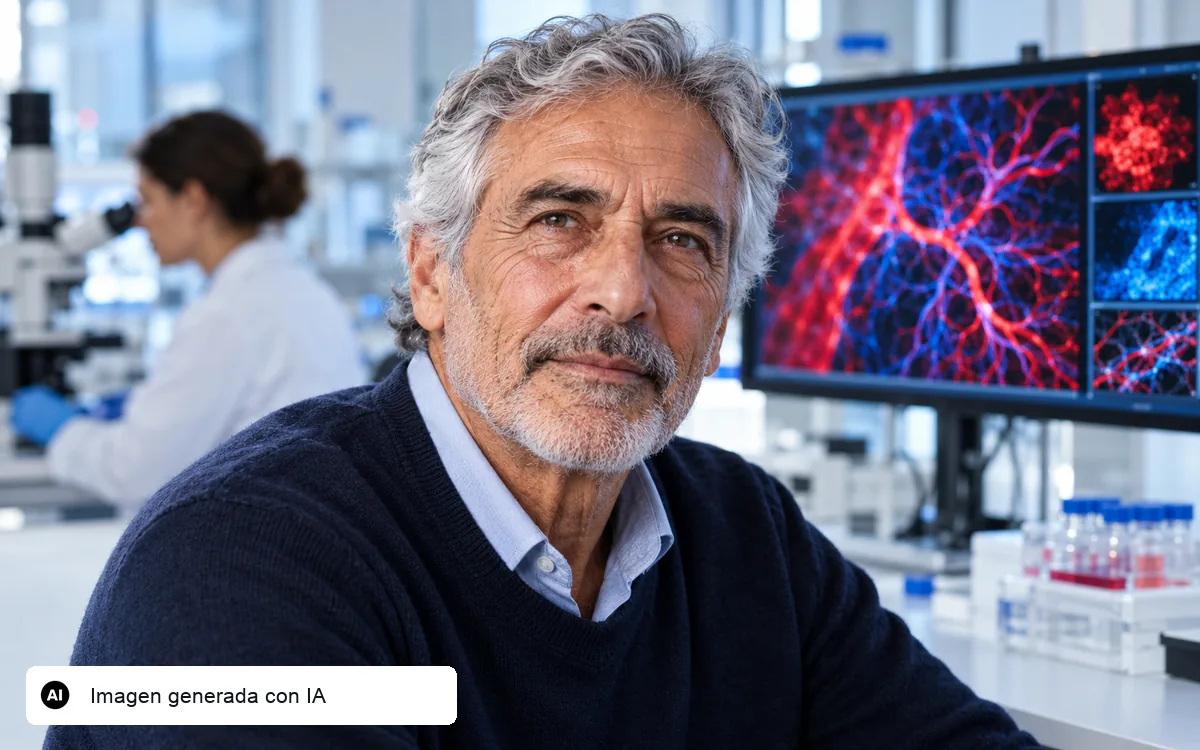
Scientific source: Dobner and colleagues, “Uncovering the transcriptional hallmarks of endothelial cell aging via integrated single-cell analysis”, Nature Aging, 23 October 2026; PubMed record. The implications for communication and innovation are FIFTIERS analysis. This article was prepared with artificial intelligence assistance. The image is an AI-generated conceptual illustration and does not document patients or researchers involved in the study.
Discover more from FIFTIERS
Subscribe to get the latest posts sent to your email.
What's Your Reaction?