







Cold reveals a molecular pathway to longevity: Nature identifies a muscle signal that protects proteins in worms

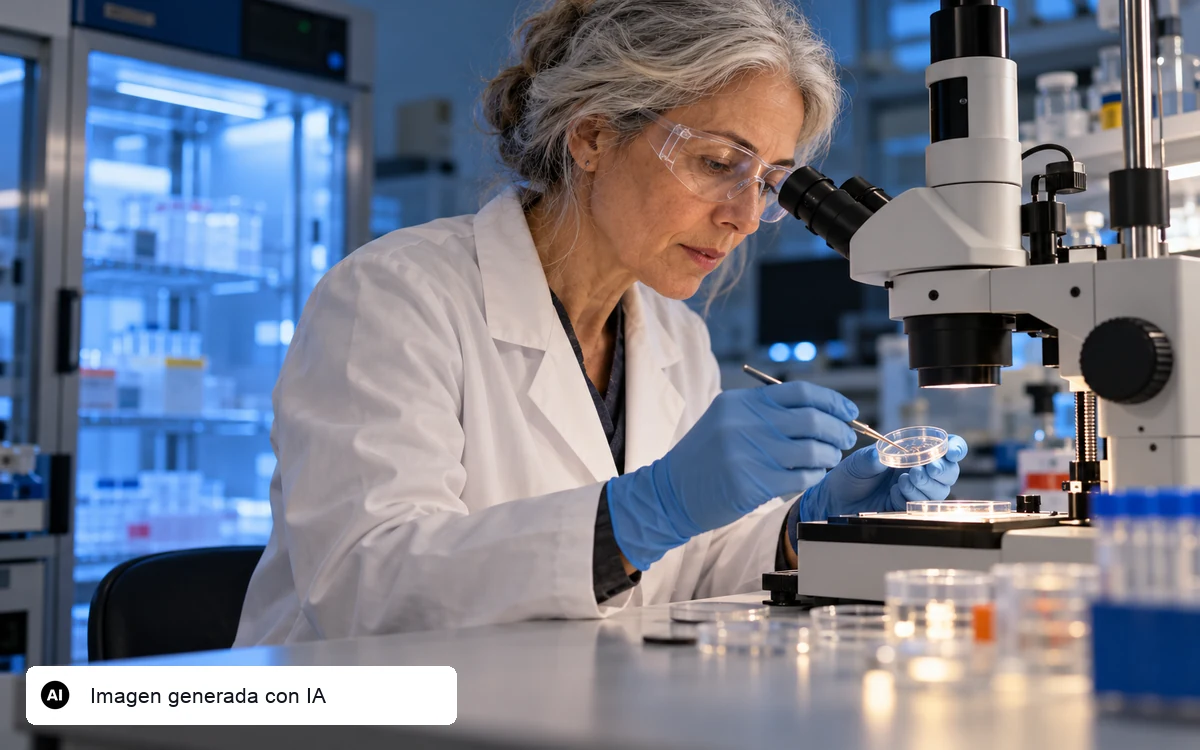

Research into ageing has uncovered an especially intriguing connection between temperature, muscle and cellular maintenance. A paper published in Nature on 21 October 2026 describes a metabolic network in the worm Caenorhabditis elegans that helps explain how moderately cold conditions can support longevity and proteostasis, the processes that keep proteins functioning properly. The finding centres on a signal originating in muscle and acting in other tissues. Its scope remains experimental: the study does not show that ice baths extend human life, nor does it establish a treatment for human ageing.
The team identifies a role for BH2, or dihydrobiopterin, and for the muscular activity of CAT-4, which corresponds to the human protein GCH1. In the model studied, cold activates this pathway; BH2 can travel to other tissues and be converted into BH4 by DHFR-1, within a metabolic sequence connected to tyrosine production. The researchers also find that increasing BH2 specifically in muscle is sufficient to support longevity and reduce protein aggregation even at normal or higher temperatures. This is a clue about communication between tissues and protein regulation. It is not a basis for extrapolating effects, doses or interventions to human beings.
Turning an observation into a scientific question
Interpreting the news requires a distinction between the observation itself and the possible research journey ahead. Finding that an environmental condition is associated with longer life in a laboratory organism provides a starting point; identifying a molecular pathway helps researchers ask more precise questions about how that happens. This explains the paper’s appeal for anyone following longevity science. Temperature becomes more than an external variable: it becomes a way into specific cellular processes. From an editorial perspective, the most interesting advance is the ability to investigate a sequence of events with components that can be tested, rather than stopping at a general recommendation to expose oneself to cold.
The choice of C. elegans also needs context. It is an experimental organism used to investigate biological mechanisms, but its living conditions, physiology and timescale differ from those of humans. An intervention that changes its survival may be valuable for generating hypotheses without thereby becoming a clinical strategy. Readers should retain that distinction even when they recognise the names of molecules found in other species. Shared biological connections make a question worth investigating; they do not guarantee that the outcome, safety or practical usefulness will carry across. The distance between mechanism and medicine is precisely the territory that further research must cover.
Muscle as the starting point for communication between tissues
The findings encourage a view of muscle that extends beyond strength and physical performance. Here, it appears as the source of a metabolic signal with effects in other tissues of the animal. That is a compelling explanatory picture, provided it stays within the boundaries of the experiment. It does not allow us to infer that a particular exercise routine activates the same response in a person, or that taking a related compound reproduces the observed effects. For FIFTIERS, the value of the approach lies in broadening the questions about ageing: how tissues communicate, which signals they receive and how a local response can relate to maintenance across the organism.
The word proteostasis also deserves attention. It is less familiar outside the laboratory than many other terms in the longevity debate, but it directs attention to the difference between the duration of life and the preservation of biological function. A protein must be produced, take on its structure, and be maintained or removed as appropriate. News about that balance cannot be reduced simply to a number of extra years. Explaining the process offers more than turning every finding into a promise of rejuvenation. This research does not need a guarantee of immortality to be interesting: its appeal lies in describing one part of an exceptionally complex problem in greater detail.
An opportunity to report on longevity more accurately
The next stages require questions this article should not treat as resolved: whether the mechanism is conserved in other models, under which conditions it operates, what unwanted effects might arise and how relevant it is to different organisms. Any application in people would require specific evidence of safety and efficacy. Until that work exists, selling the news as support for a commercial practice would replace the research with a conclusion it does not contain. Caution does not diminish the finding’s interest. It allows us to recognise what the study has contributed and what remains open, preventing a useful discovery from becoming an inadequately supported health recommendation.
The longevity economy needs precisely this ability to distinguish stages of development. A publication can generate research directions, inform business questions or stimulate scientific collaboration without producing something ready for consumers. Presenting every result as an available therapy may generate headlines in the short term, but it undermines trust when expectations are not met. FIFTIERS’ reading is that this study merits attention for the connection it proposes between the environment, muscle and protein maintenance. Its importance will be measured by the strength of the investigations it enables next, rather than by how quickly it becomes a trend.
Scientific source: Lee and colleagues, “Cold activates a BH2 metabolic network promoting longevity and proteostasis”, Nature, 21 October 2026; PubMed record. The interpretation of its editorial significance is FIFTIERS’ own. This article was prepared with artificial intelligence assistance. The image is an AI-generated illustration and does not show the research team or the experiment described in the study.
Discover more from FIFTIERS
Subscribe to get the latest posts sent to your email.
What's Your Reaction?