



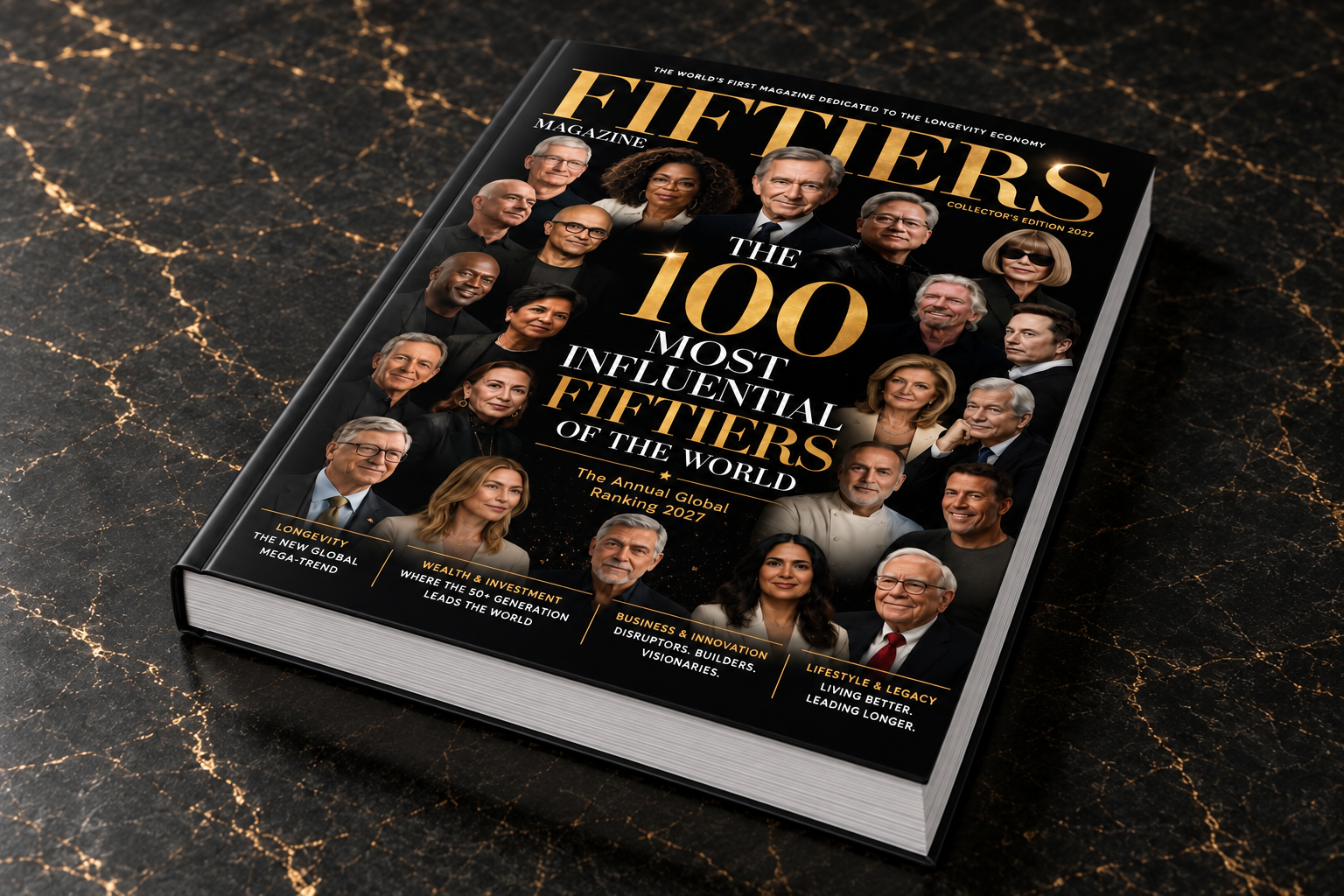


THE 100 MOST INFLUENTIAL FIFTIERS OF THE WORLD — Global Ranking 2027 #013 | Jensen Huang: at 63, the man who turned a graphics chip into infrastructure for the new global economy

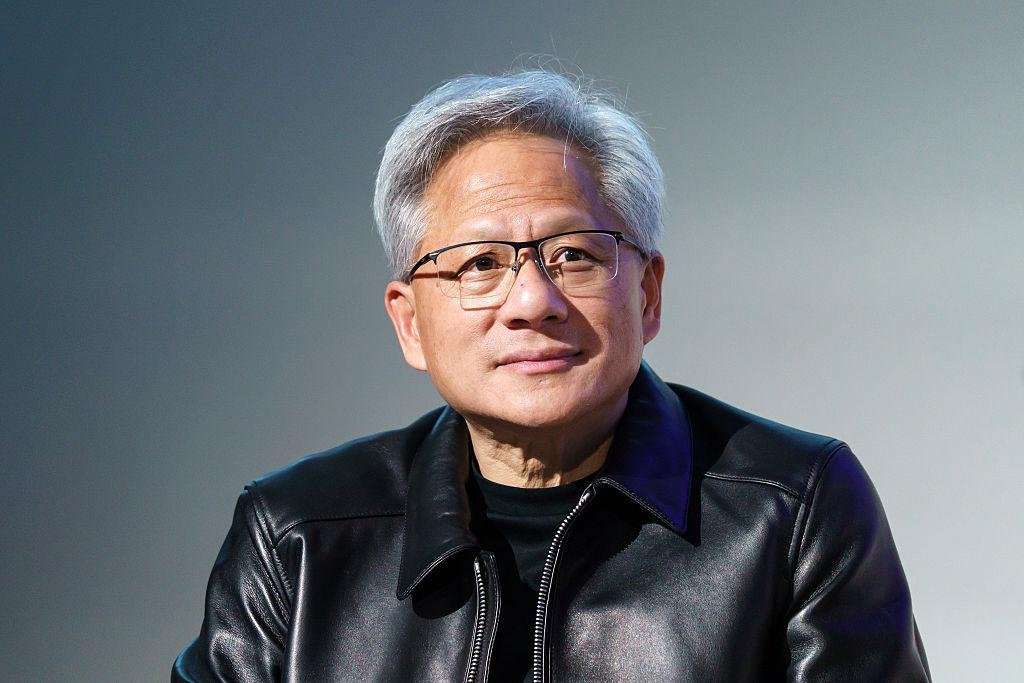

Some entrepreneurs build great companies. Others eventually build the infrastructure on which other companies create the future. Jensen Huang now belongs firmly in the second category. At 63, NVIDIA’s founder, president and CEO leads an organization that evolved from making graphics processors for video games into a company positioned at the center of artificial intelligence, data centers, robotics, autonomous vehicles, industry and, increasingly, medicine and life sciences. In 2026, he remains in the leadership role he assumed when NVIDIA was founded in 1993, more than three decades later, while the company experiences the most extraordinary period of expansion in its history.
His candidacy for THE 100 MOST INFLUENTIAL FIFTIERS OF THE WORLD — Global Ranking 2027 goes far beyond wealth or technology. Huang is one of the executives determining how much computing capacity the global economy will have available over the next decade. That means indirectly influencing almost every major industry: banking, pharmaceuticals, automobiles, manufacturing, hospitals, governments, universities, digital platforms and companies that have not even been created yet.
The numbers illustrate the scale. On August 26, 2026, NVIDIA reported record quarterly revenue of $96.221 billion, up 106% from a year earlier. Data Center alone generated $89 billion, up 117% year over year. GAAP net income reached $59.688 billion in just three months. This is no longer simply the growth story of a semiconductor company. NVIDIA is benefiting from a massive reallocation of global capital toward the infrastructure required to train and operate artificial intelligence. Huang increasingly describes this transformation as a new industrial infrastructure in which computation itself becomes directly connected to productivity and revenue creation.
His personal wealth has followed the same trajectory. Forbes estimated Huang’s net worth at approximately $189.1 billion on September 13, 2026, making him the eighth-richest person in the world at that moment. Huang still owns roughly 3% of NVIDIA, meaning that much of his fortune remains directly connected to the company he created. During 2026 his wealth temporarily crossed the $200 billion threshold as NVIDIA shares reached new highs.
But Jensen Huang’s story did not begin with generative AI. Born in Taiwan in 1963, he spent part of his childhood in Thailand before moving to the United States. He studied electrical engineering at Oregon State University and later earned a master’s degree from Stanford. Before founding NVIDIA, he worked at AMD and LSI Logic. In 1993, together with Chris Malachowsky and Curtis Priem, Huang created NVIDIA around an insight whose ultimate importance was far larger than it initially appeared: computing would increasingly require specialized processors capable of performing huge numbers of calculations in parallel.
That insight produced NVIDIA’s modern GPU in 1999. Then came another decision that may have been even more consequential: developing CUDA, the architecture that allowed GPUs to be used for general-purpose computing rather than graphics alone. For years, it remained primarily a tool for researchers, engineers and scientists. When deep learning began demonstrating that enormous neural networks could be trained using parallel processing, NVIDIA had already spent years building precisely the infrastructure the field required.
That may be one of Huang’s most important entrepreneurial lessons: technological revolutions are often won by building the infrastructure before the market fully understands what it will use it for.
Generative AI turned that bet into one of the most consequential business transformations of our era, but Huang is already attempting to repeat the pattern across new frontiers. He speaks about agentic AI, billions of digital agents operating continuously, physical AI controlling robots and machines, and world models capable of understanding physical environments. NVIDIA no longer presents itself merely as a hardware manufacturer. It now provides technology spanning chips, networking, systems, software, models and development tools. In June 2026, Huang described an emerging economy populated by billions of AI agents while NVIDIA’s next major architecture, Vera Rubin, moved into production.
For FIFTIERS, however, another frontier may be even more compelling: biology.
Huang has repeatedly argued that artificial intelligence can transform life sciences in the same way it transformed computing. In January 2026, NVIDIA and Eli Lilly announced a joint AI co-innovation laboratory for drug discovery, with the two companies planning to invest up to $1 billion over five years in talent, infrastructure and computing. The objective is to bring experts in biology and medicine together with AI engineers so that enormous chemical and biological spaces can be explored computationally before individual molecules are physically manufactured.
The technological architecture supporting that ambition is NVIDIA BioNeMo. The platform is designed to train and deploy models across biology, chemistry, genomics and molecular design. In June 2026, NVIDIA also introduced its BioNeMo Agent Toolkit, enabling artificial-intelligence agents to use scientific tools for protein-structure prediction, molecular docking, generative chemistry, genomic analysis, protein design and biomarker discovery. More than 50 companies and organizations were already using these capabilities, including Lilly, Schrödinger, Databricks, Natera, Anthropic, OpenAI and the University of Washington’s Institute for Protein Design.
The implications for the longevity economy are enormous. The major diseases associated with aging — cancer, cardiovascular conditions, neurodegeneration, metabolic disease and multiple forms of functional decline — all require better molecules, deeper protein understanding, genomic analysis, biomarker discovery and faster therapeutic development. If artificial intelligence can shorten research cycles, select stronger candidates before laboratory testing and automate parts of experimentation, the economics and speed of developing new medicine could begin to change.
NVIDIA is attempting to turn this into a continuous computational infrastructure. Its Lilly collaboration explicitly proposes connecting physical wet labs with computational dry labs so that experiments generate data, data improves AI models and those models recommend new experiments around the clock. It begins to resemble an autonomous factory for scientific discovery.
The same logic is moving into hospitals. In May 2026, NVIDIA, Foxconn and major Taiwanese medical centers announced an expansion of clinical AI and robotics under the Healthy Taiwan initiative, supported by a $1.5 billion regional investment. Most of Taiwan’s major medical centers were already using AI systems touching more than 14 million patient encounters annually, in a healthcare environment NVIDIA explicitly links to population aging, clinician shortages and rising costs.
That connects Jensen Huang directly with one of longevity’s defining challenges. If millions of people live longer, healthcare systems cannot simply multiply physicians, nurses, hospital capacity and expenditure at the same rate. They will need to increase healthcare productivity. Agents capable of documenting, interpreting tests, supporting clinical decisions, monitoring patients or coordinating processes could allow human professionals to spend more time on the work that genuinely requires judgment, empathy and experience.
Longevity, in other words, requires computing.
A great deal of it.
And Huang is building an essential part of that capacity.
His influence extends beyond healthcare. Artificial intelligence may also fundamentally reshape the productivity of mature workers. In an economy where more people remain professionally active into their 60s and 70s, digital copilots, agents and automation could allow professional value to depend less on operational speed and more on judgment, relationships, accumulated expertise and decision-making. In that scenario, AI could paradoxically become one of the great enablers of professional longevity.
Huang himself provides an extraordinary example. At 63, he is arguably living through the period of greatest influence in his career. Rather than moving toward a ceremonial or supervisory role, he continues personally presenting new architectures, meeting governments, visiting supply chains, negotiating partnerships and explaining his vision of the next technological era. In January he appeared at Davos; in March he again commanded the central stage at GTC; in June he outlined NVIDIA’s agentic and infrastructure strategy across Asia; and in July he appeared in Tokyo advancing new physical-AI partnerships.
There is something equally remarkable about the duration of his leadership. Huang has spent 33 years running the same company. He has survived semiconductor cycles, market crashes, complete changes in computing architecture and several generations of competitors. NVIDIA came close to failure at different points in its history. Today it sits at the center of one of the largest technology investment cycles ever seen.
That makes his age and experience part of the advantage.
A thirty-year-old founder can imagine an entirely new market.
A sixty-three-year-old founder who has spent three decades watching technology architectures emerge and disappear may recognize patterns others cannot yet see.
That is accumulated cognitive capital.
And it will become increasingly valuable in an economy of longer professional lives.
Jensen Huang’s contribution to longevity is unlikely to arrive as a pill or therapy carrying his name. It may ultimately prove more structural: giving thousands of laboratories, pharmaceutical companies, hospitals and scientists the computing capacity required to discover those therapies faster.
If that happens, NVIDIA’s story will no longer be only about computers.
It will also be about biology.
FIFTIERS EDITORIAL VERDICT: Jensen Huang deserves consideration among the leading candidates for THE 100 MOST INFLUENTIAL FIFTIERS OF THE WORLD — Global Ranking 2027 because at 63 he combines extraordinary influence across technology, wealth, business, science and the future industrial economy. He built NVIDIA before the market existed that would eventually make its technology essential to artificial intelligence, and he is now extending that same computing infrastructure into robotics, medicine, genomics and drug discovery. His impact on the longevity economy may ultimately be indirect but fundamental: if AI accelerates science, multiplies healthcare productivity and helps new therapies reach people faster, a major part of that revolution will be running on infrastructure Jensen Huang chose to build decades before the world understood how badly it would need it.
Discover more from FIFTIERS
Subscribe to get the latest posts sent to your email.
What's Your Reaction?