


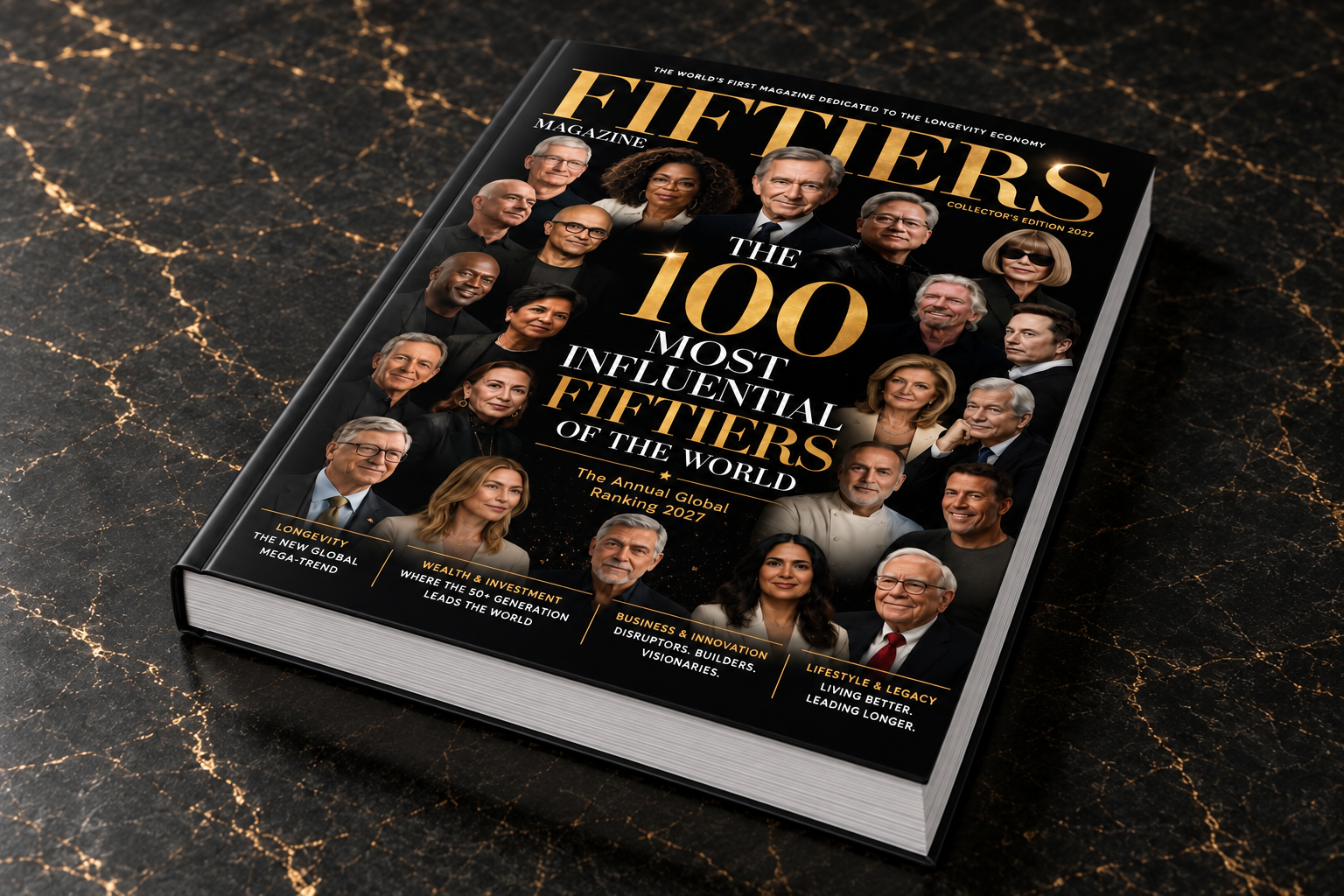

THE 100 MOST INFLUENTIAL FIFTIERS OF THE WORLD — Global Ranking 2027 #012 | Arianna Huffington: at 76, the woman who went from reinventing media to trying to reinvent how we age

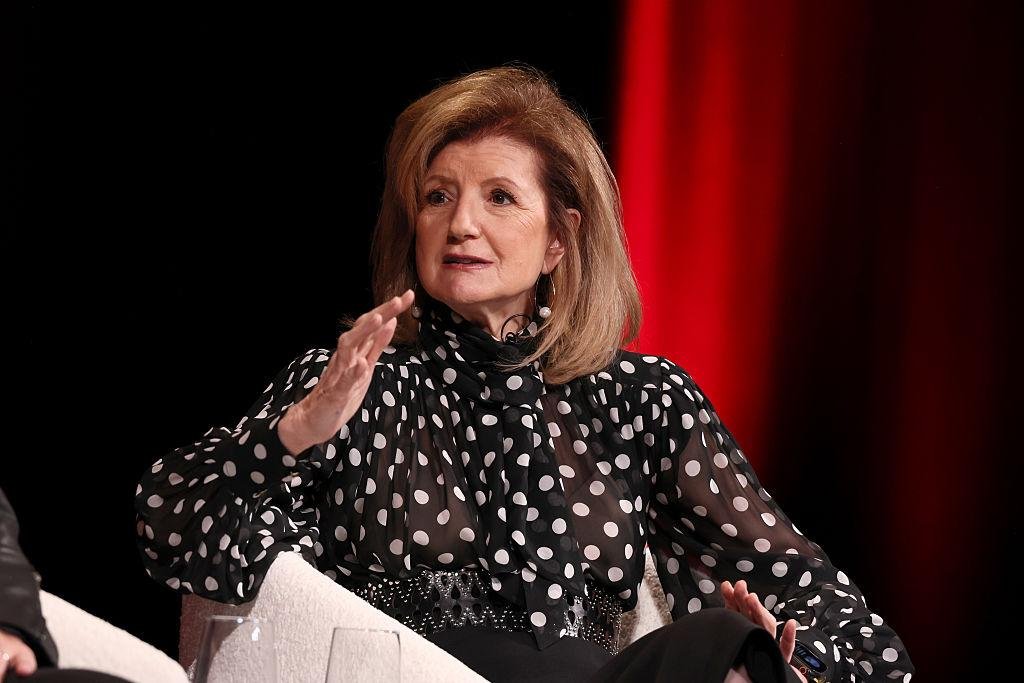

For years, Arianna Huffington was associated with one of the defining transformations of digital media. Today, at 76, she is building a second career around an industry that may ultimately become even larger: preventive health, behavior change, artificial intelligence and healthy longevity. Born in Athens on July 15, 1950, she remains fully active as founder and CEO of Thrive Global and appeared at the TIME100 Summit in New York in April 2026 discussing artificial intelligence, healthcare and the changing relationship between health companies and consumers. Her career captures one of the central ideas behind FIFTIERS: the most consequential chapters of professional life do not necessarily have to occur before 50. In some cases, accumulated experience creates the ability to build even more ambitious projects later.
Huffington’s story could easily have ended as one of the defining biographies of the digital-media revolution. She moved from Greece to Britain as a teenager, studied economics at Cambridge and, at only 21, became president of the Cambridge Union, the first international student to hold the position. In 2005, she co-founded The Huffington Post, which became one of America’s largest digital news organizations within six years. AOL acquired the company in 2011 for $315 million, and Huffington went on to lead the newly created Huffington Post Media Group. That achievement alone would have secured her place in digital-media history. Yet five years later she made a decision that says far more about who she is today: she left the company bearing her own name and started again.
The origin of that second reinvention was deeply personal. In 2007, after years of extreme work schedules, insufficient sleep and exhaustion, Huffington collapsed from sleep deprivation and burnout. The experience fundamentally changed the way she understood success. She began questioning a corporate culture that equated leadership with permanent availability, limited rest and productivity without boundaries. In 2016, she created Thrive Global to turn that thesis into a technology company: improving health and performance not by asking people to redesign their entire lives overnight, but through small repeatable behaviors — its well-known Microsteps — across sleep, food, movement, stress management and human connection. Thrive says its methodology has now been adopted by employees at more than 200 organizations across over 160 countries.
What makes the idea increasingly important is that something once interpreted largely as corporate wellness is moving toward the center of the longevity economy. Longer healthy lives will not depend only on next-generation pharmaceuticals, cellular reprogramming or advanced biotechnology. A huge portion of healthspan is built through remarkably ordinary decisions repeated thousands of times: sleeping, eating, moving, managing stress, maintaining relationships and adhering to treatment. Medicine can prescribe. The much harder challenge is often enabling a person to follow that recommendation consistently for months or years. Huffington is attempting to turn precisely that last mile between medical knowledge and everyday behavior into technological infrastructure.
Her next venture takes that philosophy directly into artificial intelligence. In 2024, Thrive Global and the OpenAI Startup Fund created Thrive AI Health, with strategic investment from the Alice L. Walton Foundation and later participation from Eli Lilly. Its goal is to build an AI health coach that personalizes recommendations using habits, goals, biometrics and data from health applications and wearables. The current product brings together activity, sleep, nutrition and stress management; users can connect devices, complete daily check-ins and engage with AI-driven motivational interviewing designed to help turn recommendations into sustained action. Huffington’s thesis is particularly relevant to longevity: use AI personalization not merely to answer health questions, but to accompany people continuously before disease develops or while they are managing it.
This could become one of healthcare’s next major economic frontiers. Traditional medicine largely operates at specific moments: consultation, diagnosis, intervention and follow-up. Human biology operates 24 hours a day, 365 days a year. Between two medical appointments, tens of thousands of decisions may be made involving food, sleep, physical activity, alcohol, stress, medication or social connection. If artificial intelligence becomes a continuous layer capable of understanding context, integrating wearable data and helping improve even a fraction of those decisions, prevention could move from an abstract recommendation to an everyday service. That is the economy Huffington is attempting to anticipate.
Her growing involvement with healthcare companies reinforces the thesis. Thrive Global has expanded collaborations across health and pharmaceuticals; its partnership with Eli Lilly brought Thrive’s behavior-change methodology into LillyDirect, while Lilly also became an investor in Thrive AI Health. At the TIME100 Summit in April 2026, Huffington argued that AI can accelerate a broader shift in pharma from a purely transactional relationship with patients toward becoming a partner throughout the health journey. The idea is not to replace medicine with lifestyle advice. It is to recognize that real-world outcomes also depend on adherence, nutrition, movement, sleep, stress and behavior.
Huffington is also extending this conversation into one of longevity’s most important emerging territories: brain health. In April 2026, she published an essay examining whether brain health represents healthcare’s next major frontier, connecting everyday behaviors with cognitive aging. Two months earlier, she had written specifically about life and death in the age of longevity. The transition is striking: someone who helped shape the way people consumed information two decades ago is now devoting much of her influence to the way technology, habits and personal awareness may help us navigate longer lives.
There is an equally powerful entrepreneurial dimension to her story. Huffington accomplished something very few leaders manage successfully: voluntarily leaving an industry in which she had already achieved global recognition and rebuilding relevance in another. The Huffington Post belongs to the first great era of the internet. Thrive Global and Thrive AI Health belong to the emergence of another economy built around personalized AI, preventive health and behavior change. Her career has not followed a conventional upward line. It has been defined by successive reinventions — precisely the capability that may become essential in a society where professional lives can last 50, 60 or even 70 years.
Because an economy of longer lives will also require longer and less linear careers. The traditional model — education in youth, one primary career for four decades and retirement around 65 — becomes less compatible with people capable of remaining healthy and active much longer. There will be second careers, third companies, new periods of education and professional reinvention after 50, 60 and 70. Huffington embodies that pattern remarkably well: she built a major media company in her fifties, founded Thrive Global at 66 and at 74 helped create a new artificial-intelligence health company. At 76, she remains on the front line.
That matters.
Not because 76 should become the new 46, but because the new longevity should allow something far more interesting: being 76 while retaining the ability to build, learn, influence and launch projects designed for the future.
Arianna Huffington’s influence also does not primarily derive from a personal fortune comparable with those of Bezos, Gates or Ellison. Her most powerful form of capital is different: an ability to turn cultural ideas into businesses and movements. First, she understood that the internet could support a new media model built around conversation, opinion and community. Then she recognized burnout not simply as an individual problem, but as an economic externality of modern work. Now she is backing a third proposition: artificial intelligence can make healthy behavior dramatically more personalized, continuous and scalable.
That final thesis could prove particularly important for FIFTIERS. Scientific breakthroughs may increase our ability to prevent or treat disease, but everyday longevity will still be created through millions of small human decisions. If AI can help those decisions become slightly better and remain better for decades, the aggregate effect on health, productivity, healthcare spending and independence could be enormous.
Arianna Huffington has spent almost twenty years arguing that sleep, recovery and health are not obstacles to performance.
She is now trying to demonstrate something larger: that they can become economic infrastructure for a society that lives longer.
FIFTIERS EDITORIAL VERDICT: Arianna Huffington deserves consideration among the leading candidates for THE 100 MOST INFLUENTIAL FIFTIERS OF THE WORLD — Global Ranking 2027 because at 76 she combines cultural influence, entrepreneurship, female leadership, technology, healthcare and an exceptional capacity for reinvention. She first helped reshape global digital media; then transformed burnout and wellbeing into a global business platform; and is now positioning herself at the intersection of artificial intelligence, prevention and healthy longevity. Her career captures one of the most powerful propositions of the emerging longevity economy: living longer is not simply about adding years to life. It is about designing better behaviors, technologies and careers to fill those years.
Discover more from FIFTIERS
Subscribe to get the latest posts sent to your email.
What's Your Reaction?