


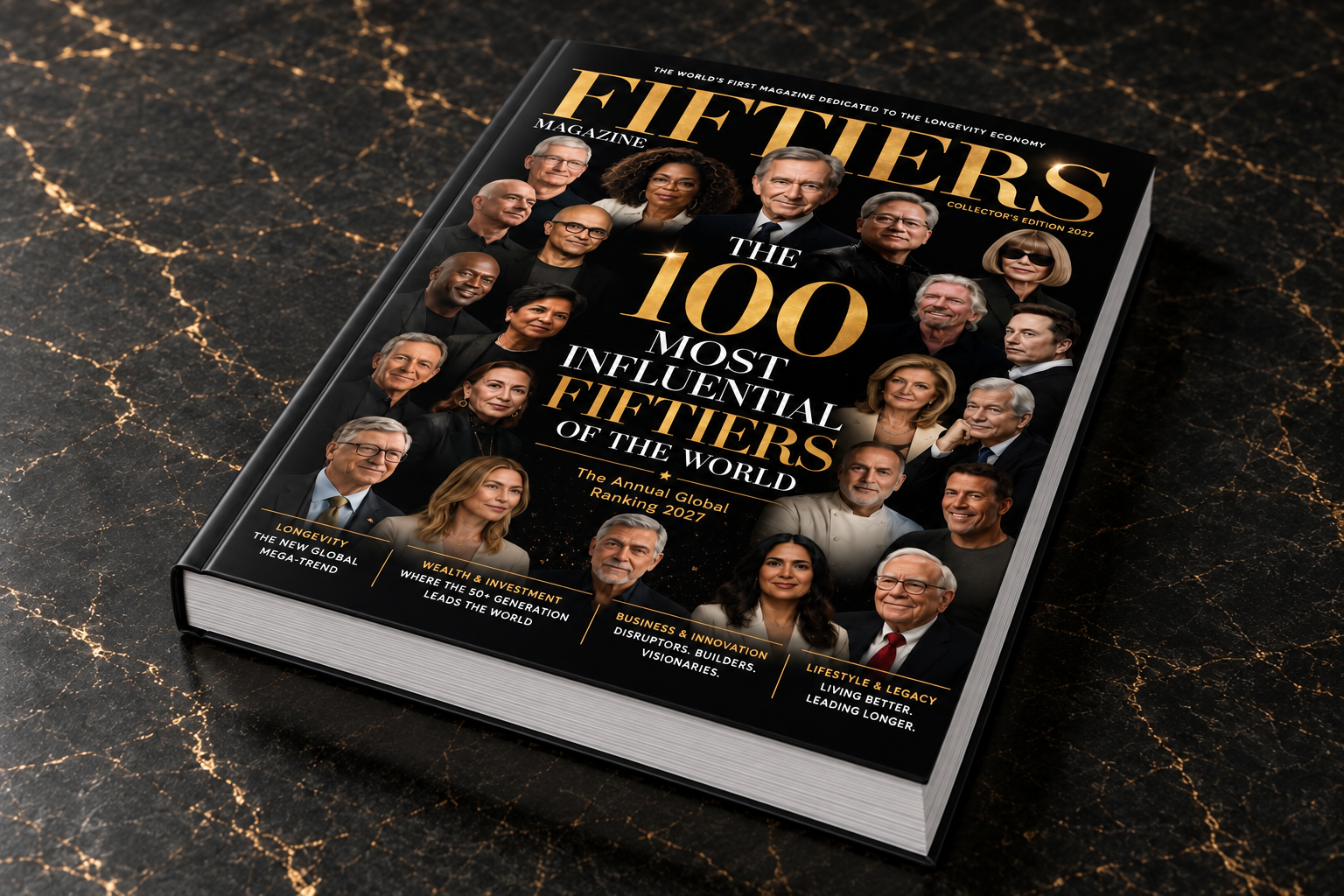

THE 100 MOST INFLUENTIAL FIFTIERS OF THE WORLD — Global Ranking 2027 #014 | Michael Bloomberg: at 84, the billionaire who turned public health into infrastructure for longer lives

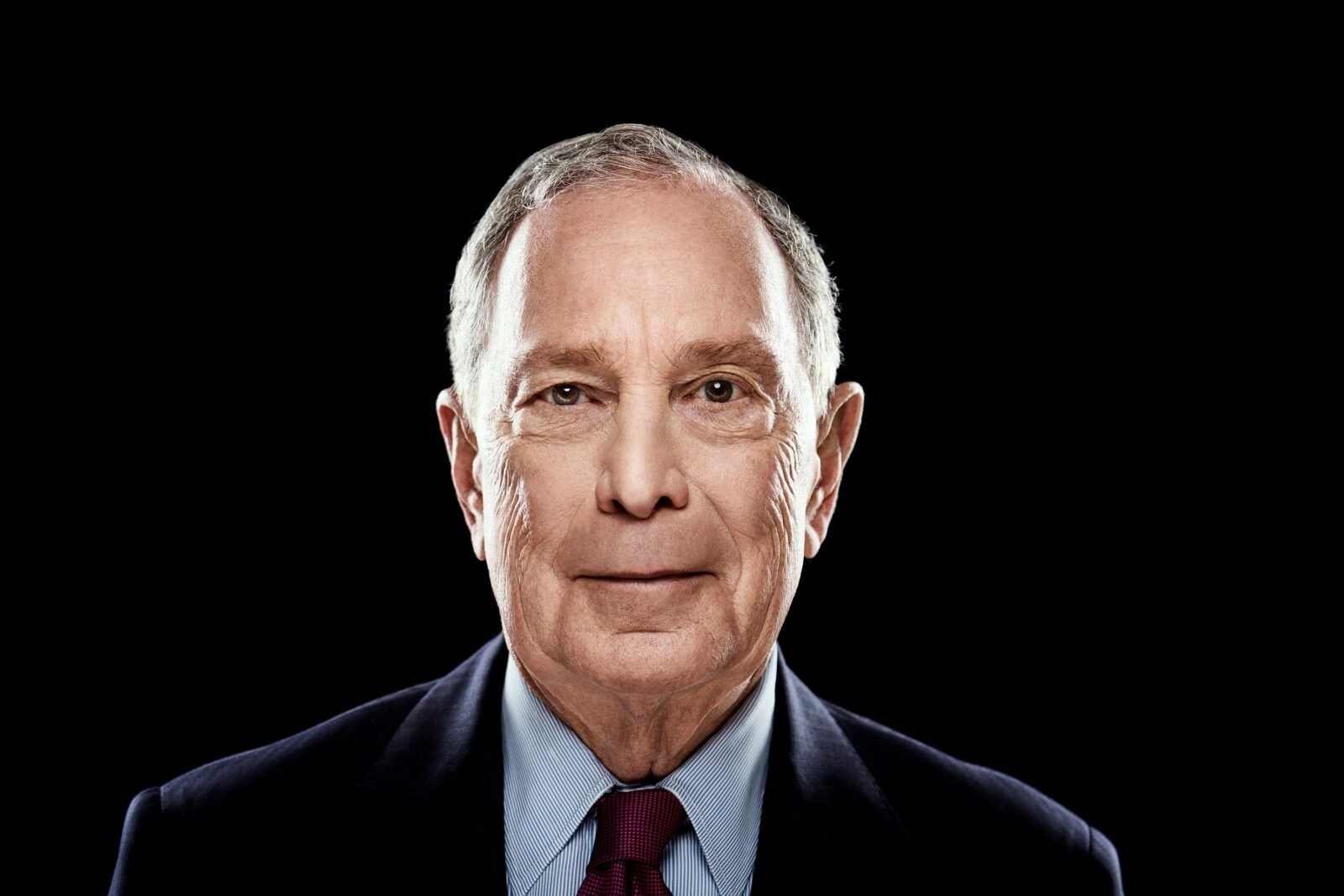

The longevity industry often looks toward laboratories, cellular therapies, artificial intelligence, genetics and molecules designed to slow aging. Michael Bloomberg represents another way of extending human life: preventing millions of people from dying too early. At 84, the founder of Bloomberg L.P. and Bloomberg Philanthropies continues to deploy capital, data, public policy and urban leadership on an extraordinary scale. He is an entrepreneur, billionaire, three-term former mayor of New York City, the UN Secretary-General’s Special Envoy on Climate Ambition and Solutions, and WHO Global Ambassador for Noncommunicable Diseases and Injuries. One phrase in Bloomberg Philanthropies’ current mission captures precisely why his career belongs in THE 100 MOST INFLUENTIAL FIFTIERS OF THE WORLD — Global Ranking 2027: ensuring better, longer lives for the greatest number of people.
His business story began decades before his philanthropy reached its current scale. After working at Salomon Brothers, Bloomberg founded his financial-information company in 1981. What began as a way to put financial data and analytics directly in front of market professionals became global infrastructure for banks, investment firms, governments and corporations. Bloomberg still owns approximately 88% of Bloomberg L.P., which Forbes estimates generates close to $15 billion in annual revenue. As of September 15, 2026, Forbes estimated his net worth at approximately $94.9 billion, placing him among the twenty richest people in the world.
The more revealing number, however, is what he is doing with that fortune. Bloomberg Philanthropies distributed $4.3 billion in 2025 alone, currently works across roughly 700 cities and 150 countries, and Bloomberg has now given away approximately $25.4 billion over his lifetime. The vast majority of Bloomberg L.P.’s profits ultimately support his philanthropic work, and Bloomberg has committed his ownership stake in the company to Bloomberg Philanthropies. The result is an unusual architecture: an immensely profitable private enterprise progressively becoming a permanent source of capital for public health, cities, education, climate action and culture.
To understand his relevance to longevity, it is useful to move beyond the fascination with living to 120. The first great longevity revolution is preventing millions of people from losing ten, twenty or thirty years of life to avoidable causes. Cardiovascular disease, cancer, diabetes, respiratory disease, tobacco, unhealthy diets, road crashes, pollution, drowning and weak health information systems continue to shorten lives across vast populations. The World Health Organization continues to identify Bloomberg as its Global Ambassador for Noncommunicable Diseases and Injuries because much of his work focuses on turning proven preventive measures into policies implemented at population scale.
Tobacco provides perhaps the clearest example. Since 2007, Bloomberg Philanthropies has funded one of the world’s largest private tobacco-control efforts. Its partners have helped develop and implement 185 laws that now protect five billion people across 94 countries. The organization estimates that these interventions have contributed to saving 35.2 million lives. The strategy does not depend on futuristic technology. It relies on measurable interventions: taxation, smoke-free environments, advertising restrictions, graphic warnings, cessation support and regulation.
New York had already served as the laboratory for this philosophy. During Bloomberg’s mayoralty, the city sharply increased cigarette taxes, expanded smoke-free regulation and developed data-driven public-health programs. Between 2002 and 2011, adult smoking prevalence fell from 21.5% to 14.8%. Electronic health-record initiatives helped tens of thousands of patients improve hypertension and diabetes management or quit smoking, while environmental measures contributed to lower urban pollution.
This points toward an idea the longevity economy will increasingly need to recognize: a postal code can matter to healthspan as much as many biomarkers do. Air quality, road safety, walkability, access to healthy food, preventive services, medical care and urban design influence how people age over decades. Bloomberg has built much of his second career around the proposition that when a city changes, millions of individual behaviors and exposures can change with it.
In April 2026, at 84, Bloomberg returned to Madrid to lead Bloomberg CityLab, bringing together more than one thousand mayors, policymakers, innovators and urban leaders. The event included 102 mayors from 37 countries across six continents and focused on artificial intelligence, housing, productivity and new models of urban government. Bloomberg Philanthropies has now trained hundreds of mayors through different leadership initiatives and increasingly helps cities use data and AI to improve public services. This is not a former mayor simply reflecting on the past. It is an octogenarian entrepreneur continuing to influence how cities of the future will be governed.
The longevity connection becomes even clearer through Data for Health. Since 2015, Bloomberg Philanthropies has helped low- and middle-income countries answer questions that sound elementary but are frequently difficult: who is being born, who is dying and why. So far, it has supported governments in 81 countries, helping collect or strengthen more than 25.4 million death records, nearly 24 million birth records, and train more than 160,000 health officials in the collection and analysis of health data.
That may look less dramatic than gene therapy, but it is essential longevity infrastructure. A country that does not know why its citizens are dying cannot properly design prevention, screening, hospitals, healthcare financing or healthy-aging strategies. Before lives can be extended, societies need to understand precisely what is shortening them.
Bloomberg’s newer vision initiative offers another example. Roughly one billion people worldwide live with untreated vision problems, many of which are correctable. Bloomberg Philanthropies is working with partners to deliver 11 million vision screenings, seven million pairs of eyeglasses and 250,000 sight-restoring cataract surgeries by 2027. Since May 2025, partners have already distributed more than 945,000 pairs of glasses and performed more than 65,900 cataract surgeries. The longevity implications are direct: better sight can preserve mobility, work capacity, independence and quality of life while lowering the risk of falls and disability.
The same logic applies to polio. In December 2025, Bloomberg announced an additional $100 million for the Global Polio Eradication Initiative, bringing Bloomberg Philanthropies’ total investment in eradication to $325 million. Wild poliovirus cases have fallen by more than 99% since 1988 and are now concentrated in Afghanistan and Pakistan. Eradicating a disease does more than save current patients. It removes an entire source of disability and premature mortality for future generations.
His involvement in medicine also extends to the people who will care for those generations. In 2024, Bloomberg committed $1 billion to Johns Hopkins University to make medical school tuition-free for most students and expand financial aid in nursing, public health and related graduate fields. He followed that with $600 million for four historically Black medical schools — Howard, Meharry, Morehouse and Charles R. Drew — strengthening their endowments and capacity to educate future physicians.
Together, medical education, preventive policy, cities, health data and global financing create a different interpretation of longevity: longevity as a system.
Inventing better medicines is not enough.
Societies need physicians capable of delivering them.
They need to identify who needs treatment.
They need data showing where disease is concentrated.
They need cities where reaching 80 does not automatically mean losing independence.
They need to reduce exposure to tobacco, pollution and injury decades earlier.
And those solutions must work beyond the wealthiest countries.
In that sense, Bloomberg stands almost at the opposite end of the longevity spectrum from highly individualized optimization. He is not building an exclusive clinic where a small number of billionaires can monitor every biomarker. He is using wealth created in financial markets to change the conditions under which entire populations age.
The economic implications are enormous. When someone avoids a heart attack at 58, stops smoking at 40, retains vision at 75 or prevents a disabling injury, they do not simply gain years of life. They may preserve productivity, independence, consumer participation, social relationships and economic contribution for longer. Multiplied across millions of people, those gains reshape healthcare spending, employment, dependency, pensions and economic growth.
This is the side of longevity that rarely appears in a laboratory photograph: healthy years are economic capital.
Bloomberg has spent decades trying to increase them.
His own career offers another powerful lesson. At 84, he continues traveling, convening leaders, participating in international forums and allocating billions of dollars toward challenges whose time horizons extend far beyond an election cycle, a corporate quarter or even his own lifetime. In April he was in Madrid for CityLab; in June he appeared in London during Climate Action Week and in New York supporting cultural initiatives. His 2026 schedule looks less like retirement than the transformation of six decades of accumulated experience into a platform for global influence.
Professional longevity takes a different form here than it does in figures such as Warren Buffett or Miuccia Prada. Bloomberg no longer runs the company he founded on a daily basis: in 2023, he appointed Vlad Kliatchko CEO of Bloomberg L.P. His role has progressively shifted from company building toward capital allocation, public health and long-horizon institution building.
That may become an increasingly common model in societies where reaching 90 in good health becomes less exceptional. Careers will not necessarily end abruptly. They may move through stages: creation, management, ownership, investment, mentoring, philanthropy, institution building and legacy. The primary asset of an eighty-year-old does not need to be the execution speed they had at thirty-five. It can be something far harder to acquire: accumulated judgment, global relationships, capital, reputation and the ability to mobilize institutions.
Michael Bloomberg has all five.
That is why his contribution to longevity should not be judged by whether he personally discovers the next anti-aging drug.
It should be judged by how many people reach the point where they are alive, healthy and independent enough to benefit from it.
FIFTIERS EDITORIAL VERDICT: Michael Bloomberg deserves a prominent place among the candidates for THE 100 MOST INFLUENTIAL FIFTIERS OF THE WORLD — Global Ranking 2027 because at 84 he continues to combine business, wealth, public health, data, education, cities and philanthropy at exceptional international scale. He built one of the world’s most powerful financial-information companies and is transforming much of the capital generated by it into infrastructure designed to reduce mortality, prevent disease and improve the conditions in which millions of people age. His contribution to the longevity economy is a reminder that the future will not be decided only inside biotechnology laboratories. It will also be decided in our streets, hospitals, data systems, universities and the policies that determine how many healthy years a population can expect to live.
Discover more from FIFTIERS
Subscribe to get the latest posts sent to your email.
What's Your Reaction?