



THE 100 MOST INFLUENTIAL FIFTIERS OF THE WORLD — Global Ranking 2027 #005 | Bernard Arnault: at 77, the architect of the world’s largest luxury empire is still thinking in decades, not seasons

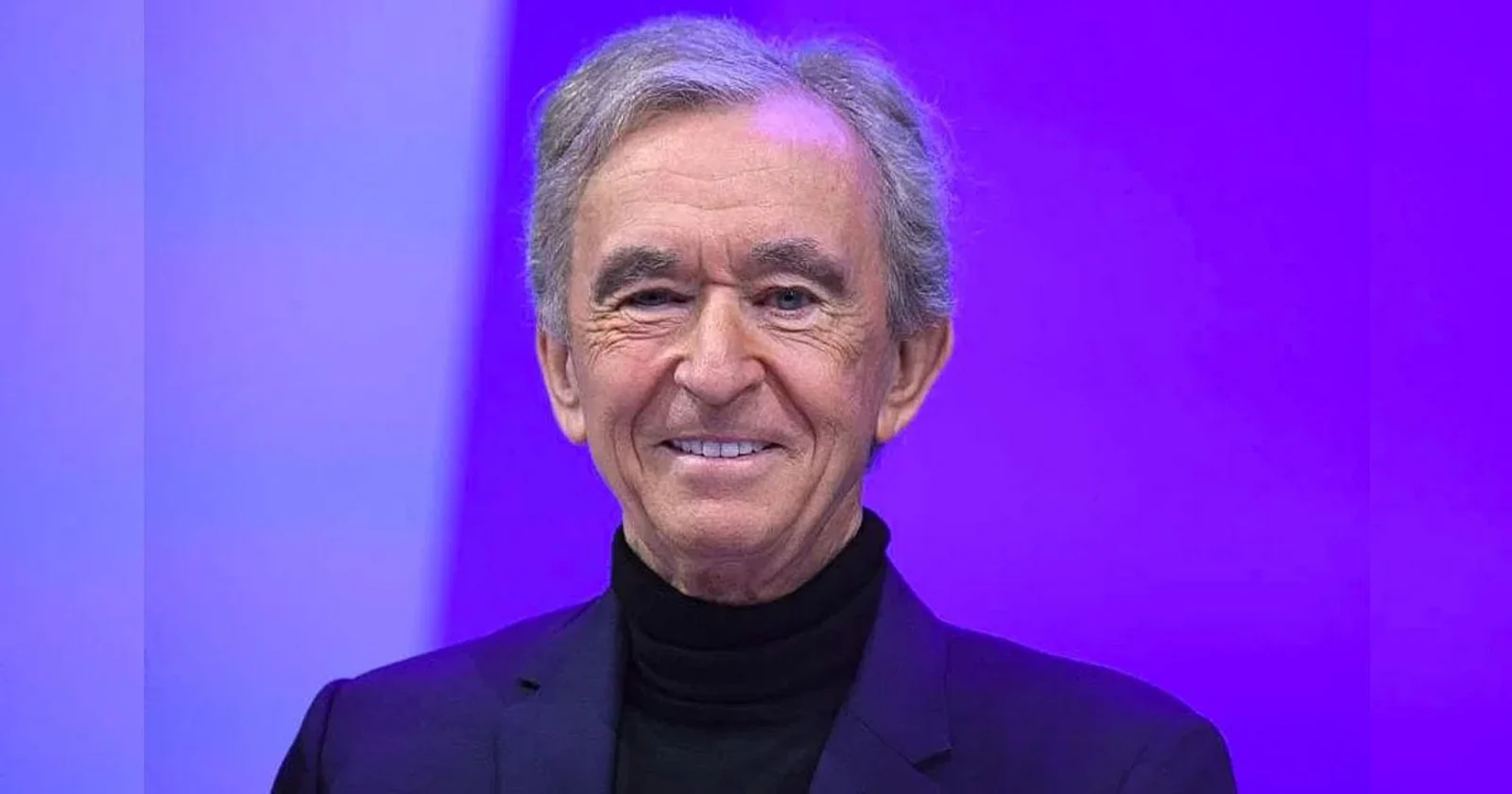

In an industry built around novelty, Bernard Arnault has turned permanence into a competitive advantage. Born in Roubaix on March 5, 1949, he is now 77 years old and remains Chairman and CEO of LVMH, a position he has held since 1989. This is not a ceremonial chairmanship. More than three decades after taking control of the group, Arnault remains directly involved in strategy, acquisitions, creativity, talent, capital allocation and the future of the maisons that make up the world’s largest luxury conglomerate.
His career represents one of the most remarkable corporate stories of modern business. Trained as an engineer at École Polytechnique, Arnault was not born into fashion. He entered the industry as an outsider, first through Financière Agache and Christian Dior and later by gaining control of LVMH in 1989. He subsequently built an architecture encompassing around 75 brands, including Louis Vuitton, Dior, Tiffany & Co., Bulgari, Fendi, Loewe, Sephora, Moët & Chandon, Dom Pérignon and Hennessy. The result is not simply a portfolio of companies. It is a system capable of combining heritage, creativity, distribution, craftsmanship, scarcity, marketing and capital on a global scale.
That ability remains highly relevant in 2026. During the first half of the year, LVMH generated €38.644 billion in revenue, €8.691 billion in recurring operating profit and €4.1 billion in operating free cash flow. Organic revenue grew 2% over the half and accelerated to 3% in the second quarter; Watches & Jewelry advanced 9% organically, with particularly strong performances from Tiffany and Bulgari, while Sephora continued to expand. The results came during an unusually demanding period for luxury, with pressure on aspirational consumers, weaker demand in parts of the world and an industry-wide reassessment of the pricing strategies that powered much of the post-pandemic expansion.
This is precisely one reason Arnault belongs in the conversation surrounding THE 100 MOST INFLUENTIAL FIFTIERS OF THE WORLD — Global Ranking 2027. Leading an industry during an expansion is one thing. Deciding what must be protected and what must change when the assumptions behind the previous growth cycle begin to break is considerably harder. Luxury is entering such a period. Aggressive pricing has reached limits, millions of aspirational consumers have retreated, and resilience is increasingly concentrated around rarity, jewelry, experiences and the wealthiest clients. Arnault is navigating the transition from an era of broad luxury expansion toward what may become a far more selective market.
His fortune illustrates the economic scale accumulated along the way. According to Forbes, on September 8, 2026, Bernard Arnault and his family were worth approximately $135 billion, making them the 12th-richest fortune in the world at that moment. The number has moved dramatically over recent years because much of the family’s wealth remains tied to LVMH shares. That volatility is precisely why Arnault’s fortune is better understood not as a fixed number, but as the financial consequence of controlling one of the largest premium-brand ecosystems ever assembled.
For FIFTIERS, however, there is an even more compelling dimension: Bernard Arnault embodies the economic power of professional longevity. At 77, he has not stepped away from frontline leadership, fully delegated strategy or indicated that retirement is imminent. LVMH has raised the age limit applicable to its top executive to 85, and Arnault told shareholders in 2026 that they should not expect clarity on succession for another seven or eight years. All five of his children now hold responsibilities within the group’s ecosystem, making LVMH one of the most closely watched intergenerational business transitions in the world.
That raises a question far larger than LVMH. Much of twentieth-century corporate life was designed around relatively compressed careers: education, advancement, peak authority between 40 and 60, followed by withdrawal. Longer healthy lives are steadily weakening that model. Someone who reaches 70 with energy, cognitive capacity, relationships, capital and experience may still have a decade or more of exceptional productive potential ahead. Arnault demonstrates what happens when four decades of accumulated knowledge do not lead to retirement, but to an even greater capacity to make decisions.
The longevity economy will also reshape luxury itself. A world in which millions of people remain healthy for longer will be a world of longer careers, extended periods of wealth accumulation and growing populations in their 60s, 70s and 80s with substantial spending power across travel, hospitality, jewelry, fashion, wellness, gastronomy, art and premium experiences. For the global luxury industry, demographic aging is not simply a social challenge. It is helping create one of the largest populations of mature affluent consumers in history.
Arnault has built an architecture for precisely that kind of consumer around something that becomes more valuable as longevity increases: time. Great maisons sell products, but they also sell continuity. A Louis Vuitton trunk, a bottle of Dom Pérignon, a Bulgari creation or a Tiffany jewel competes through narratives capable of crossing generations. In a digital economy dominated by products that can appear and disappear within months, luxury offers a connection between past, present and future.
This may ultimately be Arnault’s deeper legacy. He transformed the management of cultural heritage into a global business discipline. His core insight was that a century-old maison could protect its memory while simultaneously behaving like a modern corporation obsessed with innovation, creativity, international expansion and performance. That formula turned historic European names into some of the most valuable commercial assets on earth.
Even his family strategy reflects the same long-term perspective. All five Arnault children hold positions across the LVMH universe, from Louis Vuitton and Dior to Tiffany, TAG Heuer and other businesses. The question of who will eventually succeed their father remains unresolved and continues to attract investor scrutiny. In July 2026, Arnault publicly rejected reports of family divisions and emphasized unity among his children around the group.
That creates perhaps the defining paradox of Bernard Arnault’s career. He built an empire around brands whose greatest strength is their ability to outlive their founders, yet he still has to prove that the organization he created can ultimately do the same.
That may become his final great business challenge.
And perhaps his most consequential one.
FIFTIERS EDITORIAL VERDICT: Bernard Arnault deserves consideration among the leading candidates for THE 100 MOST INFLUENTIAL FIFTIERS OF THE WORLD — Global Ranking 2027 because at 77 he continues to exert extraordinary influence across business, wealth, culture, consumption, creativity and global heritage. He transformed LVMH into a worldwide infrastructure of desire and demonstrated that accumulated experience can remain a frontline competitive advantage long after traditional retirement age. His career also connects directly with one of the defining economic transformations of the coming decades: populations that will live and work longer, accumulate wealth over extended periods and demand new ways to consume, enjoy and transfer that wealth. Arnault has not merely built brands for multiple generations. He has built a business model designed to outlive them.
Discover more from FIFTIERS
Subscribe to get the latest posts sent to your email.
What's Your Reaction?