



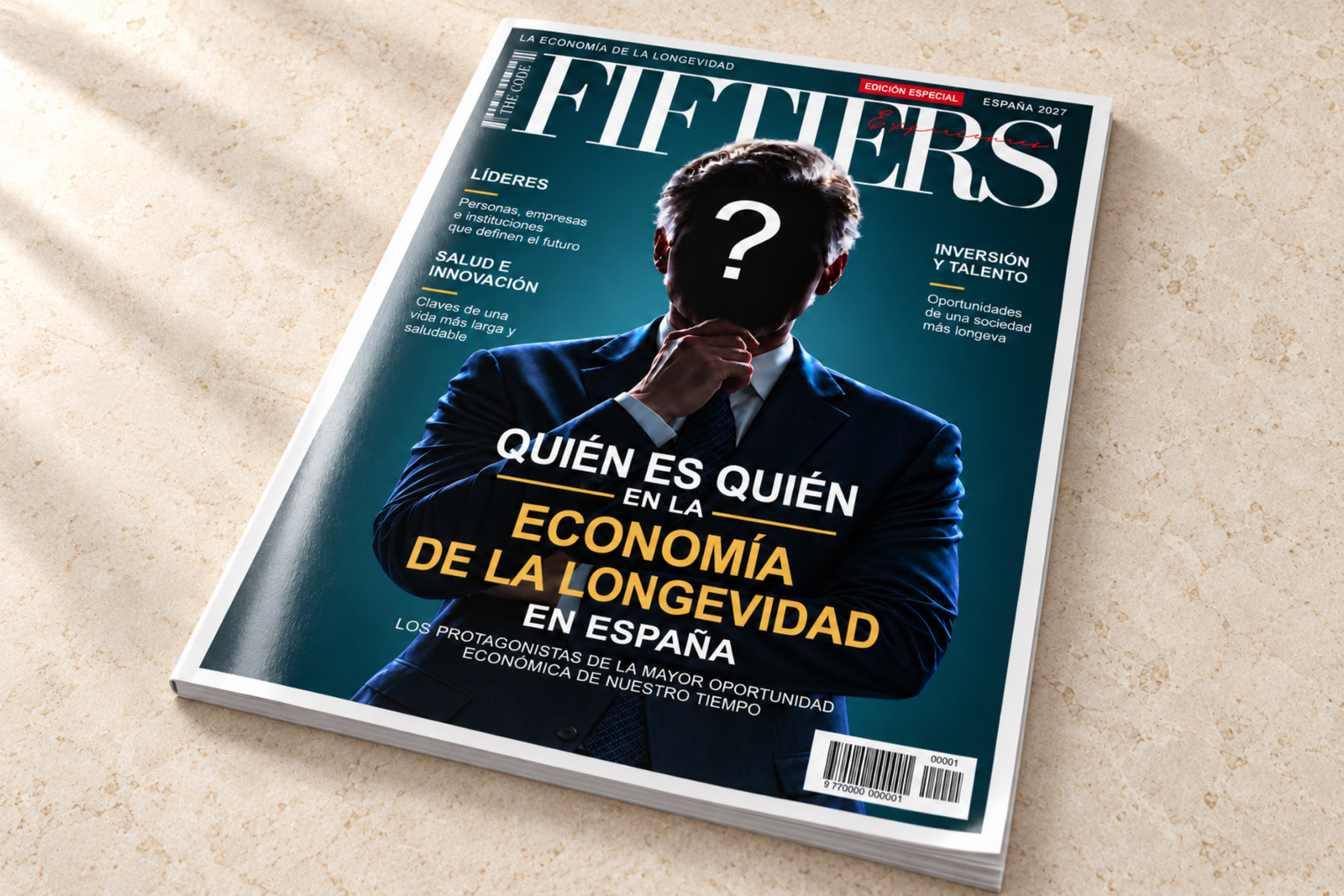


The World’s 40 Most Influential FIFTIERS


For years, the idea was pushed that power belongs to youth, speed, and near-instant disruption. However, the real map of global influence tells a different story. In technology, finance, luxury, culture, biotech, media, and politics, a large share of the decisions that move entire industries are still in the hands of leaders who have already passed 50. What changes with age is not the ability to influence, but the way of doing it: with more contextual awareness, a stronger network, greater negotiating power, and a broader long-term vision.
This FIFTIERS ranking does not measure fame alone. It measures real weight. It measures who has the capacity to alter markets, behaviors, narratives, or global priorities. And above all, it maps an increasingly visible idea: in the longevity era, leadership does not shorten — it expands.
1. Satya Nadella
Satya Nadella not only rescued Microsoft from a period of competitive rigidity, but turned it into one of the most strategic companies of the new tech cycle. Since becoming CEO in 2014 and later chairman, he has driven a transformation based on cloud computing, enterprise software, and more recently, artificial intelligence integrated across the entire value chain. His leadership has been less theatrical than that of other big tech executives, but far more structural. Microsoft no longer just competes to sell software — it competes to be the operating infrastructure for work, productivity, development, and AI in the global economy.
2. Tim Cook
Tim Cook inherited an iconic company and achieved something extremely difficult: keeping Apple’s prestige intact while elevating its operational and financial power. His strength has never been spectacle, but precision. Under his leadership, Apple has consolidated an ecosystem where hardware, software, services, and privacy form a tightly integrated, highly profitable, and loyalty-driven block. Cook represents a type of power that often flies under the radar in headlines, yet shapes consumer habits, design standards, and decisions made by millions of users and thousands of developers worldwide.
3. Jensen Huang
Jensen Huang is one of the great architects of the new technological order. He founded NVIDIA in 1993 and has remained at the helm ever since, guiding the company from the world of graphics to the heart of artificial intelligence, accelerated computing, and the new digital infrastructure. In practice, much of the contemporary AI boom cannot be understood without his chips and the long-term vision that allowed NVIDIA to position itself ahead of nearly all its competitors. Huang is not just a CEO — he is one of the few executives who has controlled the physical layer on which the next economy is being built.
4. Mary Barra
Mary Barra embodies one of the most complex industrial transformations of this decade: the reinvention of General Motors as a player in the electric, autonomous, and connected future. Her leadership combines a deep understanding of large-scale industry with a clear vision of technological change. This is not about launching a startup from scratch, but about redirecting a historic, heavy, and global organization toward a new phase of competitiveness. Her influence extends beyond the automotive sector, as she also represents the advance of female leadership in industries traditionally dominated by very conservative structures.
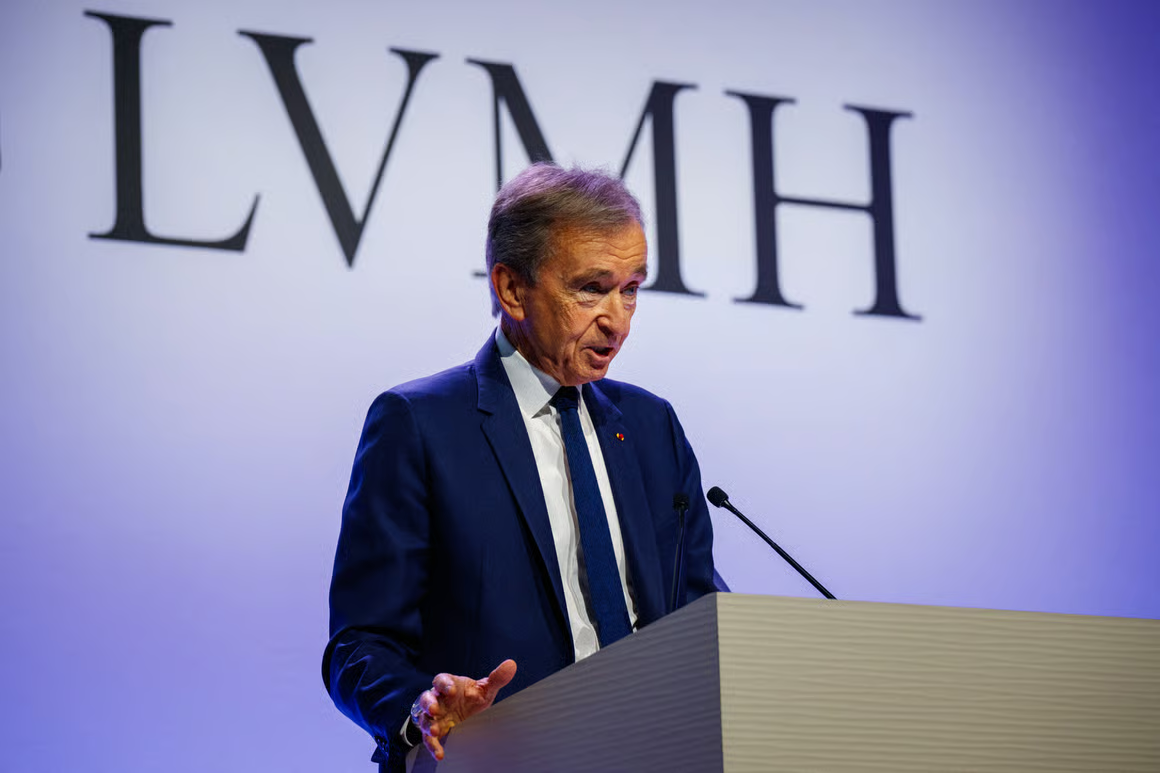
5. Bernard Arnault
Bernard Arnault has elevated luxury to the level of economic, cultural, and geostrategic power. At the helm of LVMH since the late 1980s, he built the world’s largest luxury conglomerate based on a very clear idea: major brands are not just businesses, but cultural assets capable of concentrating desire, prestige, and profitability over time. His mastery lies not only in acquiring firms, but in preserving them, repositioning them, and making them grow without destroying their aura. Arnault does not manage a portfolio of products — he manages a global system of symbols.
6. Elon Musk
Elon Musk remains an anomaly within global leadership because he operates simultaneously on several fronts of enormous impact: electric mobility, space, energy, connectivity, and digital platforms. His strength lies not only in the companies he runs or backs, but in his ability to shift public conversation and move the center of gravity of entire industries. Musk has turned technological ambition into a permanent spectacle, but also into real competitive pressure on his rivals. His figure divides, polarizes, and wears thin, but he continues to set the agenda with an intensity that is hard to match.
7. Larry Fink
Larry Fink leads BlackRock, the world’s largest asset manager, making him one of the most quietly influential figures in contemporary capitalism. His power is not usually expressed through iconic products or constant media visibility, but through something deeper: the ability to shape markets, boards of directors, investment policies, and debates on corporate governance. Fink personifies the financial dimension of global power — the one not always visible on the surface, yet determines the pace of many business and institutional decisions.
8. Oprah Winfrey
Oprah Winfrey turned emotional communication into a platform of business, social, and cultural influence on a historic scale. She moved from host to producer, entrepreneur, brand builder, and global trendsetter. Her greatest strength has always been credibility: the sense of closeness, authenticity, and authority she has built over decades. In a world saturated with voices, Oprah still represents the difference between talking and having true mobilizing power. Her influence no longer depends on a specific show, but on a complete architecture of trust.
9. Jeff Bezos
Jeff Bezos transformed commerce, logistics, and digital infrastructure with Amazon, but his real influence goes far beyond a single company. As founder and executive chairman, he has embodied, better than almost anyone, the long-term mindset applied to businesses at massive scale. His footprint is in retail, cloud computing, automation, media, space, and climate philanthropy. Bezos represents a type of leadership obsessed with systems, efficiency, and continuous expansion. He did not just build a giant company — he helped redefine how giant companies are built in the 21st century.
10. Indra Nooyi
Indra Nooyi is one of the great references in modern executive leadership for a simple reason: she managed to combine strategic rigor, international vision, and a highly advanced understanding of how large corporations evolve. Her time at PepsiCo solidified her as an executive capable of connecting growth, sustainability, product innovation, and talent management. Nooyi symbolizes an influence that depends not only on title, but on accumulated prestige and the ability to continue shaping debates on business, leadership, and responsibility in commerce.
11. Marc Benioff
Marc Benioff helped define contemporary enterprise software from Salesforce, but his true legacy is expanding what a technology company can represent. For him, the company is not just a revenue machine, but also a cultural institution with values, activism, and public responsibility. His style has combined commercial innovation, thinking about the future of work, and ethical positioning. This mix gives him a special kind of influence: he does not just sell technology, he also sells a mental framework for how the company of the future should operate.
12. Reed Hastings
Reed Hastings changed the entertainment industry with Netflix by anticipating that digital distribution would not be an additional channel, but the new backbone of audiovisual consumption. He understood before most that streaming was not an incremental improvement, but a complete mutation of the business model. From there, he altered production, distribution, viewer behavior, and even Hollywood’s competitive structure. Hastings represents leaders who change not just one company, but the global habit with which millions of people experience an entire category.
13. François-Henri Pinault
François-Henri Pinault has been an essential figure in modernizing luxury through Kering. His influence has been closely tied to the evolution of global brands toward more contemporary discourses, especially in sustainability, traceability, and cultural reputation. In a sector where symbolic capital is as important as financial capital, Pinault has shown that 21st-century luxury needs more than exclusivity: it needs judgment, narrative, and legitimacy in the face of more demanding and better-informed consumers.
14. Leena Nair
Leena Nair represents one of the most interesting recent moves in luxury: bringing a strong sensibility for organizational culture, talent, and human leadership to the top of a great maison like Chanel. Her prior background in human resources and corporate transformation makes her a distinct figure in a sector accustomed to more traditional biographies. Her influence is not just about managing a great brand, but about signaling that the next stage of luxury will also depend on how it is led from within.
15. Michael Bloomberg
Michael Bloomberg built one of the most powerful financial information platforms on the planet and, from there, extended his influence into media, politics, cities, and philanthropy. Few figures have managed to turn data and professional service into such enduring power. His figure connects the world of markets with urban governance, climate, public health, and informal diplomacy. Bloomberg is an exemplary case of how well-structured information can become an infrastructure of influence.
16. Arianna Huffington
Arianna Huffington has achieved something quite rare: reinventing herself from journalism and commentary into the realm of well-being, sustainable productivity, and behavioral health. After founding The Huffington Post, she launched Thrive Global with the idea that performance and success cannot be sustained on perpetual exhaustion. Her voice has been especially relevant in the transition from a business culture obsessed with hyperactivity toward a more sophisticated view of work, rest, and human energy. In the longevity economy, that shift in mindset is central.
17. Martha Stewart
Martha Stewart remains one of the great masters of reinvention. She built a global brand around home, cooking, everyday aesthetics, and lifestyle long before the creator economy existed as such. Her business longevity demonstrates that a strong personal brand can transcend generations, formats, and cultural changes without losing relevance. Stewart not only sold products or content — she turned a taste, a discipline, and a way of organizing life into an international-scale business.
18. Sara Blakely
Sara Blakely is one of the most emblematic entrepreneurs of recent decades because she built Spanx almost from scratch, with her own capital, commercial intuition, and a brilliant reading of an underserved market need. Her story remains powerful because it combines creativity, discipline, and humor with an extraordinary understanding of how to create a category and a brand. She later expanded her influence into philanthropy and new business ventures, confirming that female leadership can scale without copying traditional models of power.
19. Peter Thiel
Peter Thiel holds a unique place in this ranking because his influence unfolds less as a visible manager and more as an investor, ideologue, and ecosystem catalyst. He co-founded PayPal, was the first major outside investor in Facebook, co-founded Palantir, and has financed many key companies through Founders Fund. Thiel not only detects opportunities — he helps shape themes, theses, and directions within the global tech conversation. His power lies in the intellectual and financial architecture of the digital future.
20. Ginni Rometty
Ginni Rometty made history as the first woman to lead IBM and steered the company through a period of strong repositioning. Her leadership focused on higher-value areas such as hybrid cloud, security, artificial intelligence, and quantum computing, moving IBM away from less promising segments. Beyond specific numbers, her legacy lies in defending a central idea: large corporations can also redesign themselves for the future if they make tough decisions in time.
21. David Sinclair
David Sinclair is one of the scientists who has done the most to popularize the contemporary conversation about biological longevity. As a professor of genetics at Harvard Medical School and a leading researcher on aging, his influence extends beyond the lab. He has been able to translate complex debates on epigenetics, aging mechanisms, and healthy lifespan extension to business, investor, and general audiences. He is one of those figures who turn a scientific field into a social and economic conversation.
22. Jennifer Doudna
Jennifer Doudna holds a central place in modern biotechnology for her pioneering work on CRISPR and for helping open a new era of gene editing. Her influence combines top-tier science, institutional prestige, and a rare ability to embody the future of precision medicine. In the world to come, where health will become increasingly predictive, molecular, and personalized, Doudna represents one of the scientific foundations on which many far-reaching changes will rest.
23. Demis Hassabis
Demis Hassabis has played a crucial role in the evolution of artificial intelligence from a much more scientific than commercial perspective. As co-founder and CEO of Google DeepMind, and also of Isomorphic Labs, he has helped move AI from reinforcement learning and games to applications with enormous potential impact in science and biology. His profile unites research, business vision, and a clear ambition: to use artificial intelligence not just to automate tasks, but to accelerate discoveries.
24. Sam Altman
Sam Altman has become one of the most visible faces of the artificial intelligence era. As CEO of OpenAI since 2019, and after the global phenomenon of ChatGPT, his figure has shifted from being a Silicon Valley investor and operator to a top-tier geopolitical and regulatory actor. Altman not only runs a company — he actively participates in the public negotiation of AI’s future, its risks, its speed, and its limits. Few executives have concentrated so much global attention in such a short time.
25. Eric Topol
Eric Topol is an essential reference in digital medicine, personalized health, and the application of AI to clinical practice. From Scripps Research, where he leads the translational institute and holds leadership positions, he has advocated for a more preventive, data-driven, and biologically attuned medicine. His authority comes both from research and from his ability to translate it into an accessible and strategic narrative. In the FIFTIERS universe, Topol helps explain why the future of longevity will also be the future of medicine.
26. Peter Diamandis
Peter Diamandis operates at the frontier between entrepreneurship, future narratives, and longevity. As founder and executive chairman of XPRIZE and as a driver of multiple companies linked to health, space, and exponential technologies, he has spent years building an optimistic and ambitious vision of progress. His role at Fountain Life also connects him to high-level preventive and predictive medicine. Diamandis influences because he knows how to turn a technical idea into an aspirational mission for entrepreneurs, investors, and decision-makers.
27. Andrew Huberman
Andrew Huberman has managed to bring neuroscience to a massive audience without completely losing connection to academic rigor. As a professor at Stanford, his scientific work and enormous public profile have made him one of the most recognizable voices on sleep, stress, attention, habits, and human performance. His relevance to the longevity economy is evident: he has helped bring the conversation about brain health and daily optimization out of the lab and into the daily lives of millions of people.
28. Tony Robbins
Tony Robbins remains a figure of extraordinary influence because he has spent decades operating at the intersection of high performance, practical psychology, leadership, and personal transformation. His strength has always been scale: massive events, programs, content, and a persistent presence in the imagination of executives, entrepreneurs, and public figures. Beyond judgments of style, Robbins has been decisive in establishing the idea that personal performance and mindset are strategic variables of success — and that connects fully with the FIFTIERS culture.
29. Reshma Kewalramani
Reshma Kewalramani represents the growing strength of biotechnology as an axis of global influence. As CEO of Vertex Pharmaceuticals, she has led a company positioned in areas of enormous clinical and scientific impact. Her profile combines medical training, business experience, and leadership ability in a sector where the boundary between science and commerce is increasingly critical. Biotechnology is no longer a peripheral specialty — it is one of the industries that will most shape health, investment, and geopolitics in the coming years.
30. Michele Kang
Michele Kang has built a very unique influence by uniting health, technology, investment, and women’s sports. She founded Cognosante in health-tech and later became one of the major investors and owners in international women’s soccer, with significant stakes in Washington Spirit, OL Lyonnes, and London City Lionesses, as well as creating Kynisca as a multi-club platform. Her leadership signals a very clear direction: women’s sports is no longer reputational philanthropy, but a territory of business, cultural power, and structural expansion.
31. Barack Obama
Barack Obama maintains a capacity for global influence far above that of most former presidents. His relevance no longer depends on office, but on his symbolic weight, his international network, and his authority in debates on democracy, leadership, polarization, and institutional future. Obama has managed to transform political legacy into a long-lasting cultural, editorial, and civic platform. In the longevity era, he well represents an essential idea: power does not necessarily disappear when a formal stage ends — it can enter a broader and more durable phase.
32. Michelle Obama
Michelle Obama has built an influence that is independent, autonomous, and globally far-reaching. Her trajectory combines legal training, institutional experience, social leadership, and an extraordinary ability to connect with different generations. She has been a powerful voice in health, education, equality, and representation, but also in something less measurable and very powerful: the construction of a contemporary ideal of public dignity. Her influence lies in credibility, in the identification she generates, and in her ability to turn personal values into cultural force.
33. Richard Branson
Richard Branson is one of the great icons of global entrepreneurship because he turned the Virgin name into a recognizable business philosophy: boldness, customer experience, irreverence, and constant diversification. His career has extended from music to airlines, telecommunications, hospitality, space, and impact investing. Branson represents a form of leadership closely associated with adventure and narrative, but also with brand building as a core asset. Even in maturity, he remains synonymous with entrepreneurial energy.
34. Anna Wintour
Anna Wintour remains one of the most powerful figures in fashion and international publishing even after stepping down from daily editorial leadership of the US edition of Vogue. As chief content officer of Condé Nast and global editorial director of Vogue, she retains immense ability to set cultural agendas, legitimize talent, concentrate attention, and orchestrate high-impact events like the Met Gala. Wintour does not just decide on style — she decides on visibility, hierarchy, and desire within the cultural system of luxury.
35. George Clooney
George Clooney has clearly transcended the category of actor to become a global personal brand with weight in film, production, activism, cultural diplomacy, and business. His influence rests on a rare combination: prestige, elegance, public credibility, and the ability to move between Hollywood, international causes, and high-profile ventures. Clooney represents soft power in its most sophisticated form: he does not need to be omnipresent to continue having notable weight in cultural and media conversation.
36. Jane Fonda
Jane Fonda is a monumental figure because she has achieved something very rare: remaining relevant for decades without being frozen in a single identity. She has been a movie star, fitness icon, political activist, and leading voice on social and climate issues. Her career demonstrates that public longevity does not depend on repeating the past, but on constantly reinterpreting oneself with purpose. Fonda embodies a deeply FIFTIERS idea: age can amplify authority when accompanied by consistency, courage, and the ability to keep acting.
37. Dwayne Johnson
Dwayne Johnson has built one of the most robust personal brands in global entertainment. He moved from wrestling to film, production, business, and sports ownership, including his role in the United Football League and on the board of TKO Group. His strength is explained not only by his popularity, but by his business discipline and his ability to turn charisma into real assets. Johnson symbolizes a very contemporary evolution of influence: from the body to the story, and from the story to the enterprise.
38. Serena Williams
Serena Williams was already a sports legend before expanding her influence into investment, business, and cultural representation. Her figure projects competitive excellence, discipline, and resilience, but also a very clear vision of capital, entrepreneurship, and female power. Serena has managed to transfer the authority earned on the court to a broader universe where performance matters as much as the ability to pave the way for other women and other forms of leadership. Her legacy continues to grow outside of sports.
39. Melinda French Gates
Melinda French Gates is one of the figures with the greatest capacity for moral and philanthropic influence on the global stage. For years, she has driven major initiatives in health, education, equality, and access to opportunity, and her work has helped place strategic social investment at the center of highly consequential international debates. Her role is not about occupying daily headlines, but about directing resources, priorities, and partnerships toward long-term problems. In an aging and unequal world, that form of influence is increasingly decisive.
40. Pharrell Williams
Pharrell Williams closes this ranking because he clearly represents the power of hybrid profiles in the contemporary economy. He is a musician, producer, designer, creative director, and global cultural brand. His influence does not come from mastering a single discipline, but from knowing how to connect several of them naturally and with prestige. In a time when creativity, identity, and business are increasingly mixed, Pharrell symbolizes transversal leadership: one that is not limited to one sector but moves between several and makes them dialogue.
The underlying conclusion is unequivocal. Influence after 50 is not an exception — it is increasingly a norm in many of the sectors shaping the present. What these forty names show is not just accumulated power, but the ability to reinvent themselves, sustain relevance, and continue making decisions with real impact. In the longevity era, leadership enters a more complex, richer, and in many cases, more powerful phase.
Discover more from FIFTIERS
Subscribe to get the latest posts sent to your email.
What's Your Reaction?