




Artemis: the mission that confirms that space leadership is also FIFTIERS

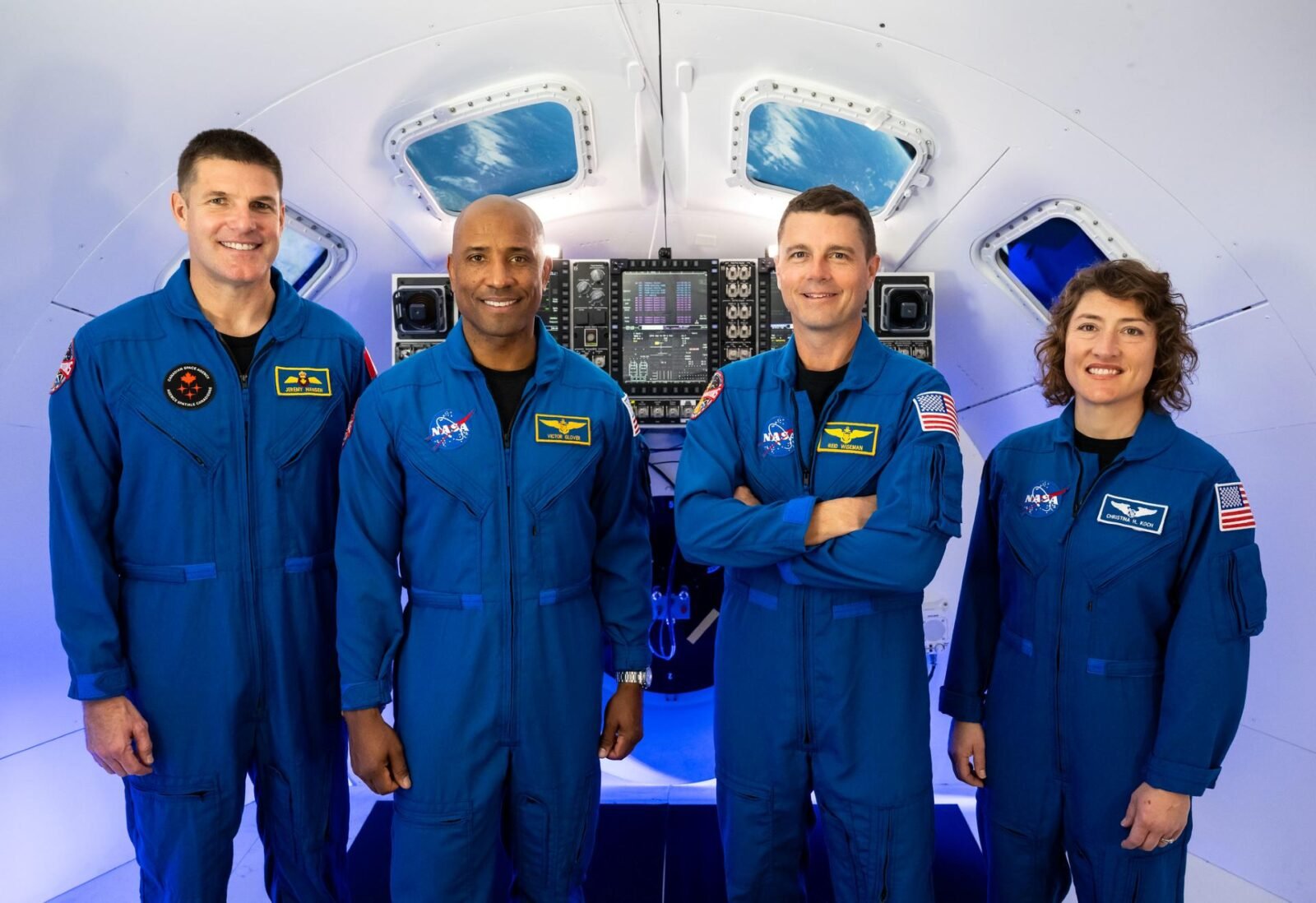

Humanity has returned to the Moon. And it has done so with a completely different narrative than half a century ago. The Artemis II mission is already an operational reality, and beyond the technological milestone, it leaves a clear message: space is no longer the territory of youth, but of experience. The protagonists of this historic moment — Reid Wiseman, Victor Glover, Christina Koch, and Jeremy Hansen — represent a mature professional generation, with decades of preparation behind them and fully integrated into what we now understand as the FIFTIERS universe.
When this mission was designed, it was already evident that it was not just about returning to lunar orbit, but doing so under a new paradigm: greater autonomy, greater technical complexity, and a level of demand that even surpasses the Apollo program. The Orion spacecraft, the centerpiece of the program, has carried the crew on a journey of more than 700,000 kilometers, operating under conditions where decision-making leaves no room for error.
And that is where age stops being a data point and becomes an advantage
Each of the astronauts has accumulated more than two decades of professional experience before this mission. Thousands of flight hours, operations in extreme environments, leadership of international teams, and psychological training designed to withstand isolation, pressure, and constant risk. It is not just about technical knowledge, but about judgment.
Because in deep space, it is not enough to know what to do. You have to know when to do it, how to do it, and above all, when not to do it.
NASA’s selection model itself has evolved in that direction. Today, emotional stability, leadership ability, and crisis management are prioritized over mere physical condition. It is a shift that reflects what is already happening in the most advanced organizations on the planet.
The four astronauts who have led this mission belong to a mature professional generation, with decades of accumulated experience. All are at or very close to 50 years of age, reinforcing a key idea: space is now FIFTIERS territory.
Reid Wiseman (51 years old) – Commander
Reid Wiseman was born in 1975 and is a captain in the United States Navy. Trained as an engineer, he logged over 7,000 flight hours on military aircraft before being selected as a NASA astronaut in 2009. He has previously participated in missions to the International Space Station (ISS), where he performed critical roles in maintenance operations and scientific experimentation. Subsequently, he was named Chief of NASA’s Astronaut Office, one of the most responsible positions within the space program. His profile combines strategic leadership, operational experience, and management ability in high-pressure environments. At 51, he represents the archetype of the modern commander: precision, judgment, and vision.
Victor Glover (50 years old) – Pilot
Born in 1976, Victor Glover is a naval aviator and test pilot with over 3,000 flight hours in more than 40 aircraft types. He also holds a strong academic background in engineering and systems. In 2020, he became the first African American astronaut to serve on a long-duration mission aboard the ISS. During that mission, he gained experience in complex operations, spacewalks, and international coordination. At 49 at the time of the mission, Glover brings a unique combination of military discipline, technical ability, and real spaceflight experience, solidifying himself as one of the most complete profiles of his generation.
Christina Koch (47 years old) – Mission Specialist
Christina Koch, born in 1979, is an electrical engineer and one of the most experienced astronauts of her class. In 2019, she set the female record for the longest continuous stay in space, with 328 days on the ISS. Throughout her career, she has worked in extreme environments, including scientific stations in Antarctica and research missions under prolonged isolation. Her experience is not only technical but deeply human: managing confinement, psychological resilience, and adaptability. At 47, she perfectly embodies the concept of operational maturity in space.
Jeremy Hansen (50 years old) – Mission Specialist
Born in 1976, Jeremy Hansen is a colonel in the Royal Canadian Air Force and a fighter pilot. He was selected as an astronaut by the Canadian Space Agency in 2009. Although Artemis represents his first spaceflight, Hansen has played a key role in operations development, astronaut training, and international coordination among space agencies. At 48, he brings a global perspective, a strong military background, and a strategic capacity that reinforces the multinational character of the mission.
Artemis is not just a mission. It is a statement.
For decades, space exploration was built on the myth of the young hero. Today, that myth has been replaced by a much more sophisticated reality: the astronaut as a highly specialized senior professional. The average age of crews on complex missions has been gradually increasing, and Artemis consolidates this as the standard.
This phenomenon connects directly with the global longevity economy, where senior profiles increasingly concentrate strategic value. In sectors such as aviation, medicine, or corporate leadership, the data is clear: accumulated experience reduces risk, improves precision, and optimizes decision-making.
Space, as always, is one step ahead
The arrival of Artemis in lunar orbit — and its consolidation as a platform for future missions to Mars — marks the beginning of a new chapter in the history of human exploration. But it also redefines who leads that exploration.
They are not prospects. They are not trainees. They are professionals at their peak maturity.
From the FIFTIERS perspective, this is not just inspiring. It is structural. Because it confirms that the future — even in the most advanced and demanding environments — belongs to those who have built a solid trajectory over time.
The Moon is once again surrounded by human capability. And that capability, today, is over 50 years old.
Discover more from FIFTIERS
Subscribe to get the latest posts sent to your email.
What's Your Reaction?