




Longevity Research Advances Through the Analysis of Big Data


FIFTIERS | Life Begins at 50. La vida comienza a…
Scientific research on human longevity is entering a new phase driven by the massive analysis of biological and medical data. For decades, the study of aging was limited by the difficulty of examining the enormous number of variables that influence how the human body deteriorates over time. Today, advances in computational power, artificial intelligence, and biomedical data collection allow researchers to analyze vast datasets and uncover patterns that were previously impossible to detect.
Aging is an extraordinarily complex biological process that affects multiple systems of the body simultaneously, including metabolism, immune response, cellular regeneration, DNA stability, hormonal balance, and neurological function. Understanding how these systems interact requires the analysis of massive datasets that combine genetic information, clinical histories, biomarkers, lifestyle data, and information gathered from wearable health technologies.
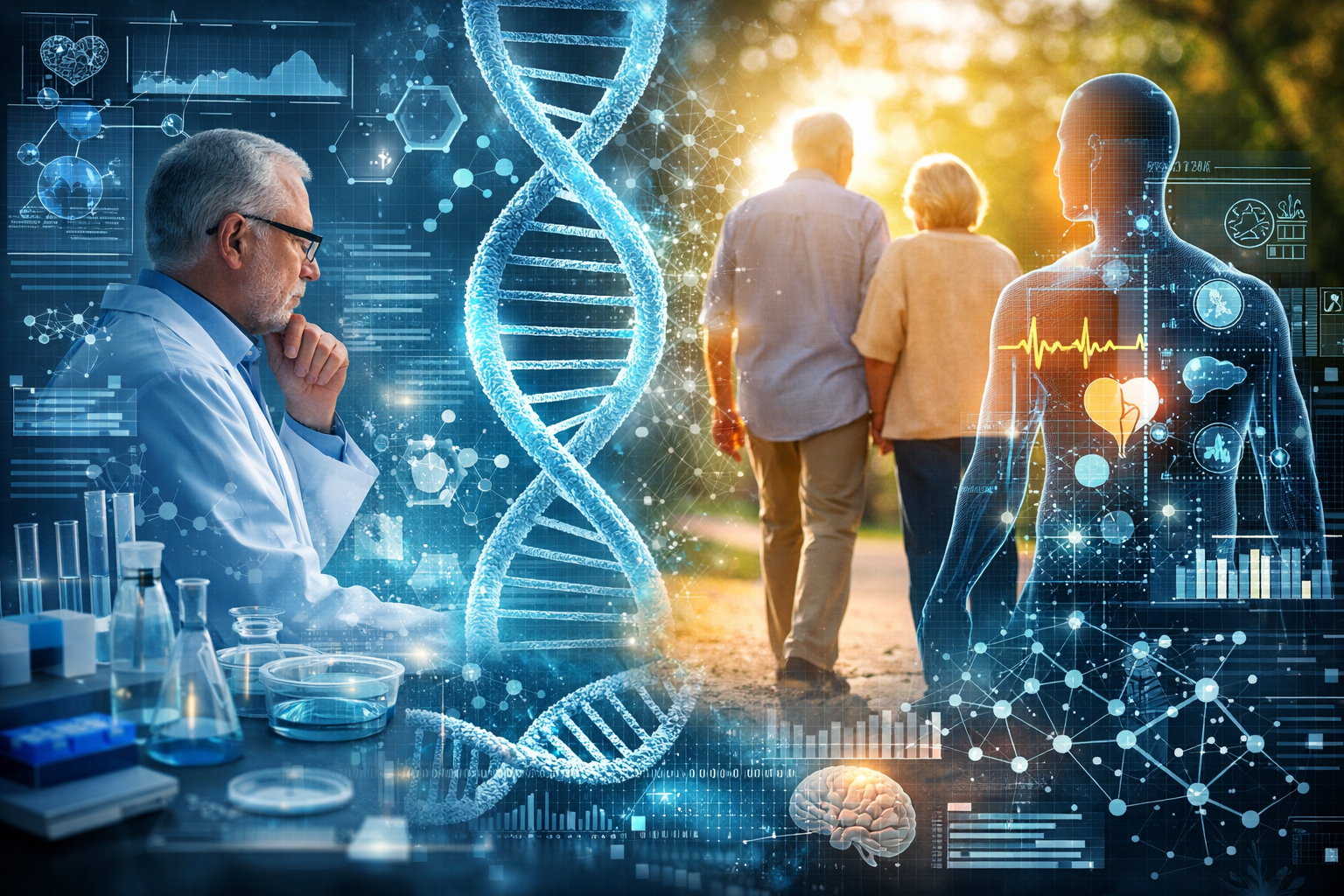
Artificial intelligence has become a central tool in this new generation of longevity research. Advanced machine learning models are capable of analyzing millions of biological data points, identifying correlations between variables, and detecting early indicators of cellular decline. These analytical systems help scientists understand why some individuals age more slowly than others and what biological mechanisms influence that difference.
One of the most promising areas of research involves genomic analysis. The cost of DNA sequencing has fallen dramatically over the last two decades, allowing scientists to analyze the genomes of large populations. With the help of artificial intelligence, researchers can examine these genetic sequences to identify genes associated with longer life expectancy or resistance to age-related diseases.
Beyond genomics, scientists are also studying other layers of biological information known collectively as “omics.” These include transcriptomics (gene expression), proteomics (proteins produced by cells), metabolomics (metabolic processes), and epigenomics (chemical modifications that regulate gene activity). Each of these biological layers generates extremely complex datasets that require sophisticated computational models to interpret.
This data-driven approach is gradually shifting medical research toward predictive models of aging. Instead of focusing only on diseases once they appear, researchers are attempting to anticipate the biological changes that lead to cellular deterioration. This shift opens the door to highly personalized prevention strategies that aim to slow the biological mechanisms associated with aging.
Many biotechnology startups are emerging at the intersection of biology, artificial intelligence, and data science. These companies build digital platforms capable of integrating data from hospitals, clinical studies, genetic databases, and health monitoring devices. By analyzing these large data ecosystems, algorithms can identify patterns related to cellular aging and the development of chronic diseases.
A key objective of this research is to better understand what scientists call “biological age.” While chronological age simply measures the number of years a person has lived, biological age reflects the actual condition of the body’s cells and tissues. Two individuals with the same chronological age may exhibit very different biological aging processes. Artificial intelligence models can analyze thousands of physiological indicators to estimate biological age with increasing precision.
The development of these models may lead to new therapies aimed at slowing the biological processes that drive aging. Some research focuses on cellular regeneration, others on DNA repair mechanisms, reducing chronic inflammation, improving mitochondrial function, or enhancing immune resilience. The goal is not only to extend lifespan but also to increase the number of years people remain healthy, active, and independent.
Researchers are also studying populations known for exceptional longevity, including individuals who live beyond 100 years of age. By analyzing their genetic profiles, biological markers, and lifestyle habits, scientists hope to identify protective factors that could help prevent cardiovascular disease, neurodegenerative conditions, and metabolic disorders associated with aging.
The implications of this research extend beyond medicine. Population aging is one of the major demographic challenges of the twenty-first century, particularly in Europe, Japan, and other advanced economies. Understanding how to delay age-related decline could reduce pressure on healthcare systems while improving quality of life for millions of people.
At the same time, a new sector known as the “longevity economy” is beginning to take shape. This emerging field includes biotechnology, preventive medicine, digital health technologies, advanced nutrition, regenerative therapies, and services designed to extend healthy human life. Artificial intelligence is accelerating scientific discovery in this domain and attracting increasing levels of investment from both public and private sectors.
Taken together, the large-scale analysis of biological data is reshaping how scientists understand human aging. What was once a fragmented field based on limited observations is evolving into a predictive science capable of interpreting the complex biological networks that govern the human body. In the coming decades, this transformation may redefine medicine and bring humanity closer to a long-standing aspiration: living longer lives while maintaining vitality, autonomy, and well-being.
Discover more from FIFTIERS
Subscribe to get the latest posts sent to your email.
What's Your Reaction?