




Longevity Redefines the Economic Role of People Over 50


FIFTIERS | Life Begins at 50. La vida comienza a…
The steady increase in life expectancy is reshaping the global economic landscape and redefining the role played by people over the age of 50. What was once considered a stage of life close to retirement is rapidly becoming one of the most economically influential demographic segments. With longer careers, greater accumulated wealth, and increasingly active lifestyles, this population group is exerting growing influence over consumption patterns, labor markets, and investment trends.
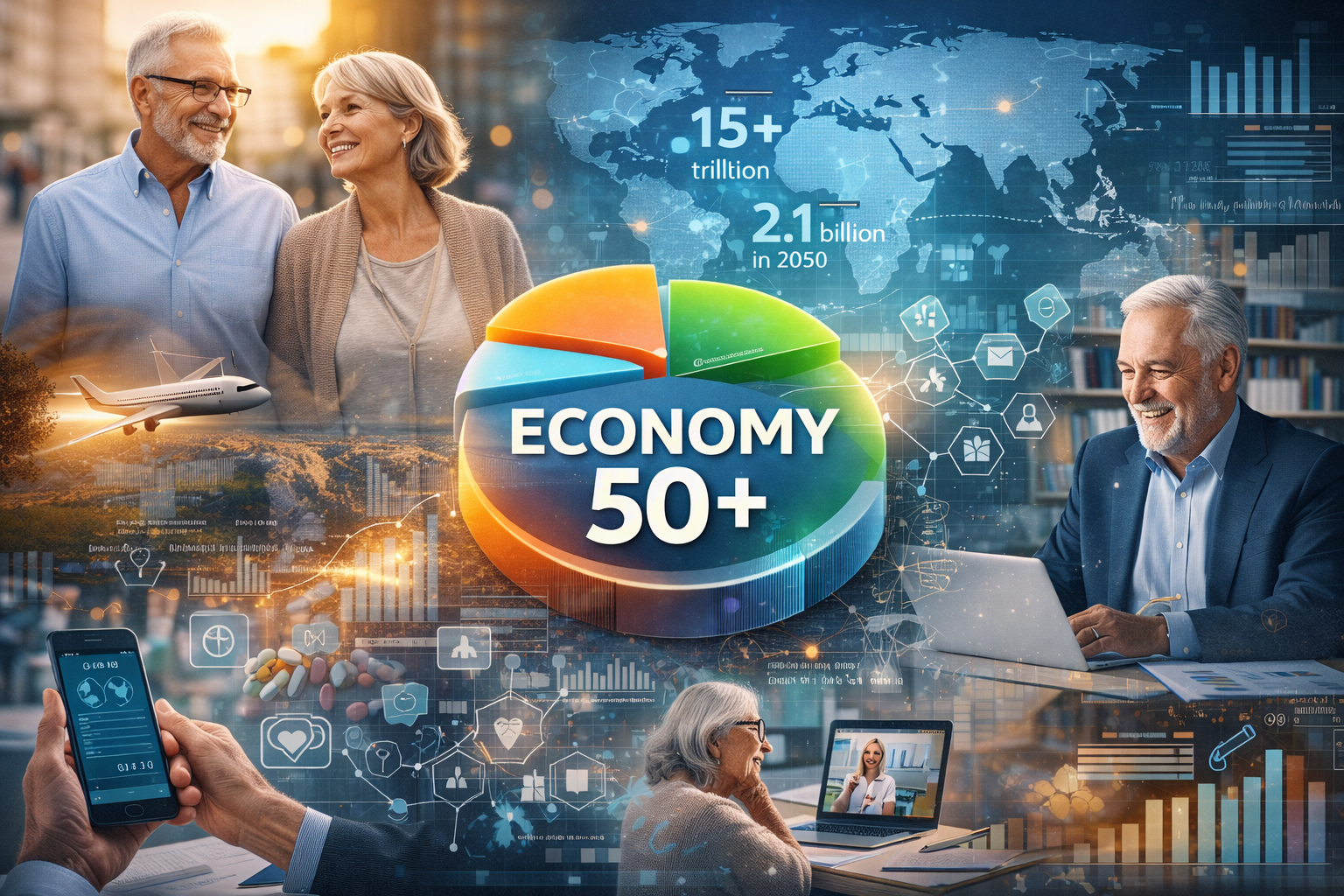
Demographic data illustrates the magnitude of this transformation. Today, the global population aged 50 and above exceeds 1.6 billion people, and projections suggest that this figure will rise to approximately 2.1 billion by 2050. In many advanced economies, population aging is even more pronounced. Across Europe, more than 40 percent of adults are already over 50, and in countries such as Spain, Italy, and Germany the proportion continues to grow each year.
This demographic shift is giving rise to what economists refer to as the “silver economy”, the economic activity generated by the consumption and financial influence of older adults. Estimates indicate that the global silver economy already exceeds 15 trillion dollars annually, making it one of the most powerful forces shaping consumer markets. In the United States alone, individuals over 50 account for roughly 52 percent of total household spending, despite representing a smaller share of the population.
One of the main drivers of this economic influence is wealth accumulation. In many developed countries, people aged 50 and older control between 60 percent and 70 percent of total private wealth, including real estate assets, retirement savings, and financial investments. This concentration of purchasing power gives the over-50 demographic a dominant role in sectors such as tourism, housing, healthcare services, financial planning, and cultural consumption.
The labor market is also undergoing a gradual transformation. Improvements in health, increased longevity, and changing retirement expectations are extending working lives. Across the European Union, the employment rate among people aged 55 to 64 now exceeds 60 percent, a dramatic increase compared with levels recorded two decades ago. In some countries such as Sweden and Germany, this figure approaches 75 percent, reflecting a growing recognition of the value of experienced workers.
Several structural factors explain this shift. Many professionals wish to remain active beyond traditional retirement ages, motivated by intellectual engagement, financial goals, or entrepreneurial ambitions. At the same time, companies are increasingly acknowledging the importance of experience, institutional knowledge, and leadership capabilities that older professionals bring to organizations.
Consumption patterns among people over 50 are also evolving rapidly. This demographic group is fueling demand in sectors such as premium tourism, health and wellness, digital health technologies, lifelong education, and age-adapted housing solutions. In the global travel industry, for instance, travelers over 50 are estimated to generate nearly 40 percent of international tourism spending, often seeking cultural experiences, comfort, safety, and personalized services.
Healthcare represents another major area of economic expansion. Medical spending tends to increase with age, which is driving growth in industries such as biotechnology, preventive medicine, medical devices, and telehealth services. Analysts estimate that the global market related to longevity technologies and services could surpass 600 billion dollars within the next decade.
Technology adoption among people over 50 is also accelerating. Contrary to outdated stereotypes, older consumers are increasingly comfortable with digital tools when they clearly improve convenience or quality of life. Online banking, e-commerce platforms, health monitoring applications, and digital communication services are rapidly gaining traction among this demographic group.
Education is another sector benefiting from this transformation. As careers become longer and technological change accelerates, many professionals over 50 seek to update their skills or explore new career paths. Universities, business schools, and online learning platforms are developing programs specifically designed for adult learners pursuing continuous education.
From a business perspective, this demographic shift is forcing companies to rethink traditional market strategies. For decades, product innovation and marketing campaigns were largely focused on younger consumers. However, the growing size and purchasing power of the over-50 population is shifting attention toward products and services designed for active and affluent older adults.
This includes innovations in healthcare technology, mobility solutions, smart housing, financial services tailored to longevity planning, and lifestyle experiences adapted to longer and healthier lives. Companies that successfully understand and serve this demographic will be well positioned to capture one of the fastest-growing markets of the coming decades.
Importantly, the economic impact of people over 50 extends beyond consumption. This group also plays a growing role as investors, mentors, and entrepreneurs. In several countries, an increasing proportion of new business ventures are founded by experienced professionals who leverage decades of knowledge, networks, and capital to launch new companies.
Taken together, these trends point to a profound structural transformation of the global economy. Longevity is no longer simply a demographic phenomenon; it is becoming a powerful economic driver that is reshaping labor markets, consumption patterns, and innovation strategies.
Societies that succeed in integrating the experience, financial resources, and productivity of older generations will be better prepared to navigate the demographic challenges of the twenty-first century. The silver economy is not only a rapidly expanding market, but also a new stage in the way individuals participate in economic life throughout longer and more active lifespans.
Discover more from FIFTIERS
Subscribe to get the latest posts sent to your email.
What's Your Reaction?