



Longevity Drives a Structural Transformation of the Global Economy



FIFTIERS | Life Begins at 50. La vida comienza a…
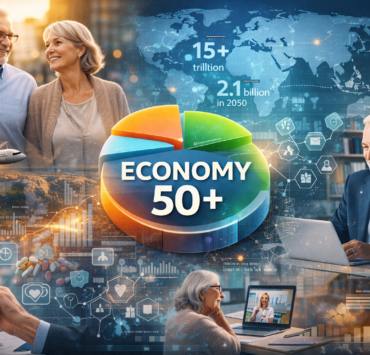
The sustained increase in life expectancy is no longer just a public health achievement; it has become one of the defining forces transforming the global economy in the 21st century. According to international organizations such as the United Nations, by 2050 there will be more than 2.1 billion people aged over 60 worldwide, compared to around 1 billion today. In Europe, the shift is even more pronounced, with over 30% of the population expected to be above that age threshold, while countries such as Japan already exceed 35%.
This demographic shift is fundamentally reshaping global consumption patterns. The so-called silver economy already generates more than $15 trillion annually and is projected to surpass $30 trillion by 2035. In developed markets, individuals over 50 control nearly 70% of purchasing power, hold more than 60% of financial wealth, and account for over half of total consumer spending.
One of the sectors most profoundly affected is healthcare. Global health expenditure already represents around 10% of world GDP, rising above 12% in aging societies. Yet the most relevant shift is not only in scale but in approach. Healthcare is evolving from a reactive model to a preventive, predictive, and personalized system. The integration of artificial intelligence, wearable devices, and genetic analysis is enabling early detection of diseases such as cancer, diabetes, and cardiovascular conditions years in advance. The global longevity technology market—including biotechnology, advanced diagnostics, and regenerative therapies—is expected to exceed $600 billion within the next decade.
Housing is another critical pillar of transformation. More than 80% of older adults prefer to age in their own homes, driving the growth of aging in place solutions. The smart home market for aging populations is expanding at rates above 20% annually, integrating sensors, AI-driven monitoring, and remote care systems. At the same time, new residential models such as senior living communities, cohousing, and intergenerational developments are gaining traction, combining independence with shared services and social engagement. In Europe, investment in these asset classes has grown by over 25% in the past five years.
Technology is also undergoing a major shift. Contrary to outdated stereotypes, more than 75% of people aged 55 to 75 in Europe use smartphones, and around 65% shop online regularly. This demographic is one of the fastest-growing segments in digital education, online banking, and connected health services. Technology companies are adapting their interfaces, simplifying user experiences, and developing tailored solutions, opening up entirely new market opportunities.
Tourism is another sector experiencing strong momentum. Individuals over 50 already account for more than 40% of global tourism spending and typically have higher average transaction values than younger segments. They travel more frequently outside peak seasons, stay longer, and prioritize quality and personalized experiences. Health, wellness, and longevity tourism is growing at rates exceeding 15% annually, driven by the integration of preventive medicine, specialized treatments, and premium lifestyle offerings.
In the labor market, longevity is redefining the concept of a professional career. Working lives are extending beyond traditional retirement ages, and senior talent is becoming increasingly valuable, especially in sectors facing skill shortages. In the European Union, more than 20% of individuals aged 65 to 69 remain economically active, a figure that continues to rise. This trend is driving more flexible work models, lifelong learning strategies, and intergenerational workforce management.
From a macroeconomic perspective, population aging presents both challenges and opportunities. Pension expenditure in developed economies ranges between 10% and 15% of GDP, requiring structural reforms to ensure fiscal sustainability. At the same time, the silver economy is emerging as a powerful engine of growth. It is estimated that it could contribute up to an additional 0.5 percentage points to annual GDP growth in advanced economies if properly leveraged.
At the corporate level, companies are increasingly incorporating longevity as a strategic variable. From product design and customer experience to marketing and segmentation, age is becoming a key driver of innovation. Industries such as luxury, automotive, food, and financial services are adapting their offerings to meet the expectations of a more experienced, demanding, and quality-oriented consumer.
Looking ahead, longevity should not be viewed merely as a demographic trend, but as a structural transformation that redefines the global economic model. Economies that successfully anticipate and capitalize on this shift—by adapting infrastructure, policies, and business strategies—will lead the next phase of global growth.
In this new paradigm, age is no longer a limitation but a new dimension of economic value. Living longer does not only mean living better; it also means participating actively in an economy that is becoming more inclusive, more technological, and increasingly shaped by the accumulated experience of its citizens.
Discover more from FIFTIERS
Subscribe to get the latest posts sent to your email.
What's Your Reaction?