Europe is moving decisively toward a new labour model in which experience is once again placed at the centre of economic strategy. Over recent weeks, European institutions and national governments have activated new funding lines and policy frameworks focused on training, employability and professional reskilling, with growing attention to people aged 50 and over. For a generation that has already navigated multiple economic and technological transitions, this shift marks a turning point: working longer is no longer the objective — working better is.
Skills Guarantee: learning as a professional passport
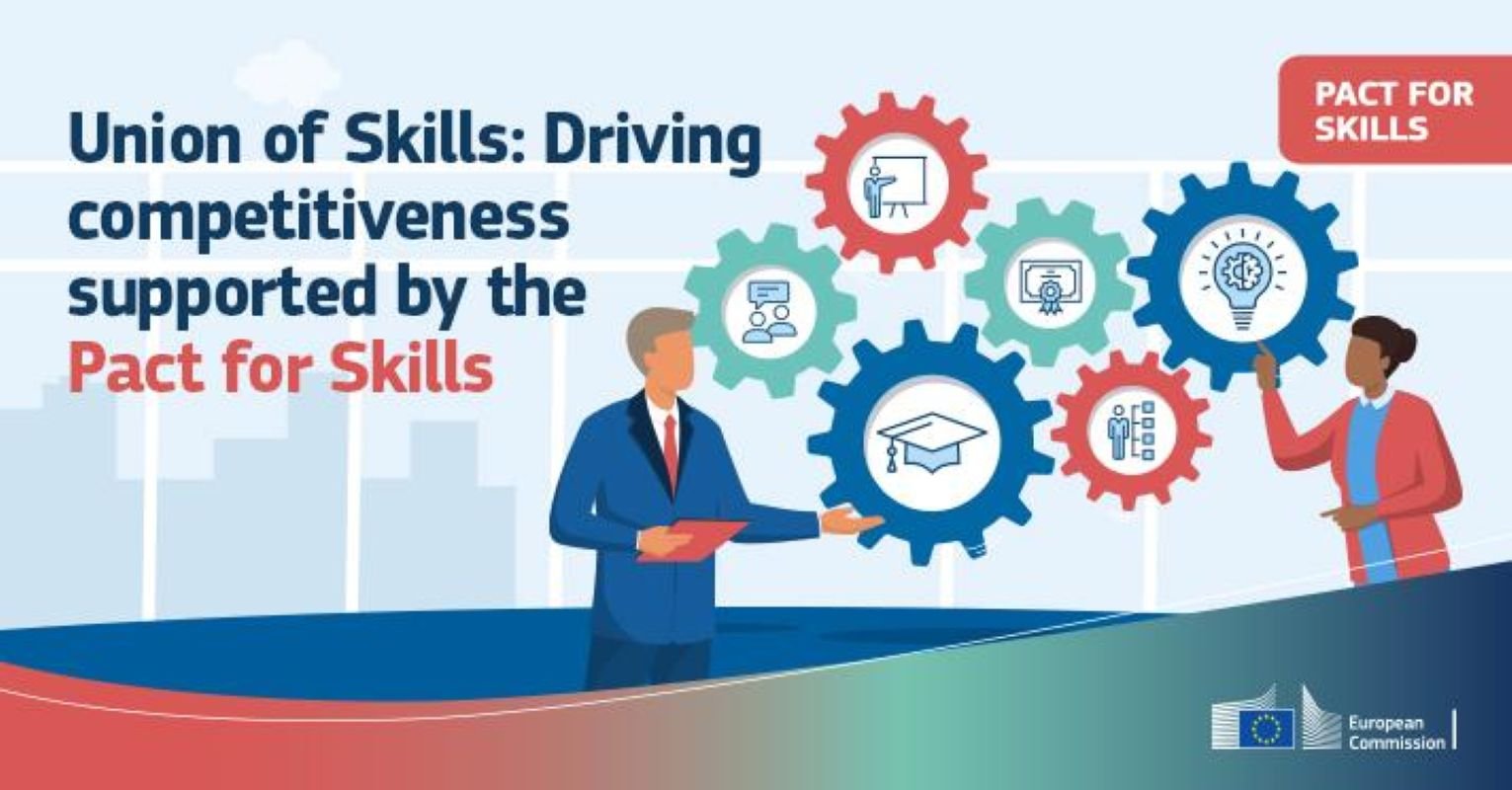
The European Skills Guarantee, promoted by the European Commission, is currently being deployed as a pilot initiative and represents one of the most forward-looking European responses to labour market disruption. Funded through the European Social Fund Plus (ESF+), the programme supports transnational projects that combine practical training, skills certification and direct pathways into employment.
Although not exclusively designed for older workers, the Skills Guarantee is particularly well aligned with 50+ profiles, especially those seeking to update digital skills, adapt to new production models or redirect their careers following automation or organisational restructuring.
ESF+: the backbone of adult employability in Europe
The European Social Fund Plus (ESF+) has become the main financial instrument supporting employment, inclusion and lifelong learning across the EU for the 2021–2027 period. Under its umbrella, Member States are launching programmes aimed at adult workers, with an increasingly strong focus on experienced professionals.
ESF+ funding enables:
-
Upskilling and reskilling programmes adapted to mature profiles
-
Micro-credentials and recognised certifications
-
Flexible training models compatible with professional and personal life
-
Integrated approaches linking employability, health and long-term work sustainability
For people over 50, ESF+ opens the door to longer, more adaptable professional trajectories, built on accumulated knowledge rather than age alone.
National initiatives: Germany and the “upskilling 50+” model
At national level, countries such as Germany are reinforcing dedicated policies for senior workers. Upskilling 50+ programmes, supported by public employment services and European funds, aim to retain experienced professionals within the productive system, preventing talent loss while easing pressure on social protection structures.
This approach reflects a clear economic reality: Europe cannot afford to waste the expertise of workers over 50, particularly in the context of demographic ageing and skills shortages across key sectors.
Training, certification and experience: the new employment equation
The message emerging from Europe is clear. Future employability will depend not on age, but on the ability to learn, certify and transfer experience. For the 50+ generation, this translates into concrete opportunities:
-
Access to publicly funded training pathways
-
Official certifications aligned with European skills frameworks
-
Professional repositioning in sectors with real demand
-
Transformation of accumulated experience into strategic value
A Europe that reintegrates its senior talent
These initiatives signal a broader cultural shift. Europe is beginning to recognise that the future of work is also built in maturity, and that investing in training for people over 50 is not a social concession, but a strategic economic decision.
For the FIFTIERS community, this evolving landscape offers a clear outlook: learning is no longer a late-career obligation, but a tool for autonomy, professional relevance and long-term vitality. Longevity in work is becoming an opportunity — not a limitation.