The global race to extend healthy lifespan has entered a new phase. Research teams have demonstrated that defined combinations of small molecules can reverse key markers of cellular aging without introducing genetic material or using viral vectors. The breakthrough suggests a potentially safer and more scalable strategy to address biological aging at its roots.
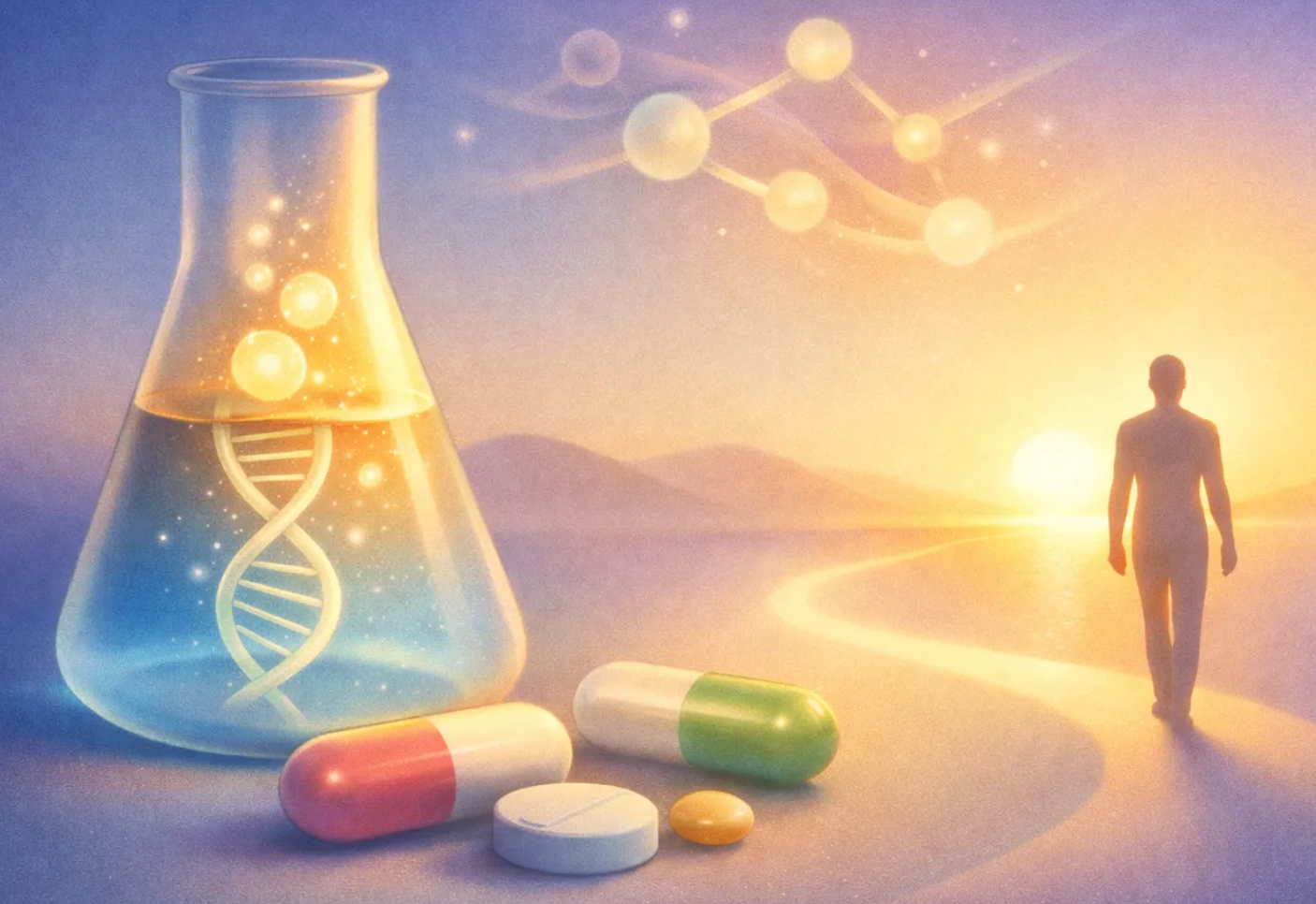
For years, partial cellular reprogramming based on genetic factors such as OSKM (Oct4, Sox2, Klf4, and c-Myc) has shown the ability to reset the epigenetic age of cells. However, gene delivery through viral vectors raised regulatory and safety concerns, including oncogenic risk. Scientists are now exploring a pharmacological alternative: chemical compounds capable of modulating the same epigenetic pathways.
Resetting the Epigenetic Clock
Biological age does not always match chronological age. “Epigenetic clocks” measure changes in DNA methylation and related molecular markers that evolve over time. In aged cell models, certain small-molecule cocktails have reduced epigenetic age scores, restored mitochondrial performance, and diminished cellular senescence signals.
In preclinical studies using model organisms such as C. elegans, chemical reprogramming improved healthspan indicators and extended lifespan. In human cells in vitro, researchers observed functional restoration without loss of cellular identity—one of the primary risks associated with full reprogramming approaches.
Advantages Over Gene Therapy
This strategy is drawing attention because of its drug-like characteristics:
-
Simplified administration: small molecules can be formulated as conventional pharmaceuticals.
-
Dose control and reversibility: effects can be titrated or halted by adjusting treatment.
-
Industrial scalability: manufacturing processes are aligned with established drug production systems.
At a time when the longevity economy is accelerating—driven largely by the 50+ demographic—this approach could reshape how regenerative therapies are developed and delivered.
Scientific Caution
Despite growing optimism, no large-scale human clinical trials have yet demonstrated systemic, long-term safety and efficacy. Risks such as unintended cellular dedifferentiation and uncontrolled proliferation remain under active investigation.
Most data so far come from controlled laboratory settings. Translating these findings into complex tissues and whole organisms will require rigorous validation, regulatory oversight, and long-term monitoring.
What This Means for the 50+ Generation
For adults over 50—the core audience of FIFTIERS—these advances are not immediate treatments but a clear signal of where medicine is heading: toward interventions designed to restore resilience, metabolic efficiency, and regenerative capacity rather than merely treating isolated diseases.
The boundary between prevention, regeneration, and biological optimization is becoming increasingly fluid. If ongoing research confirms early findings, aging itself may become a modifiable biological process.
The critical question is no longer whether science can influence the biological clock, but when it will do so safely, affordably, and under responsible regulation.